Free NewsletterPro Login

Free Live Investors Workshop

Seats limited

Tue, Sep 29.

The dollar is losing value.

Here’s how investors can still profit.

Hosted By

Jaspreet Singh

Founder, Briefs Finance

X

Warning: Undefined variable $stocks in /var/www/briefs.co/htdocs/wp-content/plugins/oxygen/component-framework/components/classes/code-block.class.php(133) : eval()'d code on line 448

Warning: foreach() argument must be of type array|object, null given in /var/www/briefs.co/htdocs/wp-content/plugins/oxygen/component-framework/components/classes/code-block.class.php(133) : eval()'d code on line 448

Warning: Undefined variable $funds in /var/www/briefs.co/htdocs/wp-content/plugins/oxygen/component-framework/components/classes/code-block.class.php(133) : eval()'d code on line 472

Warning: foreach() argument must be of type array|object, null given in /var/www/briefs.co/htdocs/wp-content/plugins/oxygen/component-framework/components/classes/code-block.class.php(133) : eval()'d code on line 472
/* the link was here */

Iran war ripples are raising clothing costs and idling factory floors

Published Sep 12, 2026
[tts_player]
Share:
Summary:
  • At Plummy Fashions near Dhaka, one hall has sat quiet for three months while other lines keep turning out black T‑shirts for Zara.
  • Polyester and cotton have both jumped: polyester yarn at Plummy rose around 25% within weeks of the conflict, and cotton hit a two‑year high with futures back to levels last seen in March 2024.
  • Retailers say shoppers could notice higher prices this autumn, with the bigger jump likely to show up on racks next spring and summer as older orders roll off.

Inside a split‑screen factory

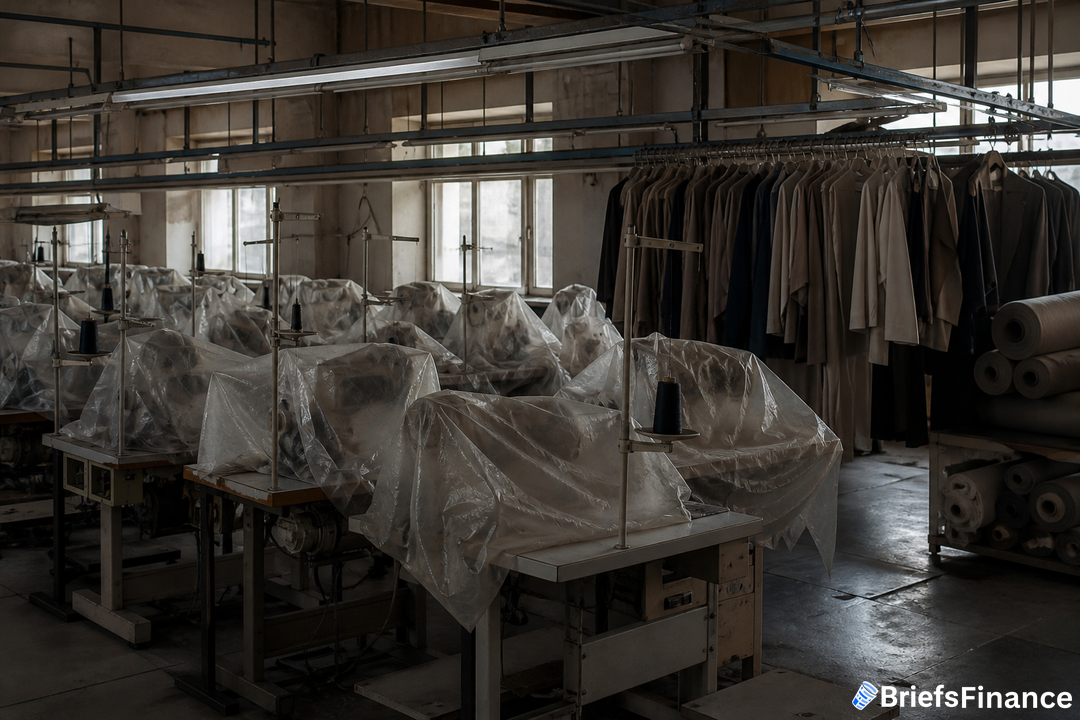
After lunch at Plummy Fashions on Dhaka's outskirts, one line clicks back into motion, with workers checking seams and fastening tags to piles of women's black T‑shirts headed to Zara stores across Europe. Steps away, a different hall has been still for three months, its rows of Juki sewing machines and white tables waiting on work that never arrived.

"One of our buyers put polyester orders on hold, hoping prices would come down," Managing Director Fazlul Hoque said in June. Among its customers are Inditex labels such as Zara and Pull&Bear, Hoque noted, and he argues the cost breakdown leaves almost no flexibility: raw materials make up about 60% of a basic T‑shirt's price, while factory margins are typically only 2% to 3%. With demand soft, he's eating the increases rather than marking up. "We have absolutely no leverage," he said, adding that in a crowded market "If I refuse to produce at a loss, someone else will step in."

Fiber shock meets pricier freight

The Iran war has made moving goods slower and dearer, and it is lifting the tab for what goes into them. Garment making usually hops across borders and through many steps, so higher energy and shipping bills stack up. On top of that, the two main fibers are both more expensive.

Before the conflict, polyester usually cost about half as much as cotton. Then oil rallied, pushing polyester prices in China toward a near four‑year high. Plummy saw polyester yarn costs jump roughly 25% within weeks of the war breaking out.

Cotton has been climbing too as buyers hunt substitutes and supplies tighten amid fertilizer constraints and worry that a strong El Niño could dent harvests later this year. Prices touched a two‑year high, and cotton futures climbed to levels last seen in March 2024. "What's unusual in the current environment is that both major fibers are facing cost pressure at the same time," said Julian Hügl, a partner at McKinsey & Co., leaving brands little room to swap one fiber for the other.

Supply disruptions remind investors to keep their savings diversified and patience intact. Join Briefs Finance CEO Jaspreet Singh on September 29th for a FREE live investor workshop, How to Profit From A Dollar That's Losing its Value, where he shows how we're spotting investment opportunities as the dollar falls. Save your spot.

Thin margins, tough choices

"There's not a single input cost that hasn't gone up, whether it's polyester yarns, cotton yarns, dyes, chemicals, oil or gas," said Mohit Jain, executive vice chairman of India's Indo Count Industries. In Germany, fabric maker Kettelhack, which largely uses polyester‑cotton blends, says its costs are running 5% to 8% higher, according to sales manager Jens Kampling in Bremen.

Brands can push back on supplier prices, change products, or lift tags. Swedish label ASKET chose to raise its own prices. "If we'd gone the other route to keep prices the same, we would've had to source somewhere else or degrade our quality," said co‑founder Jakob Dworsky.

Inditex, owner of Zara, says Middle East disruptions have increased transport and input costs, and that the hit is expected to keep weighing on gross margin in the back half of the year. The company says it has adjusted transport and sourcing and leaned on a network spread across dozens of countries to soften the blow.

Timing, trade spillovers, and your money

Because apparel orders are often placed up to a year ahead, the squeeze won't show up all at once. Retailers say shoppers will probably start to feel it in autumn, with the bigger impact showing up next spring and summer as newer, costlier orders hit stores. Jon Devine, the chief economist at Cotton Incorporated, said, "It's a really competitive environment out there." "So every cent matters. The consumer may not even notice a change in cotton prices, but retailers looking at their margins will because every cent can be helpful or hurtful to them." Fritz Grobien, president of the Bremen Cotton Exchange, put it simply: the whole textile chain rises and falls with how flush and confident consumers feel.

There are broader trade cracks too. India remains a key sourcing base, representing roughly 4% of global textiles and apparel trade. Even so, ready‑made garment shipments fell 4.5% year over year in July, extending a broader downturn that saw exports 10.5% lower over the fiscal year's opening four months. Bangladesh sends roughly $800 million in garments to the Middle East annually, and that flow is now almost entirely on pause.

For your wallet, the through‑line is straightforward: if Hügl's view plays out, list prices in basic apparel could ultimately land in the 10% to 20% range, and it may take up to a year for the full effect to cycle through. That means higher fabric, freight, and energy costs are likely to show up gradually in what you pay for everyday clothes, even as manufacturers like Plummy try to shoulder more of the burden in the near term.

When expenses change, a thoughtful plan helps protect and grow your wealth. Our CEO Jaspreet Singh is hosting a FREE live investor workshop, How to Profit From A Dollar That's Losing its Value, on September 29th. Sign up free to join him live.

Disclosure

Recent News

1 2 3 74

Get Market Briefs delivered to your inbox every morning for free!

No fluff. No noise. No politics. Just finance news you can read in 5 minutes.

Blogs

September 11, 2026
How Is the Economy Doing? Washington Says It's Fixed, but the Numbers Don't Agree
  • Treasury Secretary Scott Bessent says the economy is fixed because lower earners' incomes are now rising faster than top earners'.
  • The Atlanta Fed and Bank of America show different numbers, and Hilton, Marriott, and McDonald's can't agree on what they're seeing either.
  • Whichever side is right, the economy is built to make investors rich, and inflation is how it does it.
Read More
September 10, 2026
US National Debt Hits $40 Trillion: Why the Economy Hasn't Collapsed Yet
  • The US national debt crossed $40 trillion in 2026 and is growing faster than the economy. The debt to GDP ratio now sits at 125%, the highest outside the pandemic and higher than World War II.
  • On September 9, 2026, Treasury Secretary Scott Bessent rolled out an emergency plan for the government to lend money to itself. Ray Dalio now says the dollar has roughly three years before real pain.
  • Empires rarely default. They debase. Since 1971, median household income grew about 8x while houses grew 17x and the S&P 500 grew 360x, so investors got richer while workers fell behind.
Read More
September 9, 2026
Your 401k Is Fueling the AI Bubble
  • About $10 trillion of 401k money sits in a $77 trillion stock market, mostly through target date funds and S&P 500 funds. Roughly 30% of every S&P 500 dollar lands in five AI-heavy tech stocks.
  • Four bubble signals run hotter today than before the 2000 crash: top-ten concentration, tech's share of the index, the Buffett Indicator, and how much of the market index funds own.
  • You only lock in an AI bubble loss if you sell. The 2022, 2020, 2008, and 2000 crashes were all buying windows for long-term investors, and the US-China AI race means government money could keep flowing in.
Read More
September 9, 2026
What Is Wealth Preservation? How To Protect Your Money From Anything
  • Wealth preservation is an investing strategy built around keeping the money you've already made instead of chasing growth.
  • It leans on assets that hold steady when markets fall - gold, Treasury bonds, and companies that keep earning through wars, crashes, and pandemics.
  • The tradeoff is real: you give up some upside, and the two key numbers to check are maximum drawdown and correlation to the market.
Read More
September 8, 2026
Why Is Everything So Expensive? Why Prices May Never Come Back Down
  • Official inflation is 3.4% and prices are up 32% since 2020, but rent (41%), gas (47%), car insurance (64%) and ground beef (79%) all outran the 28% median wage.
  • The Federal Reserve targets 2% inflation on purpose. Rising prices push extra dollars to investors and shrink the real cost of a $40 trillion national debt.
  • Investors who simply owned the S&P 500 gained about 150% over the same six years, and the Fed's September 16 decision will show whether it protects the dollar or the economy first.
Read More
September 7, 2026
The U.S. Housing Market Just Flipped: Renting a Home Now Beats Buying One
  • The US is in a buyer's market in 41 of the 50 largest metro areas, but prices sit near record highs and mortgage rates are close to 7%.
  • The same median house costs 27% more than it did in 2021 while the monthly payment costs 90% more, and incomes rose a little more than 10%.
  • A 2008-style crash is not showing up in the data, so the pressure is landing on buyers instead of prices.
Read More
September 4, 2026
An Interest Rate Hike in 2026? The Fed Just Broke Its Own Script
  • The Federal Reserve spent a year signaling cheaper money, and its new chairman just warned that an interest rate hike may be coming instead.
  • The Fed is stuck between high inflation and a weak job market, and fixing one makes the other worse.
  • Higher rates also reprice roughly a third of America's $40 trillion national debt this year, which is why Washington wants cuts so badly.
Read More
September 3, 2026
5 Passive Income Ideas That Pay You Whether You Work or Not
  • School teaches one formula: work, earn, spend. Stop working and the money stops, so the wheel never ends.
  • Five assets pay you without your labor - dividends, rent, interest, royalties, and the things you already own.
  • $80,000 a year of cash flow takes about $1 million invested at 8%, or roughly 20 years of $1,000 a month.
Read More
September 2, 2026
The Best Way to Invest 10k: Three Options To Transform 10K into 10 Million
  • Passive investing in stocks or real estate targets around 10% a year, and time in the market matters more than the price you get in at.
  • Active investing means putting your time in alongside your money, which raises the target to roughly 20% a year and raises the risk of losing it all.
  • Investing in yourself has no ceiling, because a new skill can create a new income that no market return can match.
Read More
September 1, 2026
The Tax Write Offs the Rich Are Using in 2026 While the IRS Shrinks
  • The 2026 tax brackets landed lower than they were headed, and the standard deduction jumped from a planned $8,350 to $16,100 for single filers.
  • New write offs for overtime, tips, seniors and car loan interest are live now, and most of them are written to expire in 2028.
  • About a third of IRS auditors have been fired, and four assets do most of the work for people who want income without a matching tax bill.
Read More
1 2 3 26
Share via
Copy link











