What changed
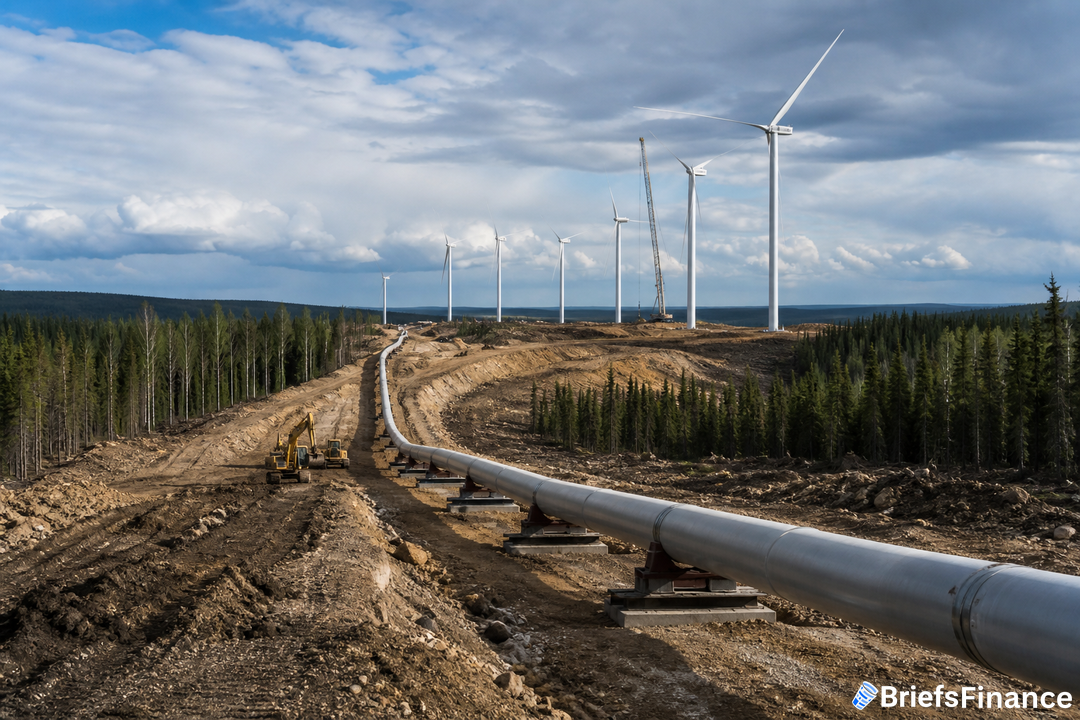
The federal government on Wednesday revealed plans to take federal environmental assessments off the table for energy projects. Among the projects that would no longer face federal review are pipelines for oil and gas, facilities that process natural gas, and developments in the oil sands.
It is the latest in a year of moves aimed at backing energy production and accelerating approvals. Prime Minister Mark Carney's government has eased some environmental rules and handed off oversight to move toward a "one project, one review" model. In addition, the government reduced the industrial carbon price target and scrapped the consumer carbon tax.
Pipeline capacity and production math
Canada pumps a little over 5 million barrels of oil a day today, and more than 2 million barrels a day of additional oil export pipeline capacity is planned over the next ten years. Among the projects on the drawing board is a line to the British Columbia coast designed to move about 1 million barrels a day. Both Alberta and the federal government back it, seeing the route as a way to ship more crude to Asia and lean less on the US during a grinding trade fight.
Hodgson said producers are positioned to respond. "I think if you talk with the oil stands people, they have what they need from the federal government," he said in an interview Wednesday. "They are working through various incentives with other parties and I am confident they have what they need to fill the infrastructure that we're proposing to build."
Policy shifts remind investors to reassess risk and protect long term savings. Join Briefs Finance CEO Jaspreet Singh on September 29th for a FREE live investor workshop, How to Profit From A Dollar That's Losing its Value, where he shows how we're spotting investment opportunities as the dollar falls. Save your spot.
Carbon capture talks and industry backdrop
Ottawa and Alberta are still hammering out terms for a major carbon capture and storage build with five of the oil sands' biggest players: Canadian Natural Resources Ltd., Suncor Energy Inc., Cenovus Energy Inc., ConocoPhillips Canada and Imperial Oil Ltd. The talks cover incentives to spark new greenfield investment and the funding required for the storage network, which industry watchers say would cost north of C$100 billion (US$72.5 billion).
Producers have long complained about rules put in place under the previous government led by Justin Trudeau, and they have not put serious money into expansion for more than a decade. That caution now collides with a policy pivot under Carney, who has made becoming an energy superpower central to his economic agenda.
What this means for your portfolio
Hodgson tied the regulatory push to trade tensions with the US: "If we are going to do that, we need to move faster. That does not mean do it less well, it means we raise the competence of government to do everything in an environmentally responsible way, to do everything in partnership with Indigenous peoples, but do it faster given where we are in the world." Net-net, faster reviews, big-ticket pipelines and a potential triple-digit-billion carbon capture build point to more capital moving through Canada's energy system. If you track cash flows into infrastructure and commodities, this is a policy turn worth watching.
Staying steady with a plan helps you preserve and grow your wealth over time. Our CEO Jaspreet Singh is hosting a FREE live investor workshop, How to Profit From A Dollar That's Losing its Value, on September 29th. Sign up free to join him live.