What happened to prices
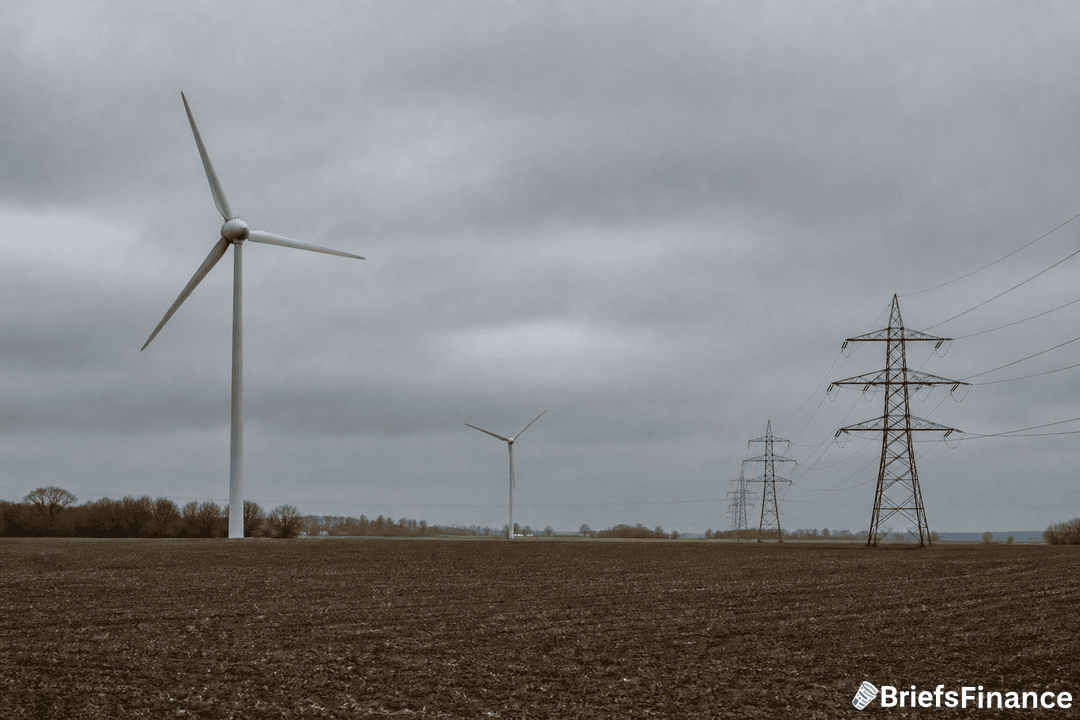
Thursday's German day-ahead price printed at €191.82 a megawatt-hour, the strongest since June. The 7 p.m. slot surged to €460.86, marking the highest reading for that hour since 2024. Bloomberg's models point to wind production sliding to roughly 3.5 gigawatts near 8 p.m. on Thursday, which is under one quarter of the average level so far this year.
Why wind matters now
Europe is shifting out of its sun-soaked summer pattern, when abundant solar kept a lid on prices, and into a cooler season where wind drives the market. When breezes fade, reliance on gas-fired plants rises just as gas prices climb on tensions in the Middle East. Germany feels this more than most because it leans heavily on weather-based renewables, so dips in wind and solar mean turning to costlier fossil generation and tapping imports.
When energy costs shift, investors benefit from steady plans that protect savings. Join Briefs Finance CEO Jaspreet Singh on September 29th for a FREE live investor workshop, How to Profit From A Dollar That's Losing its Value, where he shows how we're spotting investment opportunities as the dollar falls. Save your spot.
What it means for your portfolio
Cross-border power links spread the pain: Germany's wind slump is nudging up prices in neighboring markets too. In the UK, day-ahead power hit its highest level since June, and France's equivalent was also at its highest since mid-August. The takeaway for your wallet is simple enough: weather swings, gas markets, and import flows are now steering electricity costs across Europe, and those moves can filter into everything from utility bills to energy-heavy industries.
Keeping a balanced approach helps your portfolio weather changing resource prices. Our CEO Jaspreet Singh is hosting a FREE live investor workshop, How to Profit From A Dollar That's Losing its Value, on September 29th. Sign up free to join him live.