What happened in the market
Sugar futures ripped higher in August, up 21.5% for the month. That marks the most robust monthly increase since October 2010, when prices climbed 24%. The rally was big enough to put sugar ahead of the S&P 500 for the year to date, with the sweetener up roughly 20% in 2026 compared with nearly 13% for the index.
The U.N.'s Food and Agriculture Organization said its Food Price Index also increased in August, led by sugar. The agency tied sugar's move to a cocktail of supply worries: weaker EU sugar beet yields after rough weather, El Niño risks for key Asian producers, a smaller Brazil crop, and India's move to allow duty free raw sugar imports.
Citi called sugar its "highest-conviction bullish" setup among agricultural contracts on the Intercontinental Exchange, lifting its three month price objective to 19 cents per pound, citing tighter stocks, India's unexpected import program, and worsening weather in India, Thailand, and the EU.
Why prices jumped: weather, crops and supply math
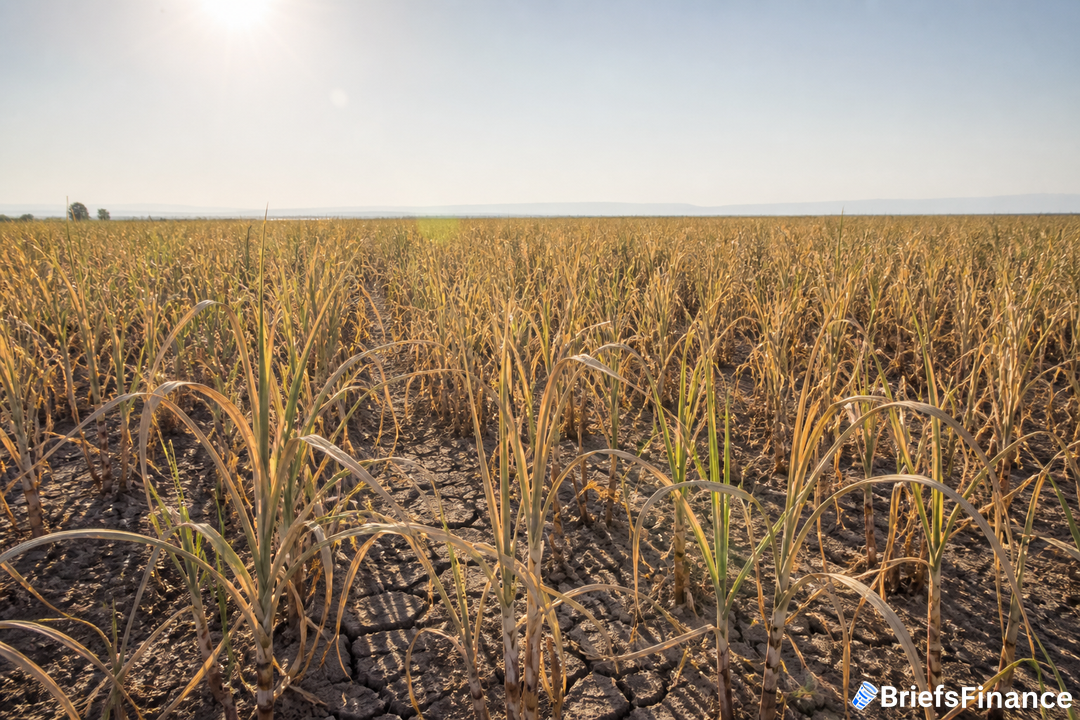
According to William Osnato, who serves as Barchart's director overseeing commodity data research and analysis, the summer heat wave's damage to Europe's sugar beet fields was one of the near term triggers. Beets share geographies and timing with corn and wheat, so extreme heat can bite into sugar output.
Those cuts are showing up in the numbers. Per the European Commission's latest balance sheet, EU sugar output is 13.4 million metric tons for 2026/27, a 19% decline versus 16.6 million tons in 2025/26. Citi now sees a 1.3 million metric ton world deficit, while Green Pool Commodity Specialists estimates a 3.2 million metric ton shortfall. "What is usually consistent is that they're all going in the same direction," Osnato said. "They're all increasing the deficit."
Understanding what moved a market beats knowing that it moved. Get the free Market Briefs daily newsletter and follow the drivers.
El Niño, Brazil and the ethanol pull
Osnato called El Niño "the biggest forward-looking concern." Brazil, India and Thailand together ship roughly 70% of global sugar exports, and Goldman Sachs warned that if drought hits in the growing season, cane yields could fall, while too much rain at harvest can slow fieldwork and dilute sugar content. The Climate Brink's multi model median points to the Niño 3.4 region warming peaking near 3.9 degrees Celsius in November, about 39 degrees Fahrenheit. By comparison, the bar that defines a very strong El Niño is 2 degrees Celsius (35.6 degrees Fahrenheit), so the outlook is well above that. India has already seen below normal rain in key sugar areas, and unusually warm Pacific waters are expected to bring erratic precipitation and water shortages across Thailand.
Energy prices are tugging on supply too. In Brazil, mills swing between sugar and ethanol, and oil over $90 tilts the math toward biofuel. As Rob Johansson of the American Sugar Alliance put it, "With oil prices over $90 a barrel, countries like Brazil, which heavily subsidizes its ethanol industry, are producing more biofuel, lowering the amount of sugar available on the market and putting upward pressure on prices." Brazil represents roughly half of global sugar exports, and a weaker corn crop tied to El Niño could push even more cane into ethanol, Goldman Sachs said.
Recent rains have also slowed Brazil's harvest, Osnato noted. If fields dry and sugar content rebounds or mills speed up cutting, that would be among the most straightforward downside risks for prices.
Policy shifts and the balancing act
India, the world's No. 2 producer after Brazil, authorized 1 million metric tons of duty free raw sugar imports to boost domestic availability amid lower output, seasonal demand and rising prices. With exports restricted and India stepping in as a buyer, less sugar may reach other importers. Even if only about half the permitted volume is actually purchased, he said, it signals tighter supplies than many expected. "Brazil remains the market's key balancing supplier, but weather-related execution risks during the remainder of the harvest leave little margin for error," Citi's Arkady Gevorkyan wrote.
What does that mean for your money? The setup now hinges on whether the projected deficits from Citi and Green Pool show up in reality, how El Niño plays out across Brazil, India and Thailand, and whether Brazil's harvest speeds up or India buys less than allowed. If you own anything tied to food costs or commodities, those are the levers to watch rather than the day to day price pops.