A barrel of oil is making your sugar more expensive. Strange but true.
Raw sugar futures rose to a one-month high Monday. It's the latest sign that the Iran war's hit on energy markets is reaching far past the gas pump. Traders who bet against sugar are now backing out of those bets and pushing prices higher.
Brazil holds the lever
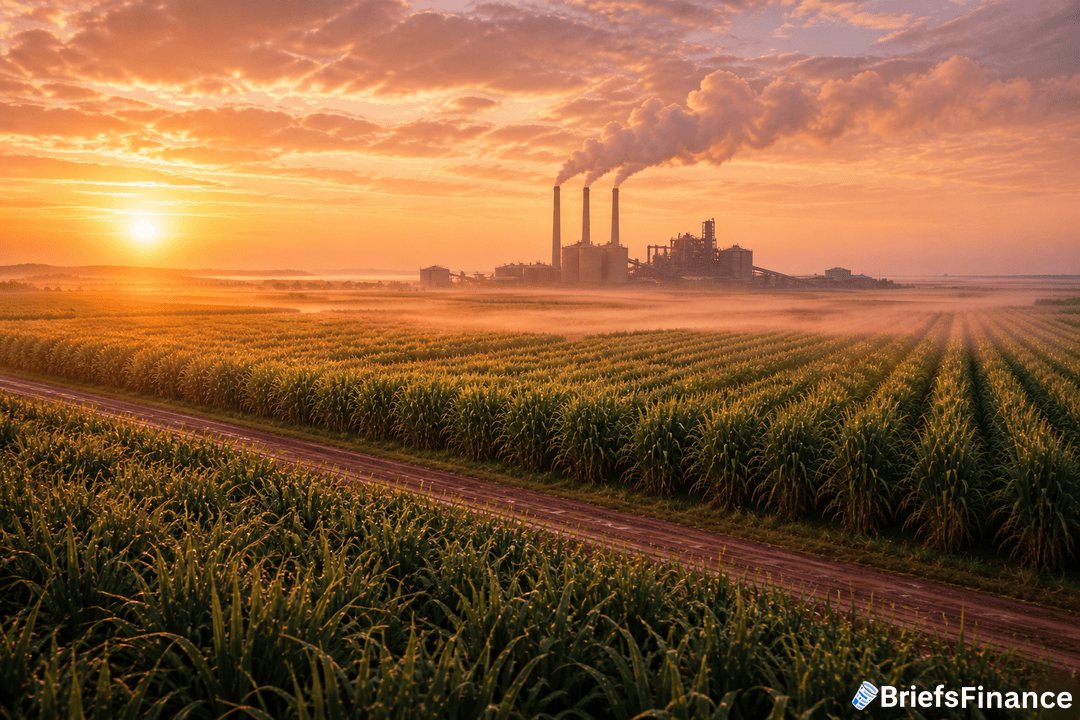
Brazil is the world's biggest cane grower. Its mills can pick what to do with the crop. They can crush it into raw sugar for export. Or they can turn it into ethanol, the fuel that gets blended into gas.
That choice usually comes down to which market is paying more.
With oil prices up sharply because of the Iran war, ethanol is suddenly the better deal. Investors are pricing in less sugar because Brazilian mills are likely to push their crop toward fuel.
The supply picture is shrinking fast
Trading firm Czarnikow now sees a global sugar surplus of just 1.1 million tonnes for the 2026/27 season. Back in February, that same call was 3.4 million tonnes.
Most of the cut comes from El Nino risk. That's the weather pattern that can hurt cane harvests in Brazil, India, and Thailand. Together, those three grow most of the world's sugar.
Brazil's 2026/27 harvest just started this month. It's moving along under drier weather. But traders are still pricing in tighter supply for the year ahead.
Less expected sugar means short sellers, the traders who profit when prices fall, are unwinding their bets.
Why it matters for investors
Sugar can move quickly when supply outlooks change. It also drags a lot of food prices with it. Higher raw sugar shows up in everything from packaged snacks to soft drinks to candy a few months down the line.
There's also a lesson hiding in this story. Energy markets and food markets are more linked than they look. The next time oil moves on a Middle East headline, sugar might be the second move to watch.
Stocks and ETFs in the orbit of sugar
Investors who want sugar exposure tend to look at a few names. The Teucrium Sugar Fund, ticker CANE, tracks raw sugar prices. The Invesco DB Ag Fund, ticker DBA, holds sugar in a mix with corn, wheat, and soy.
On the stock side, big sugar firms include US giant ASR Group, Brazil's Cosan, and India's Balrampur Chini. None of them trade like the ETFs. But they tend to follow the raw sugar curve over time.
The cleanest play remains the futures itself. Stocks add firm-level risk on top of the price of sugar.
What other soft goods to watch
Sugar isn't the only soft good moving on the Iran war. Coffee is up. Cocoa is up. Even orange juice has felt the bid.
Soft goods are sensitive to two things at once: energy costs and weather. The Iran war has hit the first one hard. El Nino is hitting the second.
That double hit makes soft goods one of the most exposed groups in the market right now. It's the kind of setup that can move fast in both directions.
Worth Noting
Iran is roughly 7,000 miles from a Brazilian sugarcane field. The price still notices.