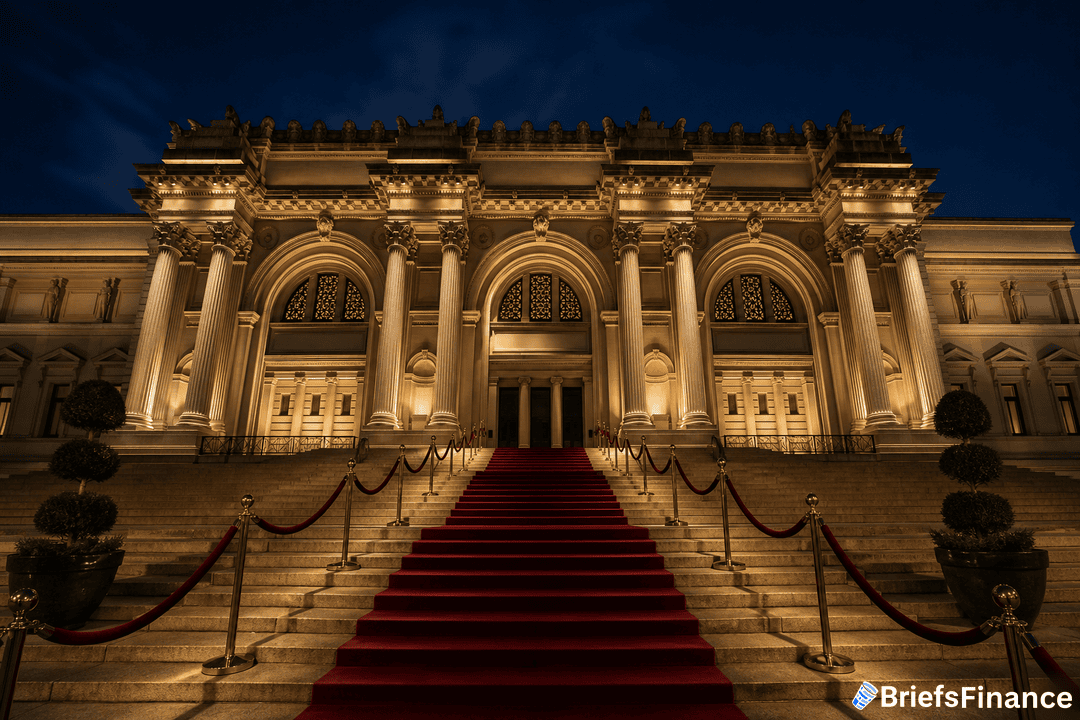
Tonight's Met Gala will set foot on the most expensive carpet in fashion history. Individual tickets jumped to $100,000 this year, up from $75,000 in 2025, while tables of 10 hold steady at $350,000.
The eye-watering numbers aren't really about who can afford a seat. They're about who's footing the bill, and the answer says a lot about how marketing money flows in 2026.
The Costume Institute Has To Self-Fund
The Met Gala is the official fundraiser for the Metropolitan Museum of Art's Costume Institute. It's also the only Met department that doesn't get direct museum funding, so it pays for its own shows, staff, and operations every year.
Last year's gala brought in a record $31 million. That's a single night doing the financial work of an entire yearly budget.
For investors who follow luxury and consumer brands, that math matters. The gala isn't just a celebrity dinner with a high price tag - it's a marketing-and-fundraising auction where access is the asset.
Who's Actually Buying The Seats
Most attendees don't pay for their own tickets. Luxury fashion houses, beauty firms, and corporate sponsors buy the $350,000 tables and invite celebrities to fill them.
A celebrity in a designer's gown on the Met steps creates more brand exposure than a 30-second Super Bowl ad, and the news cycle around it lasts a full week.
Beyoncé is co-chairing this year, which means even higher-than-usual brand competition for table spots. Tech companies and financial firms are also showing up more often, deepening the mix of money behind the event.
A History Of Climbing Prices
Tickets started at $50 in 1948, about $674 in today's money. By 2010, they had risen to $25,000, with a table at $250,000.
The current $100,000 figure marks a roughly 33% jump from 2025 alone, and the climb keeps outpacing inflation while demand keeps rising.
Why? The theme this year is "Fashion Is Art," and the rules around it are tight. Phones are banned, the dress code is required, and certain foods get cut from the menu so guests don't ruin their outfits.
What Investors Should Take From It
Luxury brands keep paying more for less seats, which says something about the industry's read on demand. Even with criticism over wealth and access, the table waitlist hasn't shrunk.
For consumer-brand investors, that's a useful signal. Companies still see the gala as the single best night to put their products in front of every magazine, fashion site, and social platform on the planet.
Worth Noting
The price climb keeps outpacing inflation, demand keeps rising, and brands aren't just willing to pay - they're competing for limited slots.
If you want to know what one of the hottest forms of luxury marketing looks like in 2026, look at who shows up to this dinner.