Free NewsletterPro Login

Canberra Seeks New Rules for Data Centre Power and Water Use

Published Aug 24, 2026
Share:
Summary:
  • Australia is moving toward a national standard for data center electricity and water consumption.
  • Prime Minister Anthony Albanese will present the proposal to state and territory leaders on Wednesday.
  • The same government plan calls for baseline requirements around copyright, security, and safety in AI model training.

What Australia Is Trying to Do

Australia is welcoming data center investment, but it insists on guardrails. The planned rulebook extends beyond physical infrastructure. There would be one framework for the facility itself and another framework for the system operating inside it.

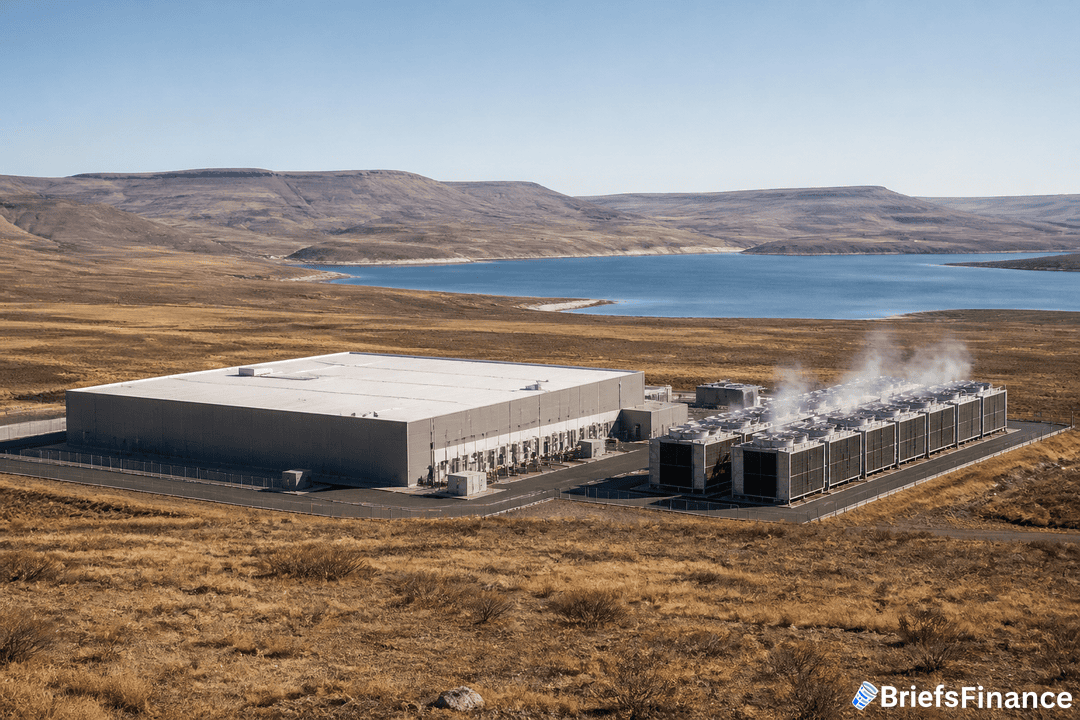
The pressure reflects a larger reality: data centers no longer run quietly in the background. They consume community electricity, water, and land while serving AI companies that want more capacity. A single national standard can give investors clearer expectations and give communities a baseline level of protection before a project breaks ground.

The Energy Fight Behind the Headline

Data centers use massive amounts of power and water because they run around the clock. That makes their impact different from a typical factory. A new facility can push household bills higher if it puts the grid under strain.

The best financial decisions come from understanding the whole picture. Join Market Briefs free and get the full brief each morning.

Energy Minister Chris Bowen has been direct about what is at stake. He said the government would not permit a "race to the bottom" where states compete for data centers by sacrificing affordability, reliability, and emissions targets. On Sunday, Bowen pushed back against Queensland's objections, arguing that proper rules can attract investment without letting data centers avoid their responsibilities.

Bowen's position is that data centers should supply their own renewable power, with peaking gas plants backing them up during high demand. That approach stands sharply apart from a "build now, worry later" philosophy.

Prime Minister Anthony Albanese is scheduled to address business leaders on Tuesday. His argument combines economic opportunity with public accountability. "Australia can do more to unlock frontier AI development," he says. "We must shape this change to harness the positive opportunities while minimising the downsides."

He also stresses that public support matters. "Australia is in a strong position to attract investment in data centers, but maintaining the social license will be essential," he said. "That means ensuring energy bills do not rise, water security is maintained and locations are appropriate."

What This Could Mean for Investors

A data center appears digital, but it is deeply physical. It needs land, electricity, and water from systems that also serve daily life. If Australia requires data centers to bring their own renewable power, the project economics change before construction begins.

The AI boom has lifted utility and energy shares, but policy now decides where data centers can operate, who pays for new grid connections, and how much water they can consume. If other governments follow Australia's model of "build, but the system must hold," the AI build-out can continue but the cost will be higher.

The investment story is shifting. It is no longer only about data center growth and AI adoption. It is also about whether AI can coexist with households, farms, and fragile power grids in the physical world. The final price of that coexistence will be written in future infrastructure bills.

Australia's proposal covers one country, but the judgment is not limited to its borders. Data center investment has become a story about public policy, water, utility limits, and local pain. The next few months will show if other governments adopt the same balance between technological ambition and the physical limits of the grid.

Markets move every day, and most of it never reaches you in time. Get the free Market Briefs daily newsletter and stay ahead of it.

Disclosure

Recent News

1 2 3 … 106

Get Market Briefs delivered to your inbox every morning for free!

No fluff. No noise. No politics. Just finance news you can read in 5 minutes.

Blogs

October 16, 2026
How Boring Math Makes You Rich: The Briefs Money Spreadsheet, Explained
  • Briefs Money shows you what to do with every paycheck, and in what order: how much to spend, save, and invest, when to build an emergency fund, and which debt to pay off first.
  • The Climb to Wealth course walks you through the system step by step, and the Personal Finance Spreadsheet is where you track your own numbers.
  • Investing is one piece of building wealth. The system that gets money to your investments, and keeps it there, decides the outcome.
Read More
October 16, 2026
Common Investing Mistakes: Why a Stock Grade Is One Tool, Not the Whole Toolkit
  • The Briefs Score shows growth, income, and wealth preservation investors how well a stock fits their goal, with a separate letter grade for each one.
  • The most common mistake is treating the letter as an instruction. An A tells you a stock scores well for one goal, not that you should buy today.
  • Research works best as one input in a process you own. The grade shows how a stock stacks up. You supply the goal, the timeline, and the rules for being wrong.
Read More
October 16, 2026
How to Read a Company's Numbers Without a Finance Degree (Using Briefs Terminal)
  • Briefs Terminal lets you size up any public company in about ten minutes: what the stock costs, what it earns, how fast sales are growing, and what it pays you, all on one page.
  • It lines those numbers up against the company's closest competitors for you, so you can tell if a number is impressive or just average.
  • Below that are the income statement, balance sheet, and cash flow statement from the company's SEC filings, the latest news, and transcripts of its earnings calls.
Read More
October 16, 2026
What Type of Investor Am I? The Three Investor Archetypes, Explained
  • Briefs sorts its stock grades and monthly reports by three investor goals: growth, income, and wealth preservation. Pick yours and you know which report and which grade to read first.
  • Growth investors want stocks that beat the S&P 500. Income investors want to get paid in cash. Wealth preservation investors want stocks that hold up when the market drops.
  • The same stock can score an A- for one goal and a D- for another, so picking your goal comes before picking any stock.
Read More
October 16, 2026
How to Build a Stock Watchlist That Isn't Just Stocks You Heard About
  • A watchlist on Briefs Terminal lets you group stocks by the idea you're tracking and follow each one's price, one-day move, and 52-week high and low in one place.
  • Each list has its own name and description, so you always know why a stock is on it, and you can make as many lists as you have ideas.
  • The monthly growth, income, and wealth preservation reports under the Briefs Research tab hand you new themes to track that you didn't hear about online.
Read More
October 16, 2026
How to Choose an ETF That Matches Your Idea (Using the ETF Planning Tool)
  • The ETF planning tool takes an idea like "I want to invest in fast food companies," asks what you mean, and finds the ETFs that match, with the reasons, the holdings, and the sources.
  • Build a Plan then shows what your money could grow to in those ETFs over the years you choose, with conservative, expected, and optimistic estimates next to the S&P 500.
  • It gets you from an idea to an actual plan without researching dozens of companies one at a time.
Read More
October 16, 2026
Is This Stock a Good Buy? How to Use the Briefs Score to Tell If a Stock Fits the Way You Invest
  • The Briefs Score shows growth, income, and wealth preservation investors how well a stock fits their goal, with a separate letter grade for each one.
  • One stock can score very differently for each. Nvidia showed an A- for growth and a D- for income, because it grows fast and pays almost no dividend.
  • Seven sub scores under each grade show what earned the letter, so you can see exactly where a stock is strong or weak for your goal.
Read More
October 16, 2026
How to Tell an Asset From a Liability: The One Question to Ask Before You Buy Anything
  • The typical American household earned more in 2025 than in any year on record, yet only 30% of Americans say they could pay a surprise $1,000 bill from savings, so the problem isn't income but what the income gets spent on.
  • An asset puts money in your pocket and a liability takes money out, and the wealthy buy assets first, then let the assets pay for the fun stuff.
  • Before you buy anything, ask one question: does this put money in my pocket, or take money out of my pocket? Then you need a plan for the money you keep.
Read More
October 16, 2026
How to Build Your First $2,000 Emergency Fund and Wipe Out Every Debt Over 10%
  • Your first money goal isn't investing, it's $2,000 in its own account named Do Not Touch, built by moving 10% of every paycheck into it automatically.
  • More than a third of American adults couldn't cover a $400 surprise bill with cash or savings, according to the Federal Reserve, and that's how one bad day turns into years of credit card payments.
  • Once the $2,000 is there, attack every debt charging more than 10% interest, highest rate first, because you can't out-invest a 22% credit card so paying it off is the investment.
Read More
October 16, 2026
How to Invest Through a Crash: 3 Rules From the Worst-Timed Investor Alive
  • Meet Bunty, a fictional investor with the worst timing in history: he put $100,000 into the market in four chunks right before four crashes, never sold, and by 2025 it had grown to more than $500,000.
  • Investors who jump in and out of the market miss its best days, and missing just a handful of those days can cut your final result roughly in half.
  • The fix is ABB, Always Be Buying: you buy on a schedule through booms, crashes and scary headlines, which matches the market, and beating it takes knowing where the money is moving first.
Read More
1 2 3 … 29
Share via
Copy link