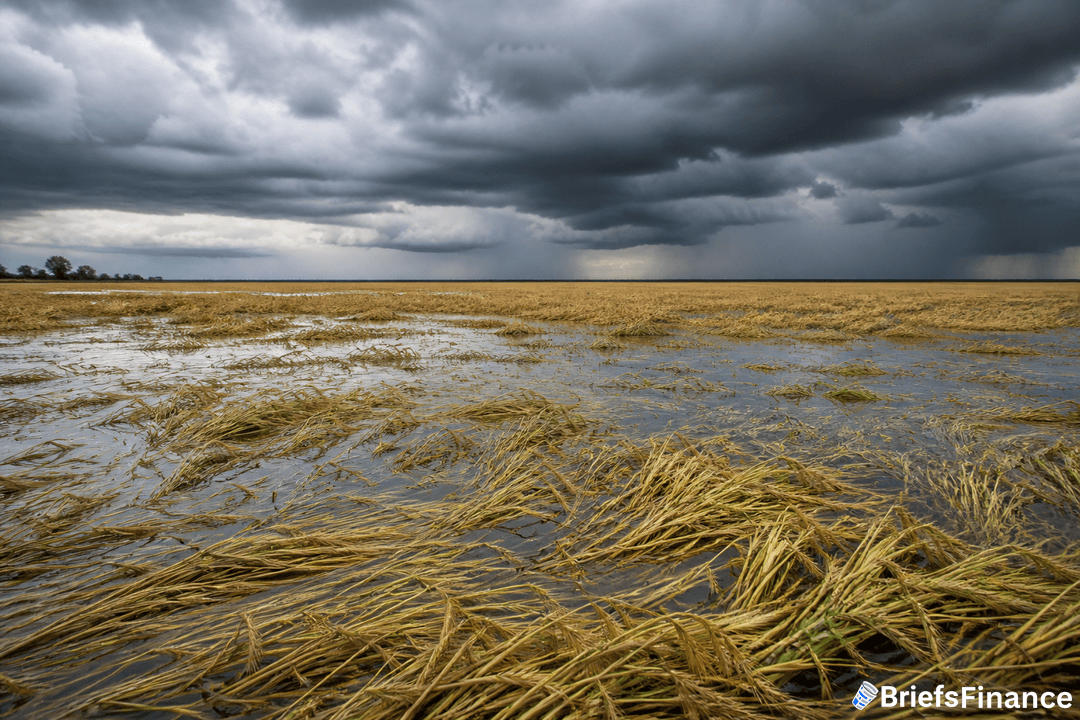
The corn in the ground right now is not looking great, and the prices at the grain exchange already know it.
Flooding across Indiana and Ohio is threatening soybean plants, a record tornado season in Illinois stressed crops, and heat waves limited yields. All of this is happening as the U.S. harvest was already expected to come up short of last year's bumper crop.
What the Crop Tour Found
The Pro Farmer Crop Tour, which has been scouting fields for 34 years, wrapped up its annual survey of Midwest farmland this week. The findings were not encouraging.
The tour estimates Iowa's corn yield at 194 bushels per acre. That is down from 198.4 bushels last year and well below the USDA's official forecast of 216 bushels per acre. Nationally, the tour's corn yield estimate sits 4.2% below what the USDA projected in its August report.
"Overall, corn yields were disappointing for everyone in the Midwest," said Maxence Devillers, a crop scout and grains analyst at Argus.
Chip Flory, who leads the tour's western leg and hosts the AgriTalk radio program, saw the same pattern in the fields. "In corn, lower ear populations, shorter kernel depth and inconsistent field performance limited upside in several areas," he said. "Soybeans showed pockets of strong potential but remain more dependent on late-season weather and plant health."
Markets move every day, and most of it never reaches you in time. Get the free Market Briefs daily newsletter and stay ahead of it.
The problems are not just in the U.S. Europe is looking at its most meager corn harvest in 19 years, and ongoing attacks between Russia and Ukraine keep threatening wheat shipments from the Black Sea. Global grain supplies are tightening from multiple directions at once.
China Steps Back Into the Market
Here is where the story gets complicated. The White House says China has agreed to buy 25 million tons of U.S. soybeans annually, plus $17 billion in additional agricultural purchases. But federal export data reveals that by mid-August, China had purchased only about 5.7 million tons of U.S. soybeans.
That gap is starting to close. The USDA announced a sale of 712,000 tons to China on Friday, the largest single-day amount this year. The buying is ramping up ahead of a planned September meeting between President Donald Trump and Chinese President Xi Jinping.
Lee Brooke, president-elect of the Iowa Soybean Association, is not convinced China is back for good. "They're not looking for us first, they're going to other places to buy their needs," he said.
He is not wrong to be cautious. China has increasingly turned to South America for soybean purchases while U.S. tariffs were in place. Winning back a customer takes more than one big order.
The weather damage is pushing prices up, though. This week, Chicago corn futures crossed above the $5 per bushel level, a threshold not breached since early 2025. That is good news for farmers who have crops worth selling, even if it is bad news for anyone buying groceries.
What Higher Prices Mean for You
Indiana farmer Kip Tom, a special adviser to USDA Secretary Brooke Rollins, said some growers in his area saw eight to 18 inches of rain. "We had people with anywhere from eight to 18 inches of rain," he said. "There's a lot to learn about the losses and yield impacts."
Pro Farmer data analyst Carolan put it more bluntly. "We got saturated at a critical time," she said. "It's been stress on top of stress."
Not every farmer is hurting. Nick Goslar, who farms in western Iowa, expects his yields to land right around last year's levels, which he called "good enough." Brian Nilson, who farms 600 acres, is in a similar spot. "To get good prices in farming, somebody has to have problems," he said. "I've got a good crop, and with how things look elsewhere, maybe we have a shot at decent prices."
Deere & Co., the equipment maker that watches farm conditions closely, said things are stabilizing but does not expect a more pronounced recovery until 2027.
The bottom line: When crops shrink, prices rise. That means higher costs for food down the road, but it also means the farmers who managed to dodge the worst weather are finally getting paid for it. For your portfolio, the takeaway is simpler. The weather is always the wild card in agriculture, and this year it is playing a bigger hand than usual.
The money story behind the headlines is usually the part that matters. Join Market Briefs free and get it every morning.