Free NewsletterPro Login
S&P 500 6,287 +0.42%
DOW 44,521 -0.18%
NASDAQ 21,103 +0.71%

Warning: Undefined variable $funds in /var/www/briefs.co/htdocs/wp-content/plugins/oxygen/component-framework/components/classes/code-block.class.php(133) : eval()'d code on line 491

Warning: foreach() argument must be of type array|object, null given in /var/www/briefs.co/htdocs/wp-content/plugins/oxygen/component-framework/components/classes/code-block.class.php(133) : eval()'d code on line 491
/* the link was here */

Grassroots Donations for Nixon's Florida Campaign

Published Aug 22, 2026
[tts_player]
Share:
Summary:
  • Nixon raised nearly $1 million after winning the Democratic primary, with an average gift of $38.
  • Her campaign spent just $50,000 on digital ads in the primary and projects an additional $1.5 million by Friday.
  • Incumbent Senator Ashley Moody has collected over $11 million, and Florida's voter rolls show a 1.5 million Republican advantage.

The Money Gap

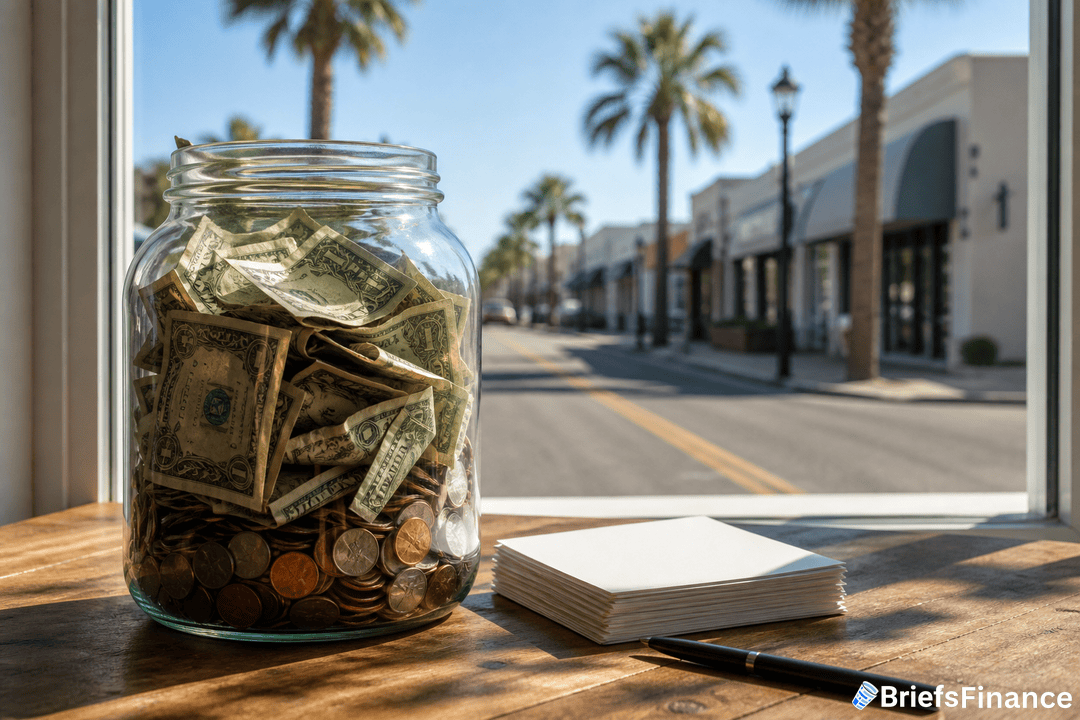
Nixon, a 42-year-old democratic socialist, defeated a better-funded opponent in the primary. She does not claim she can match Moody's war chest. Instead, her campaign is betting on a different kind of machine: a rapidly growing list of small-dollar donors who give early and often.

Her primary digital ad outlay came to just $50,000, with an additional $1.5 million expected by Friday. That sudden influx changes how the campaign operates. A small-donor base allows a team to test messages, hire organizing staff earlier, and build a field program ahead of the general election. Nixon's primary victory followed a campaign that invested only $50,000 in online advertising against a wealthier rival, suggesting she can stretch each dollar further than campaigns relying on expensive consultants.

A strong network of small contributors also gives the campaign a pool of potential volunteers. People who give $38 now can be asked to knock on doors, host phone banks, and turn digital enthusiasm into real-world turnout. The modest average contribution signals deep grassroots engagement, not support from a few wealthy backers. The rapid pace of donations points to an energized base that could sustain a ground game throughout the fall.

The Small-Dollar Strategy

"We don't need to match them at all dollar for dollar," Nixon said. "We need to out-organize them."

Small checks add up fast, so grab the free Always Be Buying E-Book to build wealth steadily on any income.

That approach is built on more than hope. Her platform includes Medicare for All and tuition-free public college. She has drawn endorsements from progressive figures like Bernie Sanders. Her primary win came after a low-budget media strategy that relied on social media and local events rather than expensive television ads.

The quick cash injection gives Nixon flexibility. She can pour money into targeted digital ads, hire field organizers, and fund mailers in a state where media markets are notoriously expensive. Even without matching Moody's total, the steady flow of small gifts allows her to stay visible and responsive. Every $38 contribution also adds a name to a contact list that can be activated for volunteering, donation drives, and get-out-the-vote efforts.

Florida's political landscape remains an uphill battle. Registered Republicans outnumber Democrats by 1.5 million, a structural disadvantage no amount of small-dollar enthusiasm can erase. Yet Nixon's campaign sees the numbers differently.

A donor who gives early is likely to vote and to later bring her friends. The $38 average is not just a funding mechanism; it is a recruitment tool.

Nixon, a former state representative, has made economic populism the centerpiece of her campaign. Her calls to expand Social Security and Medicare have connected with working-class voters across party lines, even as she faces headwinds in a state that has trended Republican in recent cycles. Political analysts note that while her path to victory remains narrow, her ability to energize young and minority voters could have down-ballot implications for Florida Democrats.

The race will test whether a campaign powered by many small gifts can overcome a well-funded opponent in a large, expensive state. Nixon's team believes that the urgency behind her primary win can build a broader movement. They point out that she barely spent on ads and still defeated a candidate with deeper pockets. That carefulness may matter more than the race's raw total in the final stretch.

As the campaign moves forward, every small check adds to the message that ordinary people can shape a Senate race. The real outcome may not be known until November, but the early signs suggest Nixon's playbook is gaining momentum. For now, the $38 donations have changed the race's mechanics, even if they haven't yet changed its outcome.

Just like grassroots donations, consistent investing wins, so download the free Always Be Buying E-Book for a simple wealth plan.

Disclosure

Recent News

1 2 3 59

Get Market Briefs delivered to your inbox every morning for free!

No fluff. No noise. No politics. Just finance news you can read in 5 minutes.

Blogs

June 29, 2026
Portfolio Diversification: Why Putting All Your Eggs in One Basket Destroys Wealth
  • Real diversification means spreading investments across all 11 economic sectors plus bonds, alternatives, and cash so no single bet can sink the portfolio.
  • Different sectors perform at different times, so a diversified portfolio captures upswings while smoothing the brutal drawdowns that wipe out concentrated bets.
  • Total market index funds offer the simplest path to diversification, and annual rebalancing is what keeps the structure working over time.
Read More
June 29, 2026
Non Taxable Income: What It Is and Why It Matters
  • Non taxable income is money you receive that you don't owe income tax on.
  • The tax code treats workers, investors, and business owners very differently, and investors often come out ahead.
  • Learning how income is taxed is a quiet superpower for keeping more of what you earn.
Read More
June 29, 2026
Semiconductor Stocks: A Simple Guide for Investors
  • Semiconductor stocks are companies that design and make computer chips, the brains inside nearly every modern device.
  • The AI boom has turned chips into one of the market's most important and most watched groups.
  • They offer big growth potential, but come with high valuations and a notoriously cyclical history.
Read More
June 25, 2026
How Stocks Work: A Simple Guide for Beginners
  • A stock is a slice of ownership in a company - buy one, and you own a piece of the business.
  • You make money two ways: the share price rising over time, and dividends paid to shareholders.
  • The simplest path for most beginners is buying into the whole market through a low-cost index fund.
Read More
June 25, 2026
Stop Loss vs Stop Limit: What's the Difference?
  • A stop loss order sells your stock once it hits a trigger price, prioritizing getting you out.
  • A stop limit order only sells within a price range you set, prioritizing price over a guaranteed exit.
  • The trade-off: a stop loss almost always executes; a stop limit might not if the price moves too fast.
Read More
June 25, 2026
Energy Stocks: A Simple Guide for Investors
  • Energy stocks are companies that produce and supply the power the world runs on, from oil and gas to newer sources.
  • They make up one of the 11 sectors of the market and tend to move with energy prices and big-picture shifts.
  • Like any sector, the key is diversification and understanding the forces driving demand.
Read More
June 18, 2026
What Is a Stop Loss Order? A Simple Guide
  • A stop loss order automatically sells a stock once it falls to a price you set.
  • It's a tool to cap losses or lock in gains without watching the market all day.
  • It works best for active strategies, and can backfire if used carelessly on long-term holdings.
Read More
June 18, 2026
Best S&P 500 Index Fund: How to Choose One
  • The best S&P 500 index fund for most investors is simply the cheapest, most established one that tracks the index well.
  • Funds like VOO, IVV, and SPY all hold the same 500 companies, so the biggest difference is the fee.
  • Pick one, automate your buys, and let time do the heavy lifting.
Read More
June 17, 2026
What Are Penny Stocks? Risks and Rewards Explained
  • Penny stocks are very low-priced shares of very small companies, often trading for just a few dollars or less.
  • They promise huge gains but carry huge risks: low liquidity, high failure rates, and wild price swings.
  • Most investors are better served by quality companies and funds than by chasing cheap shares.
Read More
June 17, 2026
Best Stocks for Beginners With Little Money
  • The best stocks for beginners with little money usually aren't individual stocks at all - they're low-cost index funds.
  • You can start with $100 or less and use small, regular investments to build wealth over time.
  • Focus on diversification and consistency, not on picking the next big winner.
Read More
1 2 3 24
Share via
Copy link