India's Solar Surge Hits a Critical Obstacle
India's solar expansion is colliding with a practical issue: the grid often cannot accept the energy the sun produces. Solar is the country's leading renewable source, generating the most power during daytime and summer. But this year, during the hottest months, roughly 11% of solar generation was discarded due to grid limitations, despite record-breaking demand.
The Math Behind the Waste
The worst month for cutbacks was May, as extreme temperatures pushed power consumption to a never-before-seen peak.
The exposure is most acute for certain projects. That includes about 18 gigawatts of solar-only plants, plus an additional 14 to 15 gigawatts of capacity that was contracted at elevated rates. "Projects that are not equipped with battery storage are unlikely to find buyers," Renewables Secretary Santosh Kumar Sarangi said on Friday at the BNEF Summit in New Delhi.
The best financial decisions come from understanding the whole picture. Join Market Briefs free and get the full brief each morning.
A Global Grid Problem
India is not unique. Worldwide, power networks are finding it hard to match the swift growth of solar and wind installations, which leads to times of surplus power that compel grid operators to switch off some generating units to safeguard hardware and avoid outages.
India's challenge is partly geographic. Northern and western states have found it difficult to build transmission infrastructure fast enough to keep up with the growth of solar power. Around 21 gigawatts of renewable installations in the nation can only use the grid on a limited schedule, making them more vulnerable to output cuts, which is hindering growth and could decelerate the energy shift.
India's renewable push has been among the fastest in the world, but the transmission network has not kept pace. Many solar plants sit in sunny states far from the cities where demand is highest, and new high-voltage lines take time to construct. That mismatch is why the government is now focusing on storage as a key part of the transition.
What It Means for Your Money
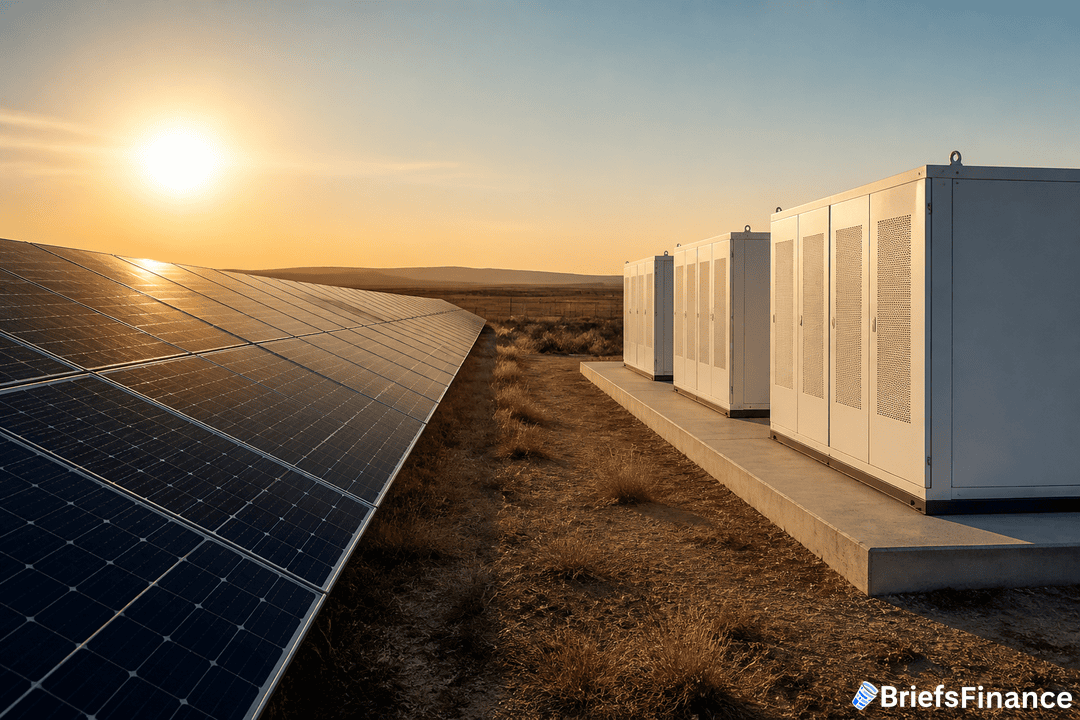
So what does this mean for you as an investor? The key is that India is banking on more spending in battery storage to reduce the growing amount of solar power that gets wasted. The idea is that batteries can store excess solar power during the day and release it when the sun sets, smoothing out supply and avoiding waste.
This signals a major opportunity in the storage and grid infrastructure space. Developers of solar projects are increasingly incorporating batteries to appeal to customers who require power around the clock, according to Sarangi.
But it also highlights a risk for solar developers who haven't locked in buyers yet. The almost 42 gigawatts without offtake contracts is a lot of potential supply looking for a home - and not all of it may find one.
The bottom line: The solar transition isn't just about building more panels. It's about building the grid that can carry that power to homes and businesses, and store it for use after dark. That's where the next wave of opportunities and risks lie.
Markets move every day, and most of it never reaches you in time. Get the free Market Briefs daily newsletter and stay ahead of it.