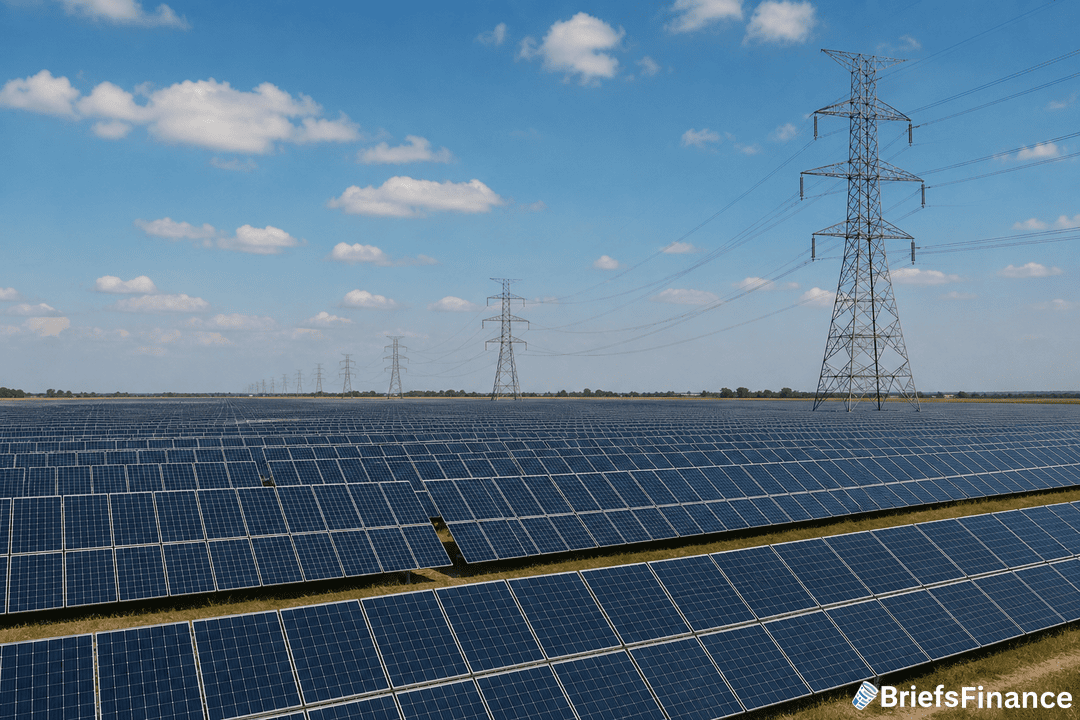
The Midwest Overtakes the Mid-Atlantic
The largest U.S. electricity system by capacity no longer sits along the dense urban corridor between Washington and Boston. It is now in the middle of the country, where a burst of new solar farms has quietly reshaped the map of American electricity.
The Midwest power grid, run by a group called MISO, now has the largest generating capacity of any electric system in the United States. It pulled ahead of PJM Interconnection, the grid serving the Mid-Atlantic region that had held the top spot until last year.
Think of generating capacity as the total amount of power a grid can produce at a single moment.
Even though PJM built slightly more individual solar units, the ones going up in the Midwest were much bigger. According to BloombergNEF, the solar projects on the Midwest grid since early 2024 were close to double the average size of those in the Mid-Atlantic.
All of that new power serves a huge customer base. MISO provides electricity to 45 million people across 15 states, from Indiana and Missouri up through Minnesota.
Why the Rush to Build Solar
The push for more power is coming from a simple squeeze: as one grid official said, "demand is spiking, and nobody wants the lights to go out."
Understanding what moved a market beats knowing that it moved. Get the free Market Briefs daily newsletter and follow the drivers.
Demand is being driven by the explosion of data centers built for artificial intelligence, which suck up electricity around the clock, and by extreme summer heat, which sends air conditioners roaring and strains the whole system. Both MISO and PJM saw heavy demand this summer, and PJM likely set a 20-year record for power usage in early July.
High electricity prices and the fear of shortages have pushed utilities and politicians in both regions to get serious about expanding the grid. In the Midwest, that push has led straight to solar fields.
The buildout has been, as one energy observer said, "surprisingly bipartisan." Illinois contributed the most new solar of any state in the region, but Republican-led Indiana, Arkansas, and Missouri followed close behind.
This all happened even as the Trump administration ended federal solar tax credits and slowed projects with permitting delays. The economics of solar have gotten strong enough that, at least in the Midwest, the projects kept coming anyway.
Why the Capacity Race Matters
The capacity race matters because grid operators must prove they can meet expected peak demand. Data-center growth and hotter summers are pushing those peaks higher, and the region that builds first gains an edge in attracting more investment. MISO's lead over PJM is narrow, but its pace of solar construction suggests the gap could widen.
What This Means for Your Money
This is a story about where the country is heading, and it touches your portfolio in a few ways.
For anyone holding utility stocks, this is a signal that the companies plugged into the Midwest grid are investing heavily in growth. When a grid adds that much capacity, it means construction dollars are flowing, and those projects will generate revenue for years. It also means these utilities are positioning themselves to serve the AI boom, which is the kind of demand that does not fade after one hot summer.
For broader market watchers, the shift is a sign that the AI story is not just a chip story. The Midwest just made a big bet on solar being the answer, and the early numbers suggest the bet is paying off.
The country's power needs are growing faster than anyone expected, and the regions that build capacity first will be the ones that keep the lights on, keep prices in check, and attract the next wave of data centers and factories. Right now, the Midwest is winning that race.
For your money, that is worth paying attention to. The companies that supply the power for the AI era might not be as flashy as the chipmakers, but they are just as essential.
A few minutes a day is enough to stay genuinely informed about your money. Join Market Briefs free and start tomorrow.