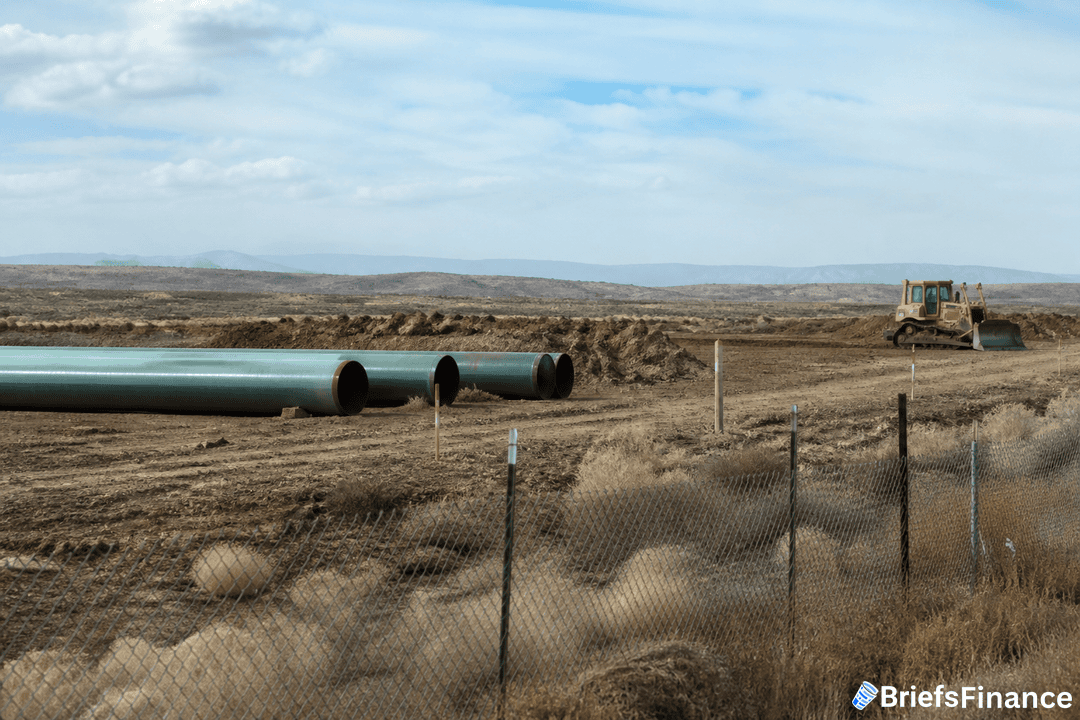
The natural gas pipeline that would power a massive Oracle data center in New Mexico has hit yet another delay, and the new schedule is already drawing skepticism.
Transwestern Pipeline filed the updated timeline with federal regulators.
The pipeline is intended to fuel Oracle's proposed data center, called Project Jupiter, located just north of the U.S.-Mexico border. That facility is part of Oracle's larger Stargate contract with OpenAI, and it would rely on as much as 2.5 gigawatts of natural-gas-fueled fuel cells supplied by Bloom Energy Corp.
The holdup centers on a land dispute. Local residents have also raised environmental concerns about the project.
The pipeline would move up to 400 million cubic feet of gas each day. While that sounds substantial, it represents less than half a percent of the natural gas consumed daily across the lower 48 states. Still, for a single data center, it's a significant supply.
The catch: The project has already secured public funding and tax incentives, meaning taxpayers have a financial stake in its completion.
Infrastructure delays remind us that steady habits matter, so get the free Always Be Buying eBook.
Analysts Question the Feasibility
Oracle has been pushing for a faster resolution. In a filing with federal regulators last month, the company warned that any further delays "jeopardize the broader objectives of Project Jupiter." The data center is expected to involve spending of up to $165 million in Doña Ana County, New Mexico.
An Oracle spokesperson pushed back against the skepticism, stating: "Our team is fully engaged with all stakeholders and remains confident in the project's completion." The spokesperson added that Oracle is evaluating alternative power sources in the interim.
The market reaction was muted but telling. Oracle's stock slipped 3.6% following the announcement, while Energy Transfer's shares rose 1.5%. Neither Bloom Energy nor Transwestern commented on the revised schedule.
What This Means for Investors
The delay highlights a broader reality: the AI boom's insatiable appetite for electricity is colliding with the slow, messy process of building new energy infrastructure. Natural gas pipelines, transmission lines, and even solar farms all face permitting hurdles, land rights battles, and community opposition.
For Oracle and its partner OpenAI, the timing matters. The Jupiter facility is expected to support training and inference workloads for large-scale AI models. Every month of delay could affect the companies' ability to meet compute demand.
Energy Transfer, meanwhile, has deep experience navigating regulatory challenges, but the repeated setbacks suggest the Green Chile Project may face structural opposition that won't be easy to solve.
For now, the Feb. 1, 2027 target gives developers roughly a year to resolve the land dispute and begin construction. Whether they can meet that window remains an open question - one that investors and customers will be watching closely.
When big plans slip, steady habits matter. Check out this guide to consistent investing.
When big plans slip, consistent investing still builds wealth, so download the free Always Be Buying eBook.