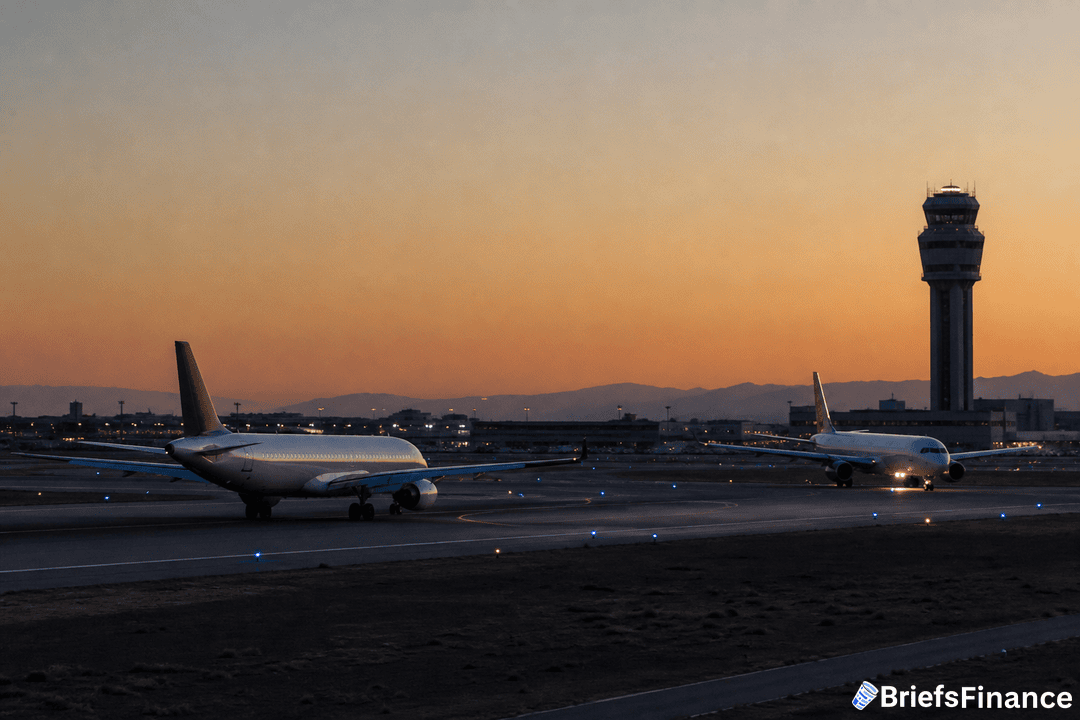
Two American Airlines planes sharing the same flight number came within moments of disaster at Phoenix Sky Harbor airport near midnight on Friday.
The inbound flight and the outbound flight were both using the call sign 2482. One was landing while the other was taking off, and they were heading straight toward each other on the same radio frequency.
The air traffic controller on duty had to scramble to keep them apart. He called the situation "pretty incredible" and said it "could have been disastrous."
A Close Call That Shook a Veteran Controller
The controller has been directing air traffic for 25 years. He said he had never seen anything like it.
"I've been working air traffic for 25 years. I've never seen two aircraft pretty much merge with the same call sign," he said.
Close calls show how small mix-ups can lead to disaster, so grab the free Always Be Buying eBook to build wealth steadily.
Here is what happened. Flight 2482 runs as a round trip between Chicago and Phoenix, and both legs carry the same flight number. The inbound plane arrived late, while the outbound plane left close to its scheduled time.
When a controller talks to a pilot, the call sign is how everyone knows who is being addressed. Two planes with the same one on the same frequency is a recipe for confusion. A pilot could easily follow instructions meant for the other aircraft.
The controller had to separate the two planes manually, then filed a mandatory occurrence report, known as an MOR. That is the formal process air traffic controllers use to document safety incidents for review.
What the Airline and Regulator Say
American Airlines said it is looking into what happened. The company maintains that the planes kept proper separation throughout.
The Federal Aviation Administration, which oversees air traffic control, is also investigating. The agency said its controllers noticed the duplicate call signs and ensured the aircraft maintained the required distance, allowing both flights to continue without further issue.
So nobody got hurt, and the planes never actually touched. But the fact that a 25-year veteran called it the closest call he has ever seen tells you how serious this was.
What This Means for You
Near misses like this one are rare, but they matter because they expose cracks in systems people assume are bulletproof. Air travel is statistically incredibly safe, and that safety comes from layers of redundancy. When one layer fails, another catches it. Here, the controller was the layer that caught it.
The agency's investigation will determine whether the system needs a fix. The airline's review could lead to changes in how flight numbers are assigned or how late arrivals are handled. That is the part worth watching.
For you as a traveler, the takeaway is not that flying is dangerous. It is that the people watching the skies are paying attention, even when a scheduling quirk creates a situation they have never seen before. The system held. But it held by a thinner margin than anyone would like.
When even experienced controllers catch a lucky break, having a simple system matters, so get the free Always Be Buying eBook.