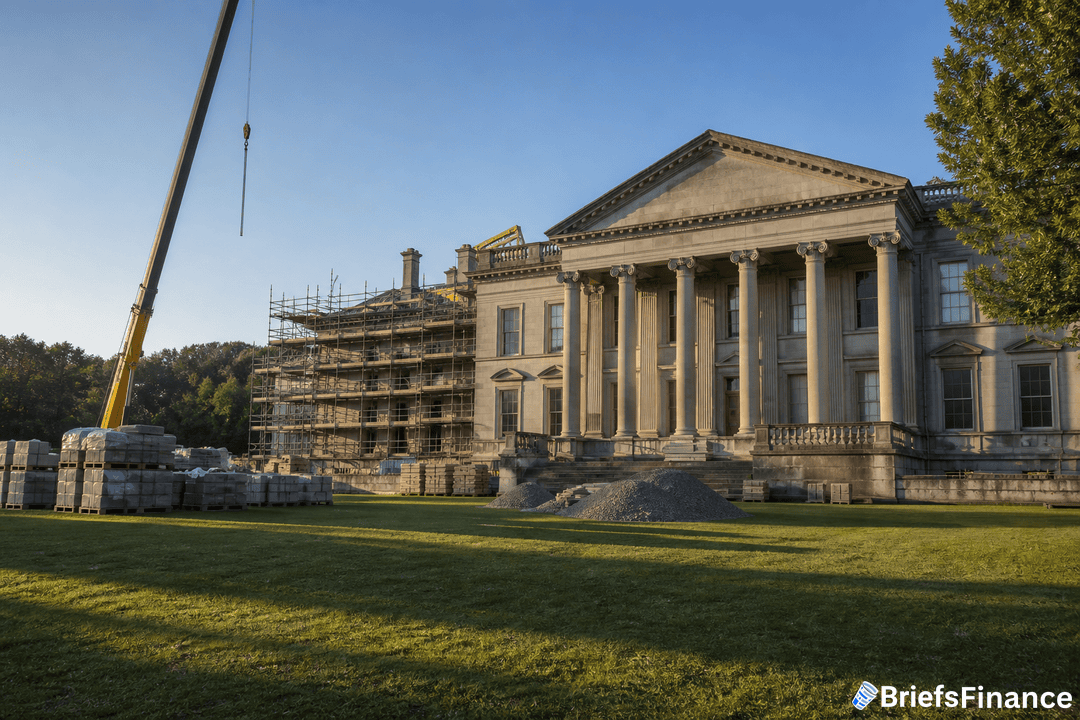
A $400 Million Ballroom Reaches the Supreme Court
The White House is at the center of a legal fight over a $400 million ballroom, and the Supreme Court just got pulled in.
On Friday, Aug. 14, 2026, President Trump asked the justices to immediately set aside a court order blocking work at the demolished East Wing site. Trump's filing came seven days after the D.C. Circuit directed that the project be halted.
The case started with a demolition. Trump tore down the East Wing the previous year without giving Congress advance notice.
The National Trust for Historic Preservation, the group behind the lawsuit, has opposed the project. A federal district judge later issued a preliminary injunction, a court order that pauses work while a case is still being decided.
The Supreme Court now faces a quick decision. It can step in and set aside the injunction, or it can let the lower-court order stand.
The administration is asking the Court to do the former so construction can continue.
While the White House ballroom construction faces legal hurdles, claim your free Always Be Buying eBook for steady investing.
National Security Versus Legal Review
The administration says this is not an ordinary construction dispute. In the Supreme Court filing, U.S. Solicitor General D. John Sauer stressed the building's military role and called it an "integrated military complex" with a "totally secure ballroom space."
Sauer wrote that the injunction is "extraordinary and unlawful" and that the work is "vitally required by national security." He also argued that allowing it to stand "would wrongfully install a single district judge as sole arbiter" of what construction is "strictly necessary" for presidential safety.
There is more than a chandelier at stake. The plans include a rooftop drone landing facility, which Trump has described as a "drone port," and he has increasingly framed the ballroom as essential to national security and military preparedness.
The National Trust for Historic Preservation sees the case in very different terms. "The Administration's transparent efforts to evade the rule of law, frustrate judicial review, and limit the availability of meaningful relief in the courts must stop here," the group said.
The trust also opposed letting construction move forward while the appeal continues.
What This Means for Your Money
This is a legal case, but it is also a spending case. At $400 million, this is public money, which means it is your money.
The deeper issue is who gets to approve large government projects. Normally, Congress has a say in how public buildings are handled, but here the administration acted first and asked questions later.
If the Supreme Court lets construction continue, the work can move ahead while the legal dispute is resolved. If the injunction stands, construction stops until the case is fully decided.
There is no stock ticker for the East Wing, and this dispute is unlikely to move your portfolio by itself. But it is a reminder that government projects are funded with public money, and legal battles over them can tie up real dollars for a long time.
The court's decision will help define how much review is required before the next big public project breaks ground. For anyone paying taxes, that is a detail worth following.
Instead of focusing on one big project, learn to build wealth consistently with the free Always Be Buying eBook.