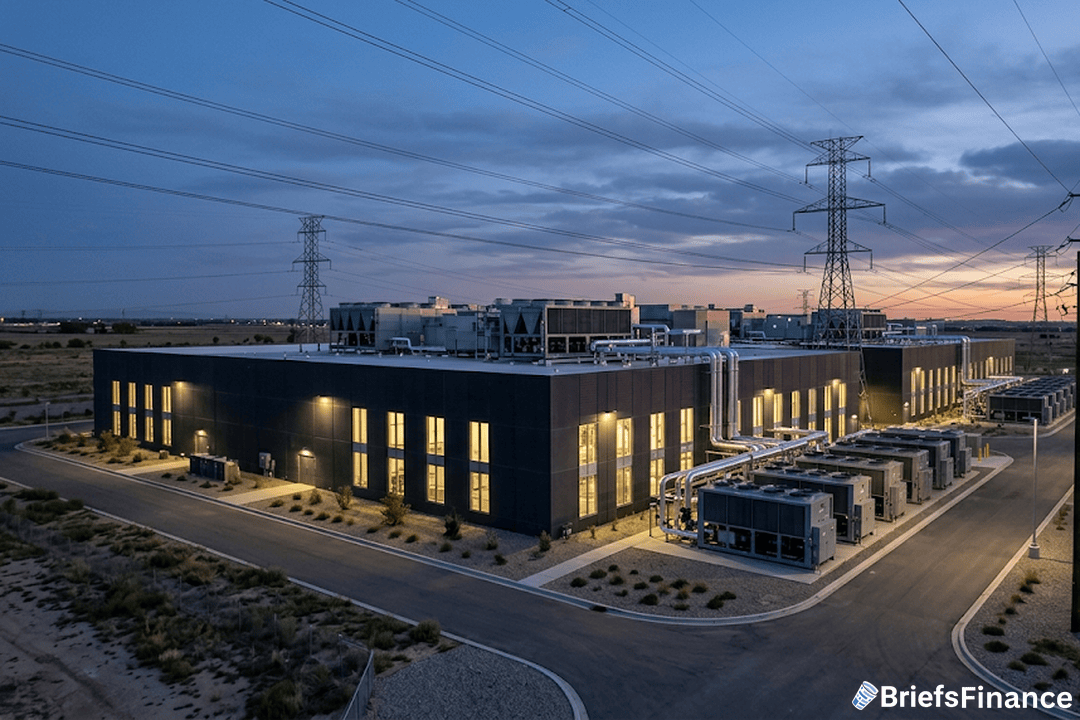
The buildings that power the artificial intelligence boom are getting a regulatory break, and that could mean a wave of new investment opportunities.
Data centers are the warehouses full of servers that make AI and cloud computing work. They are also incredibly expensive to build, and Wall Street has been financing that construction boom with bonds. Now the Securities and Exchange Commission has quietly made it easier for those bonds to reach investors.
What Changed and Why It Matters
The SEC said late last month that many data-center bond deals no longer need to follow the same investor protections as other asset-backed securities. Those are bonds backed by a pool of assets that generate cash, like auto loans or mortgages.
The rules in question were created after the 2008 financial crisis to protect investors from risky securitization practices. Securitization is when a company bundles loans or other debts and sells them to investors as bonds. After the crisis, regulators added requirements like risk retention, which forces the people selling the bonds to keep some of the risk on their own books instead of dumping it all on investors.
Here is the twist: data centers do not pay down gradually like a loan or a lease. A mortgage gets paid off over time. A data center just sits there and generates income from the companies that use it. The SEC staff wrote in a letter that because of this difference, securities tied to data centers should not face the same rules as auto-loan or mortgage debt.
The SEC's letter responded to a query by the law firm Latham & Watkins, which had sought clearer guidance. The firm's lawyers argued that the old requirements are costly, make little sense for some deal types, and have kept some issuers out of the market entirely.
Get the free Always Be Buying eBook and learn the simple system for building wealth on any income
"There was a growing need for this relief," said Kevin Fingeret, a partner at Latham & Watkins.
The Boom Behind the Rule Change
This is not a small corner of finance.
The surge tracks the AI boom. The Trump administration has backed the buildout, with the president signing executive orders last year to speed up AI development by easing regulations and boosting energy supplies for these power-hungry facilities.
The SEC guidance is not a formal rule change. It is a staff letter that gives issuers written permission to skip certain requirements they had been following out of caution, even when those rules did not fit. Now they have a document to point to if regulators ever question their deals.
Fingeret said data-center bond issuers already hold a significant amount of risk in their deals. Without that, they could not get strong credit ratings in the first place. He also noted that the old rules forced some companies into deal structures that did not match their actual business goals.
There is one limit to the new flexibility. The SEC's clarification does not cover every data-center deal. Bond offerings that use mortgages as collateral still have to follow the old rules, because the underlying security is a mortgage, not the data-center equipment itself.
What This Means for Investors
The practical effect is that more data-center bonds could hit the market, and the deals could become simpler and cheaper to put together. That matters because the construction boom shows no signs of slowing.
For everyday investors, the immediate takeaway is about how the AI buildout is being financed. The companies behind these facilities need enormous amounts of capital, and this regulatory shift makes it easier for that money to flow.
The bigger picture is straightforward. The investor protections created after 2008 were designed for a different kind of debt. Data centers are a new asset class, and regulators are starting to treat them that way. For anyone watching the AI boom, that means the bond market behind it is about to get a lot more active.
Download the free Always Be Buying eBook and start putting your money to work today