What Taalas Built
Nvidia controlled the opening phase of the AI boom with the GPU, a chip designed for many jobs at once. AMD is wagering that the next phase will reward chips that are deliberately inflexible.
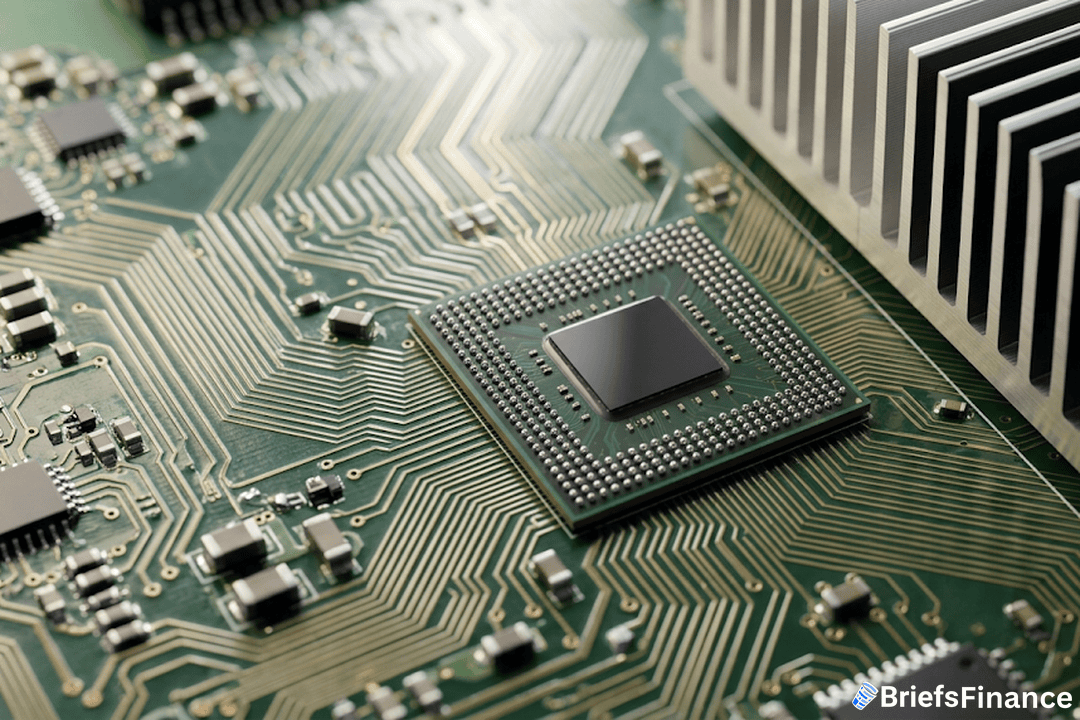
Taalas makes chips for AI inference, the step where a trained model actually answers a question, and each chip is hardwired to one specific model.
Taalas says those chips run thousands of times faster than a conventional GPU on the exact model they target. The tradeoff is flexibility, since a chip built for one model cannot easily switch to a new one.
On its website, CEO Ljubisa Bajic writes that Taalas "developed a platform for transforming any AI model into custom silicon." He adds that a brand-new model can be "realized in hardware in only two months."
The current chip runs a compact version of Meta's Llama 3.1 and is built on an earlier manufacturing process from TSMC, the contract chipmaker, with fast memory attached right on the chip. Taalas is already designing chips for larger, more advanced models.
Why AMD Is Buying a Specialist
AMD has built much of its data-center business on GPUs, and the generative AI boom is now nearing its fourth anniversary. Cloud providers cannot get their hands on advanced AI chips fast enough, but GPUs do not cover every kind of AI workload.
Get the free Always Be Buying eBook and learn the simple system for building wealth on any income
Some workloads need an instant first response, which is where specialized chips shine. Taalas and Groq both focus on this low-latency territory, where being quick matters more than being flexible.
At a product launch in July, AMD CEO Lisa Su said: "I'm a big believer that there's no one-size-fits-all as it comes to chips." She still expects GPUs to keep the majority of AI chip sales, since they can support newly developed models.
GPU demand pushed Nvidia's market value above $5 trillion, making it the most valuable listed company in the world.
Building Whole Systems
The same logic is pushing AMD to sell whole systems, not just chips. AMD recently began shipping Helios, its first rack-scale system, which means a complete package of servers and parts designed to work as one machine.
Helios goes up against Nvidia's integrated server racks, and Meta and Microsoft are early customers. According to a CNBC photo caption, the first Helios system was delivered on June 24, 2026, to a data-center facility in Rockdale, Texas.
Helios comes in four configurable versions, and the version that went into the Rockdale data-center lab is the one Meta will roll out later this year. AMD has been collecting the pieces for this machine for a while.
The purchases reflect a broader shift in the AI chip market: leading suppliers are expected to deliver complete systems, not just components. Nvidia's integrated server racks and its $20 billion Groq acquisition already pointed in that direction, and AMD's Helios launch is designed to match the approach.
AMD bought Silo AI in 2024 for $665 million, paid $4.9 billion for server builder ZT Systems, and picked up MK1, a small inference-software developer, along the way. Taalas will now join that collection.
AMD plans to fold the startup's chip designs into future systems, including machines that pair AMD CPUs with its Instinct GPUs. The company also intends to include Cerebras' AI processors in its hardware lineup before the end of the year.
What It Means for Your Portfolio
The market for AI processors is dividing into two broad categories. General-purpose GPUs will keep selling in enormous numbers, since they can handle almost any model that comes along. Specialized chips like Taalas' will take over the jobs where speed and cost beat flexibility. That split explains why AMD made this purchase.
What does this mean for your portfolio? The bigger story is that AI is becoming a hardware business, not just a chip business.
Leading GPU companies are now expected to sell whole systems, and they are buying up specialist startups before those companies ever reach the public market. The bet is no longer just about one kind of chip. It is about who can build the whole machine.
Download the free Always Be Buying eBook and start putting your money to work today