When Oil Drops but Gas Doesn't
Oil prices are falling. Your gas bill may not have gotten the memo.
U.S. crude dropped about 10% this week to around $76 a barrel after President Donald Trump hinted at a possible deal with Iran over the Strait of Hormuz. Since the conflict began, crude is still up about 14%.
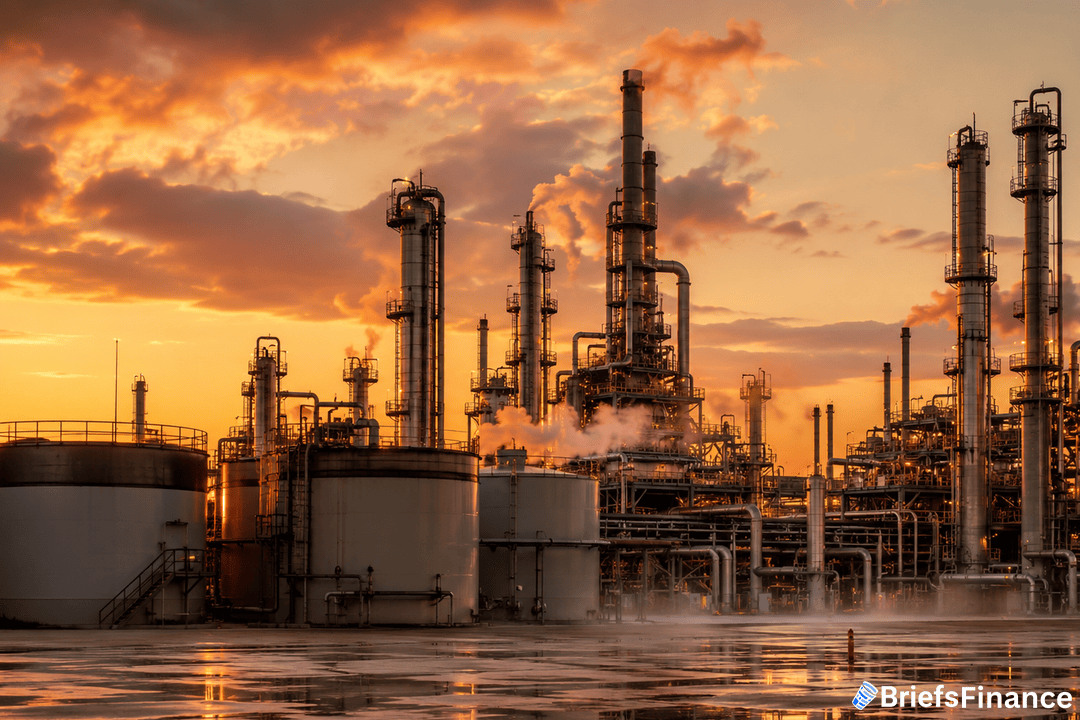
ExxonMobil CEO Darren Woods called that gap a "disconnect between crude prices and pump prices" on Friday's CNBC "Squawk Box." He said refining constraints are now driving gasoline prices more than oil costs. If you have oil but no refinery, the oil does not help anyone at the pump.
Refineries Are Offline, and That's the Problem
The shortage comes from wars in Europe and the Middle East.
Exxon's Woods said about 3 million barrels a day of Middle East capacity is unavailable because of the Hormuz disruption. Ukrainian drone strikes have knocked out roughly one million more barrels per day of Russian refining capacity, prompting Russia to ban diesel exports. China has also stopped exporting, pulling another couple of million barrels a day out of the market.
Get the free Always Be Buying eBook and learn the simple system for building wealth on any income
Phillips 66 executive vice president Brian Mandell put the shortage in wider terms: Asia and the Middle East have 7 million barrels per day of refining capacity offline, while Russia has 1.4 million barrels per day offline. "Refining fundamentals are very tight and getting tighter with the issues in Russia and the Mideast," he said.
Marathon Petroleum CEO Maryann Mannen said, "Middle East refineries have really been slow to come back online." "Any further disruption in the region could cause further supply constraints to evolve," she added.
These outages are why crude prices and pump prices have diverged. Refineries convert crude into gasoline, and when millions of barrels of refining capacity are offline, cheaper oil cannot quickly become cheaper fuel.
Refiners Are Cashing In
The shortage hurts at the pump, but it is good for companies that own refineries. "If you've got the refinery, you run it absolutely as hard as you can," said Patrick De Haan, GasBuddy's head of petroleum analysis. He says some refiners are delaying maintenance to keep earning high margins.
The crack spread, the gap between what refiners pay for crude and what they get for fuel, topped $70 in late July.
Valero's second-quarter earnings rose more than 400% to $3.7 billion from a year earlier. Marathon Petroleum's profit surged over 300%, to $5.1 billion, while Phillips 66's profit also climbed over 300%, reaching $3.8 billion.
Gulf Coast refiners are in a strong spot. De Haan said facilities on the Louisiana and Texas coasts have the most options in the world, helped by Venezuelan crude imports and a Jones Act waiver. "There's not a better place to be a refinery in the world. The world is your oyster," he said.
What This Means at the Pump
Fall usually brings some cheaper gas as driving cools, and De Haan expects easing. But he warns that unless Washington and Tehran reach a stable deal on the Strait of Hormuz, U.S. drivers could see a record-high pump price on Labor Day. The previous Labor Day record was $3.83 a gallon, set in 2012, and drivers are already paying more than that.
Even if oil headlines calm down, fuel has its own problem. Mandell said that if the Strait of Hormuz reopens, crude supply will come back faster than fuel supply. "The refineries, depending on the damage and ability to get spare parts, are going to take a good long time to get back online," he said.
For your wallet, the price at the pump is no longer only about oil. It is about who can actually turn oil into fuel. Until those refineries come back, autumn gasoline prices could stay high, and the relief you are hoping for may have to wait.
Download the free Always Be Buying eBook and start putting your money to work today