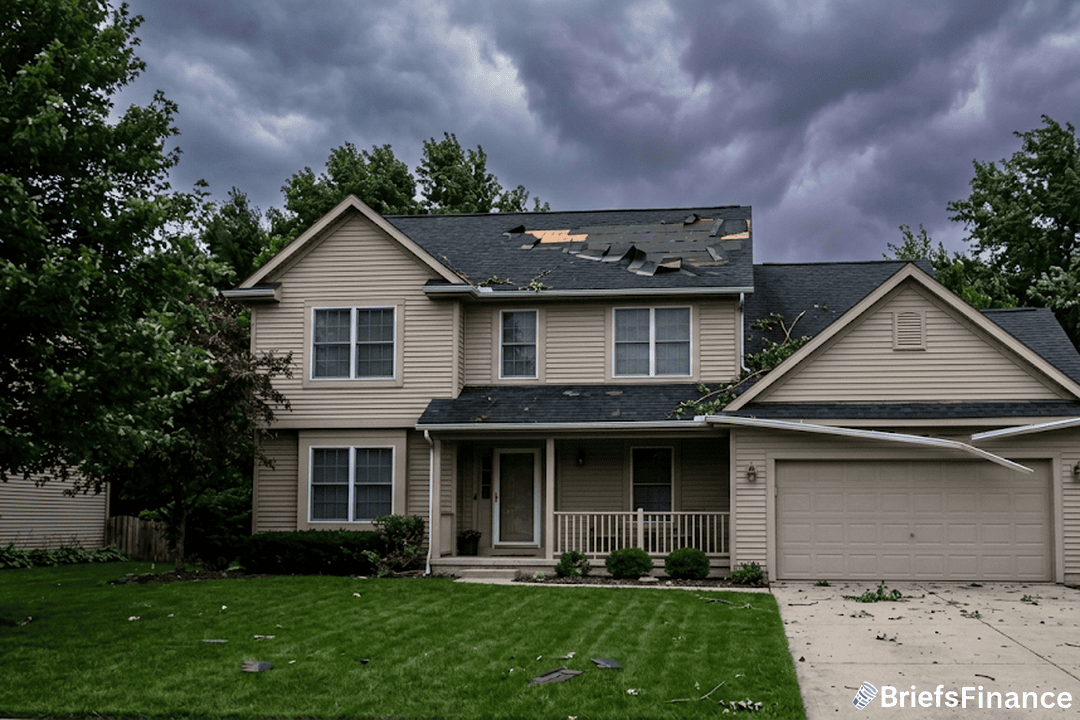
Premiums Are Rising in Every Region
Homeowners insurance is the bill you cannot skip. If you have a mortgage, your lender requires it, and the policy is what pays to fix the house after a fire, a storm, or a fallen tree.
But that bill is climbing, and for a lot of people, keeping the coverage is getting harder.
The National Association of Insurance Commissioners (NAIC), which represents state insurance regulators, came out with its first detailed report on this market in years on Wednesday.
The NAIC report, built from information supplied by state insurance regulators, shows that inflation-adjusted average premiums rose in every region from 2018 to 2024. The increases by region:
- Northeast: 18%
- Midwest: 25%
- Southeast: 27%
- West: 43%
The Southeast had the highest regional average in 2024, at $1,818 a year.
The Northeast was the cheapest region, at $1,396 a year.
Why Premiums Keep Rising
The main driver, according to insurance expert Peter Kochenburger, is climate risk.
Climate change is making severe weather more frequent and more intense, which raises both the odds of damage and the size of the claims.
Treasury data shows that, in inflation-adjusted terms, $1 billion-plus weather disasters occurred more than five times as often in 2018-2022 as they did in the 1980s.
Rebuilding is pricier too: property and casualty replacement costs, which include homeowners insurance, rose 45% on average in 2020-2023, according to Treasury.
Get the free Always Be Buying eBook and learn the simple system for building wealth on any income
This is not just a coastal story. "Hail is a significant source of property damage, and that occurs in a number of states that don't have much coastal exposure," Kochenburger said.
All this comes as the Trump administration has been dismantling federal climate and emissions-reduction programs.
The NAIC report is meant to give state regulators and consumers a clearer picture of a market that has been difficult to measure. Its authors say the overall system is still working, but the numbers point to growing strain.
Insurers Are Dropping More Customers
Price is only half the story. Insurers are also choosing not to renew more policies, a practice known as non-renewal.
In 2024, the U.S. had 103 million active homeowners policies.
Other data points to the same squeeze. Last year, Treasury found that average premiums per policy grew 8.7% faster than inflation from 2018 to 2022.
Jeffrey Czajkowski and Paula Harms, who wrote the report, say the market is sound but under strain.
"The data tells the story of a homeowners insurance market that is overall operationally robust but nonetheless under pressure and exhibiting signs of stress," they wrote.
The authors say the data reflects what consumers are seeing, including higher prices and more difficulty obtaining or maintaining coverage in certain areas.
Low-income homeowners feel this first, Kochenburger said. They are more likely to drop coverage and leave their biggest asset unprotected.
"It's a big problem," he said. He worries that unaffordable insurance could set off a "cascading or domino effect," including weaker demand from home buyers.
What It Means for Your Money
The increases are not over. Since the start of 2025, premiums have climbed another 7%, according to the BLS producer price index.
The National Association of Realtors notes that index is a proxy for premium trends, not a direct measure of what consumers pay.
The catch: The NAIC numbers may understate the problem. Regional averages can hide faster local increases.
Some policyholders have trimmed coverage to offset costs, and insurers have narrowed policies or lowered coverage limits. That means the same size bill can buy less protection.
The housing affordability squeeze has an insurance piece too, according to the National Association of Realtors. It estimates that homes are about 10% less affordable than they would be if insurance bills had stayed flat since the late 1990s.
All of this lands while American households are already dealing with above-target inflation that has lasted more than five years.
For most people, a home is the largest asset they own, and insurance is what stands between that asset and a sudden loss. As premiums climb and coverage becomes more difficult to maintain, protecting that asset costs more, and the protection itself can shrink.
Download the free Always Be Buying eBook and start putting your money to work today