The Growing Job Cut Warning
Volkswagen's restructuring is getting bigger.
Blume wrote to employees that the company is "currently assessing across all brands, companies and regions how many adjustments are actually necessary and feasible."
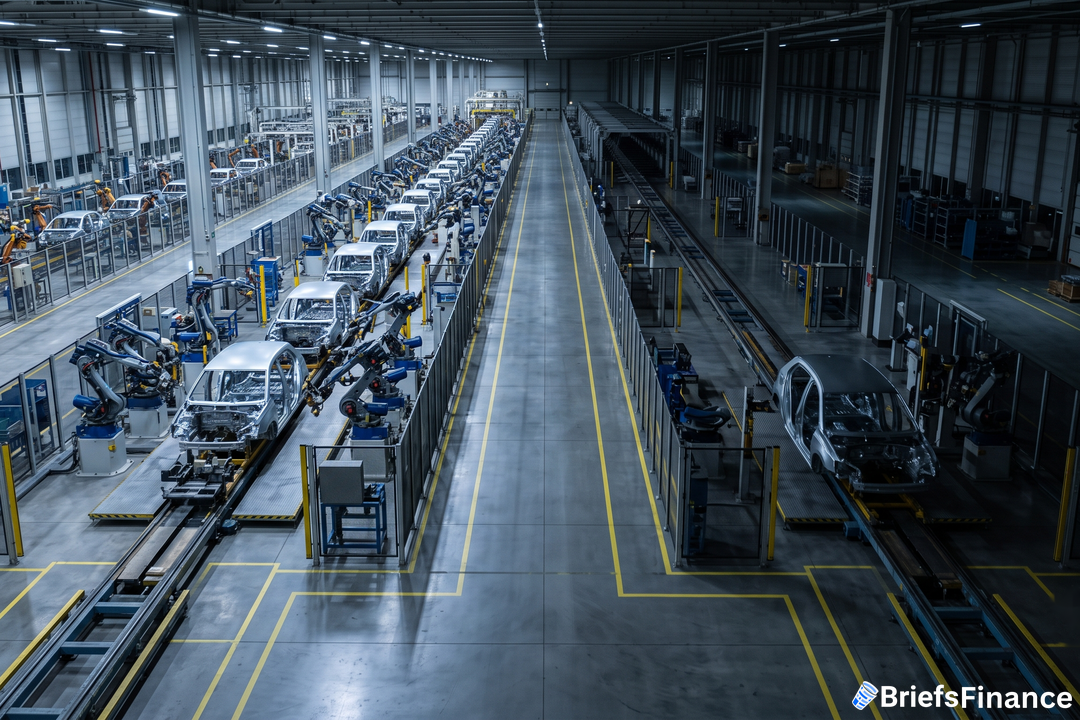
The four plants named - Emden, Hanover, Zwickau, and Neckarsulm - currently produce electric models like the ID. series as well as traditional combustion vehicles. This plant uncertainty reflects the broader challenge of aligning production with a significantly reduced model range and evolving consumer tastes.
Why Volkswagen Is Squeezed
The auto industry has been tough lately, and Volkswagen is feeling the pressure.
Get the market news that matters in a five-minute read with Market Briefs, our free daily newsletter
The company's profits have slumped. It is also looking to gradually halve its lineup of models. Blume said he prefers "intelligent solutions" over closing facilities, and previously suggested that spare capacity could be repurposed for defense manufacturing or for assembling Chinese-market Volkswagen vehicles in Europe.
Union officials on Volkswagen's supervisory board have rejected plans that reportedly involved layoffs and the potential shuttering of four plants. Following the meeting, Volkswagen's official statement omitted any mention of job reductions or factory closings; instead, it outlined measures to cut capacity further.
Blume acknowledged to workers that "it's understandable that not everything has been planned out down to the last detail yet, and that certain issues still need to be further discussed and evaluated." He added, "There will certainly be more meetings in which we will work hard to find the best solutions."
Volkswagen's difficulties come as the broader European automotive sector confronts a shift to electric vehicles and increased competition from Chinese manufacturers. The European automotive sector is under severe strain as legacy manufacturers like Volkswagen face the dual challenge of transitioning to electric vehicles and fending off aggressive competition from Chinese automakers. Slower-than-expected EV adoption and rising battery costs have squeezed margins, while potential tariffs on Chinese imports add further uncertainty.
The company's profit slump and the planned halving of its model lineup underscore the scale of the transformation required. With labor representatives resisting cuts, the path ahead involves difficult negotiations between management and unions.
Volkswagen's struggles are part of a wider European auto industry crisis, as legacy automakers face rising costs for battery production, slower-than-expected EV adoption, and the threat of tariffs on Chinese imports. The company has already invested billions in electric vehicle platforms and battery cell factories but now must rationalize its capacity to avoid overproduction.
What This Means for Investors
Volkswagen's US‑listed stock (ticker VWAGY) closed at 8.36, up 1.39% on the day.
Management has faced heated demands from employees for clarity on the restructuring strategy. More meetings are planned to decide exactly how many jobs will be cut and where.
Whether the cost gap can be closed depends on the outcome of those talks. The uncertainty makes it hard to predict how quickly Volkswagen can improve its competitiveness.
Join Market Briefs, our free daily newsletter, for a quick daily rundown of the markets