Free NewsletterPro Login
S&P 500 6,287 +0.42%
DOW 44,521 -0.18%
NASDAQ 21,103 +0.71%
S&P 500 +12.4%
Briefs Finance Fund +24.8%
JOIN THE FUND →

UK Buyers Embrace Chinese Plug-In Hybrids as Affordability Drives Sales

Published Jul 17, 2026
[tts_player]
Share:
Summary:
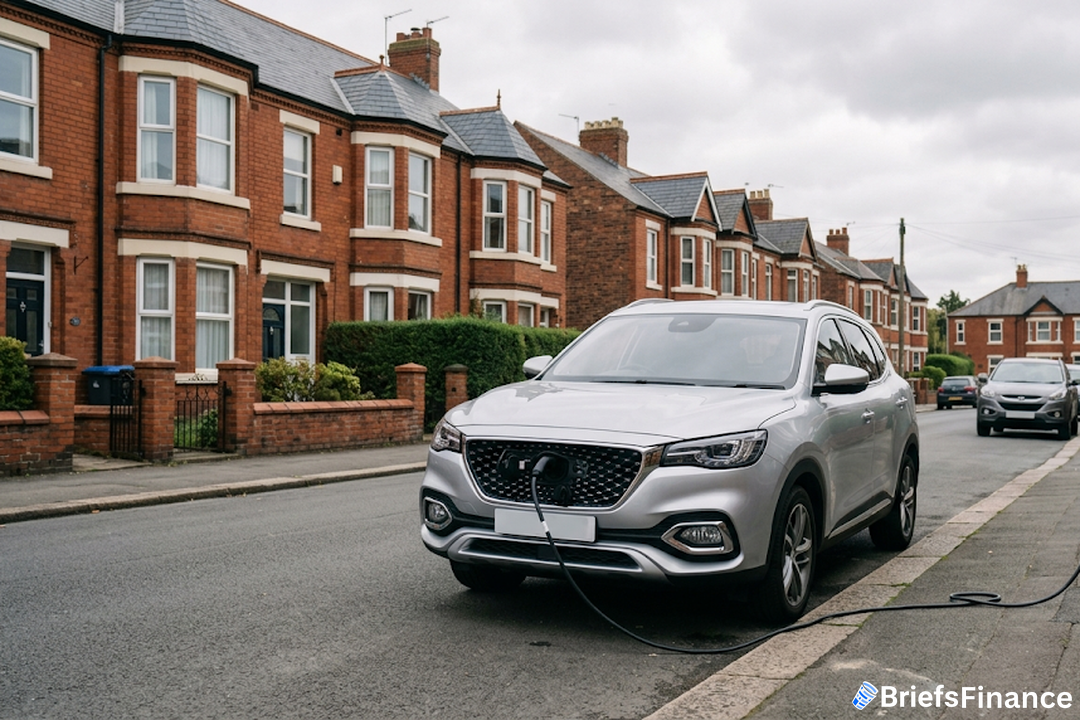
  • Sales of Chinese-made cars in the UK surged from 384 vehicles in 2015 to roughly 285,000 last year.
  • Chinese automakers undercut rivals like Volkswagen by thousands of pounds, partly because the UK does not impose extra tariffs on plug-in hybrids.
  • Domestic car sales in China fell 26% in the first half of 2026, pushing manufacturers to export more while British buyers snap up cheaper, feature-rich models.

A Quiet Invasion That Sneaked Up on Everyone

You might not have noticed, but Chinese car brands have been quietly filling British driveways. Will Roberts, an analyst at the consulting firm Benchmark, remembers the exact moment he realized how fast things had changed. "I remember noticing the first BYD crossing London Bridge a couple of years ago, and that was a big moment in a way," he said. "Ever since then, it's just become second nature."

What is driving it? Chinese domestic demand has slumped.

At the same time, Chinese auto exports shot up 72%. The math is simple: when fewer people buy at home, you sell abroad.

This export push is also fueled by generous government subsidies for Chinese manufacturers, which help them price vehicles far below Western rivals. Legacy automakers, including the United States' so-called Big 3, have complained about what they see as an unfair advantage.

Get the market news that matters in a five-minute read with Market Briefs, our free daily newsletter

Why British Buyers Are Switching

Talk to people who actually bought one, and you hear a very consistent story. Izzy Woodrow, a British consumer who recently bought a Geely, put it this way: "I've got a car that I enjoy driving, super comfy. It's very quiet and the fit and finish is great and the technology experience is enjoyable."

Chris and Tracy Smith, who bought a Geely from Lipscomb Cars in Maidstone, England, said the decision came down to value. "It's value for money, and what you're getting in equipment as opposed to some of the top brands that are selling for probably more money, but with less accessories on it," Chris Smith said.

The price gap is huge. A Volkswagen Tiguan plug-in hybrid manufactured in Germany costs just over £43,000 at UK dealerships. A comparable model from the Chinese automaker BYD, the Seal U, costs almost £10,000 less.

The catch: Chinese carmakers benefit from government subsidies at home, enabling them to sell at lower prices. Jon McNeill, a former board member of General Motors, put it bluntly: "The Chinese are coming into Europe with really attractive cars at really attractive prices with technology that sort of blows away what they can buy from a European manufacturer."

Why the UK Is a Perfect Target

Britain provides a favorable landing spot for Chinese automakers. Unlike the European Union, the UK does not charge extra tariffs on plug-in hybrid electric vehicles. That creates a wide-open door for Chinese brands like BYD and Geely, which specialize in hybrids and EVs.

John Panda-Noah, a dealer at Lipscomb Cars, says the cars sell themselves once people see them in person. "When they see the car, they're blown away by how good they look," he said.

Analyst Will Roberts sees the UK as a natural fit. "It becomes an excellent size market that's progressing well towards electrification and is in demand for some cheaper vehicles with that void to fill," he noted.

Join Market Briefs, our free daily newsletter, for a quick daily rundown of the markets
Disclosure

Recent News

1 2 3 38

Get Market Briefs delivered to your inbox every morning for free!

No fluff. No noise. No politics. Just finance news you can read in 5 minutes.

Blogs

June 29, 2026
Portfolio Diversification: Why Putting All Your Eggs in One Basket Destroys Wealth
  • Real diversification means spreading investments across all 11 economic sectors plus bonds, alternatives, and cash so no single bet can sink the portfolio.
  • Different sectors perform at different times, so a diversified portfolio captures upswings while smoothing the brutal drawdowns that wipe out concentrated bets.
  • Total market index funds offer the simplest path to diversification, and annual rebalancing is what keeps the structure working over time.
Read More
June 29, 2026
Non Taxable Income: What It Is and Why It Matters
  • Non taxable income is money you receive that you don't owe income tax on.
  • The tax code treats workers, investors, and business owners very differently, and investors often come out ahead.
  • Learning how income is taxed is a quiet superpower for keeping more of what you earn.
Read More
June 29, 2026
Semiconductor Stocks: A Simple Guide for Investors
  • Semiconductor stocks are companies that design and make computer chips, the brains inside nearly every modern device.
  • The AI boom has turned chips into one of the market's most important and most watched groups.
  • They offer big growth potential, but come with high valuations and a notoriously cyclical history.
Read More
June 25, 2026
How Stocks Work: A Simple Guide for Beginners
  • A stock is a slice of ownership in a company - buy one, and you own a piece of the business.
  • You make money two ways: the share price rising over time, and dividends paid to shareholders.
  • The simplest path for most beginners is buying into the whole market through a low-cost index fund.
Read More
June 25, 2026
Stop Loss vs Stop Limit: What's the Difference?
  • A stop loss order sells your stock once it hits a trigger price, prioritizing getting you out.
  • A stop limit order only sells within a price range you set, prioritizing price over a guaranteed exit.
  • The trade-off: a stop loss almost always executes; a stop limit might not if the price moves too fast.
Read More
June 25, 2026
Energy Stocks: A Simple Guide for Investors
  • Energy stocks are companies that produce and supply the power the world runs on, from oil and gas to newer sources.
  • They make up one of the 11 sectors of the market and tend to move with energy prices and big-picture shifts.
  • Like any sector, the key is diversification and understanding the forces driving demand.
Read More
June 18, 2026
What Is a Stop Loss Order? A Simple Guide
  • A stop loss order automatically sells a stock once it falls to a price you set.
  • It's a tool to cap losses or lock in gains without watching the market all day.
  • It works best for active strategies, and can backfire if used carelessly on long-term holdings.
Read More
June 18, 2026
Best S&P 500 Index Fund: How to Choose One
  • The best S&P 500 index fund for most investors is simply the cheapest, most established one that tracks the index well.
  • Funds like VOO, IVV, and SPY all hold the same 500 companies, so the biggest difference is the fee.
  • Pick one, automate your buys, and let time do the heavy lifting.
Read More
June 17, 2026
What Are Penny Stocks? Risks and Rewards Explained
  • Penny stocks are very low-priced shares of very small companies, often trading for just a few dollars or less.
  • They promise huge gains but carry huge risks: low liquidity, high failure rates, and wild price swings.
  • Most investors are better served by quality companies and funds than by chasing cheap shares.
Read More
June 17, 2026
Best Stocks for Beginners With Little Money
  • The best stocks for beginners with little money usually aren't individual stocks at all - they're low-cost index funds.
  • You can start with $100 or less and use small, regular investments to build wealth over time.
  • Focus on diversification and consistency, not on picking the next big winner.
Read More
1 2 3 24
Share via
Copy link











