Free NewsletterPro Login

Cyberattack Halts Production at Coca-Cola's Fairlife Plants

Published Jul 17, 2026
Share:
Summary:
  • A ransomware attack forced Coca-Cola to suspend production at all Fairlife dairy facilities in the U.S.
  • Fairlife generated approximately $4 billion in annual sales as of 2024.
  • Canadian Fairlife operations were not affected by the cyber incident.

A Cyberattack Shuts Down a Dairy Giant

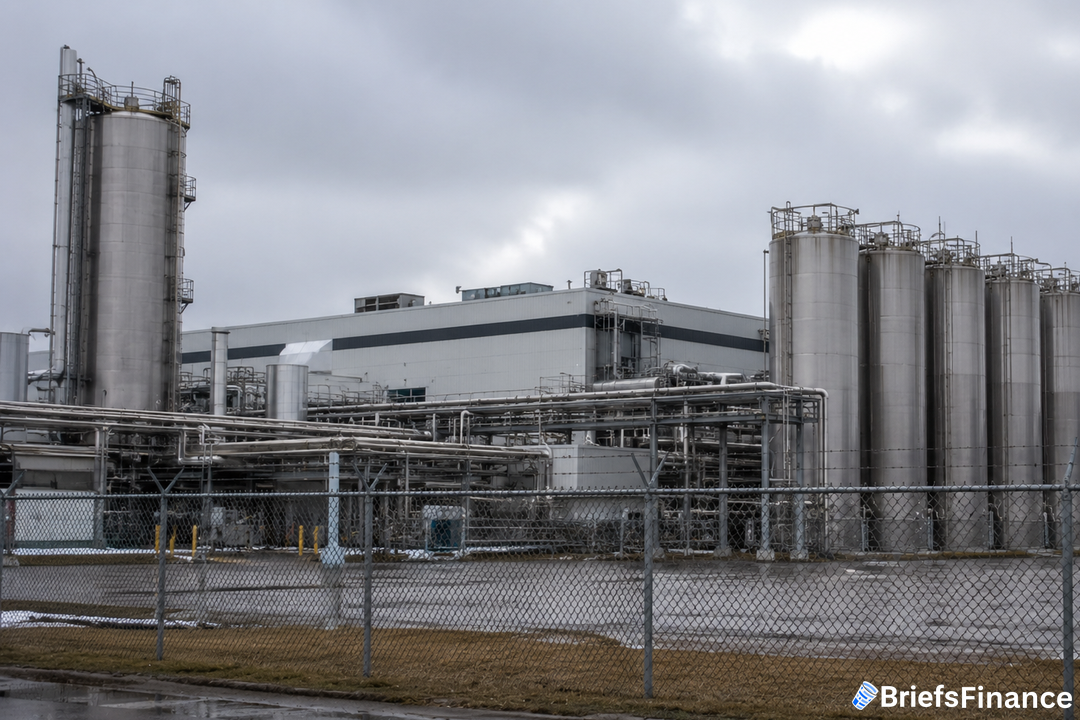
Coca-Cola disclosed to the SEC that a ransomware attack had forced it to halt production at its Fairlife dairy plants. A company spokesperson said, "Our Fairlife manufacturing facilities nationwide are currently shut down." Fairlife ranks among Coca-Cola's key brands, boasting roughly $4 billion in annual sales as of 2024.

Coca-Cola did not say when Fairlife's systems would be restored.

Why a Dairy Brand Is a Big Target

Cyber extortion targeting food and drink firms often leads to prolonged consequences. For example, cyberattacks on Arizona Beverages in 2019 and UNFI last year caused weeks of production halts and empty store shelves. The company has not provided a timeline for system restoration.

Get the market news that matters in a five-minute read with Market Briefs, our free daily newsletter

Immediate Response Uncertain

Coca-Cola has not disclosed whether it has been in contact with the attackers or if a ransom was demanded. The company's cybersecurity team is working to restore systems. In similar past incidents, recovery often took weeks, leaving retailers to scramble for alternative supplies.

The Scale of the Disruption

The cessation of Fairlife's U.S. operations has effectively halted its entire domestic supply chain. The brand's products, including ultrafiltered milk and protein shakes, are sold in major grocery chains nationwide. With no clear restart date, retailers may face shortages in the coming weeks.

Coca-Cola has not indicated whether it maintains backup systems or offline data copies that could speed recovery. In similar incidents, companies often restore operations incrementally, but full normalization can take weeks.

Impact on Retailers and Supply Chains

The production halt also places additional strain on Coca-Cola's relationships with retailers who have come to rely on Fairlife's steady supply. With no clear restart date, grocers may need to seek alternative suppliers, potentially costing the brand valuable shelf space and consumer loyalty. Fairlife's rapid growth in the dairy alternative sector has made it a critical component of Coca-Cola's portfolio, and any prolonged downtime could erode its market position.

Why This Attack Matters

Such cyber incidents highlight the increasing vulnerability of critical food and beverage infrastructure. Food and beverage companies have become attractive targets because their reliance on just-in-time inventory and digital logistics makes them particularly sensitive to downtime. As cybercriminals continue to refine their tactics, firms like Coca-Cola face mounting pressure to invest in robust cybersecurity measures and offline backups to protect critical production systems.

Fairlife has become a significant growth driver for Coca-Cola since its acquisition. Initially launched as a premium ultrafiltered milk, it expanded into protein shakes, creamers, and other dairy-based beverages, capturing health‑conscious consumers and establishing a strong foothold in the dairy alternative market. The brand's rapid expansion into a wide product lineup has made it a key revenue stream, meaning any production disruption risks losing both sales and shelf space to competitors like Chobani, Danone, or Nestlé.

Join Market Briefs, our free daily newsletter, for a quick daily rundown of the markets
Disclosure

Recent News

1 2 3 … 108

Get Market Briefs delivered to your inbox every morning for free!

No fluff. No noise. No politics. Just finance news you can read in 5 minutes.

Blogs

October 16, 2026
How Boring Math Makes You Rich: The Briefs Money Spreadsheet, Explained
  • Briefs Money shows you what to do with every paycheck, and in what order: how much to spend, save, and invest, when to build an emergency fund, and which debt to pay off first.
  • The Climb to Wealth course walks you through the system step by step, and the Personal Finance Spreadsheet is where you track your own numbers.
  • Investing is one piece of building wealth. The system that gets money to your investments, and keeps it there, decides the outcome.
Read More
October 16, 2026
Common Investing Mistakes: Why a Stock Grade Is One Tool, Not the Whole Toolkit
  • The Briefs Score shows growth, income, and wealth preservation investors how well a stock fits their goal, with a separate letter grade for each one.
  • The most common mistake is treating the letter as an instruction. An A tells you a stock scores well for one goal, not that you should buy today.
  • Research works best as one input in a process you own. The grade shows how a stock stacks up. You supply the goal, the timeline, and the rules for being wrong.
Read More
October 16, 2026
How to Read a Company's Numbers Without a Finance Degree (Using Briefs Terminal)
  • Briefs Terminal lets you size up any public company in about ten minutes: what the stock costs, what it earns, how fast sales are growing, and what it pays you, all on one page.
  • It lines those numbers up against the company's closest competitors for you, so you can tell if a number is impressive or just average.
  • Below that are the income statement, balance sheet, and cash flow statement from the company's SEC filings, the latest news, and transcripts of its earnings calls.
Read More
October 16, 2026
What Type of Investor Am I? The Three Investor Archetypes, Explained
  • Briefs sorts its stock grades and monthly reports by three investor goals: growth, income, and wealth preservation. Pick yours and you know which report and which grade to read first.
  • Growth investors want stocks that beat the S&P 500. Income investors want to get paid in cash. Wealth preservation investors want stocks that hold up when the market drops.
  • The same stock can score an A- for one goal and a D- for another, so picking your goal comes before picking any stock.
Read More
October 16, 2026
How to Build a Stock Watchlist That Isn't Just Stocks You Heard About
  • A watchlist on Briefs Terminal lets you group stocks by the idea you're tracking and follow each one's price, one-day move, and 52-week high and low in one place.
  • Each list has its own name and description, so you always know why a stock is on it, and you can make as many lists as you have ideas.
  • The monthly growth, income, and wealth preservation reports under the Briefs Research tab hand you new themes to track that you didn't hear about online.
Read More
October 16, 2026
How to Choose an ETF That Matches Your Idea (Using the ETF Planning Tool)
  • The ETF planning tool takes an idea like "I want to invest in fast food companies," asks what you mean, and finds the ETFs that match, with the reasons, the holdings, and the sources.
  • Build a Plan then shows what your money could grow to in those ETFs over the years you choose, with conservative, expected, and optimistic estimates next to the S&P 500.
  • It gets you from an idea to an actual plan without researching dozens of companies one at a time.
Read More
October 16, 2026
Is This Stock a Good Buy? How to Use the Briefs Score to Tell If a Stock Fits the Way You Invest
  • The Briefs Score shows growth, income, and wealth preservation investors how well a stock fits their goal, with a separate letter grade for each one.
  • One stock can score very differently for each. Nvidia showed an A- for growth and a D- for income, because it grows fast and pays almost no dividend.
  • Seven sub scores under each grade show what earned the letter, so you can see exactly where a stock is strong or weak for your goal.
Read More
October 16, 2026
How to Tell an Asset From a Liability: The One Question to Ask Before You Buy Anything
  • The typical American household earned more in 2025 than in any year on record, yet only 30% of Americans say they could pay a surprise $1,000 bill from savings, so the problem isn't income but what the income gets spent on.
  • An asset puts money in your pocket and a liability takes money out, and the wealthy buy assets first, then let the assets pay for the fun stuff.
  • Before you buy anything, ask one question: does this put money in my pocket, or take money out of my pocket? Then you need a plan for the money you keep.
Read More
October 16, 2026
How to Build Your First $2,000 Emergency Fund and Wipe Out Every Debt Over 10%
  • Your first money goal isn't investing, it's $2,000 in its own account named Do Not Touch, built by moving 10% of every paycheck into it automatically.
  • More than a third of American adults couldn't cover a $400 surprise bill with cash or savings, according to the Federal Reserve, and that's how one bad day turns into years of credit card payments.
  • Once the $2,000 is there, attack every debt charging more than 10% interest, highest rate first, because you can't out-invest a 22% credit card so paying it off is the investment.
Read More
October 16, 2026
How to Invest Through a Crash: 3 Rules From the Worst-Timed Investor Alive
  • Meet Bunty, a fictional investor with the worst timing in history: he put $100,000 into the market in four chunks right before four crashes, never sold, and by 2025 it had grown to more than $500,000.
  • Investors who jump in and out of the market miss its best days, and missing just a handful of those days can cut your final result roughly in half.
  • The fix is ABB, Always Be Buying: you buy on a schedule through booms, crashes and scary headlines, which matches the market, and beating it takes knowing where the money is moving first.
Read More
1 2 3 … 29
Share via
Copy link











