Free NewsletterPro Login
S&P 500 6,287 +0.42%
DOW 44,521 -0.18%
NASDAQ 21,103 +0.71%
S&P 500 +12.4%
Briefs Finance Fund +24.8%
JOIN THE FUND →

Cyberattack Halts Production at Coca-Cola's Fairlife Plants

Published Jul 17, 2026
[tts_player]
Share:
Summary:
  • A ransomware attack forced Coca-Cola to suspend production at all Fairlife dairy facilities in the U.S.
  • Fairlife generated approximately $4 billion in annual sales as of 2024.
  • Canadian Fairlife operations were not affected by the cyber incident.

A Cyberattack Shuts Down a Dairy Giant

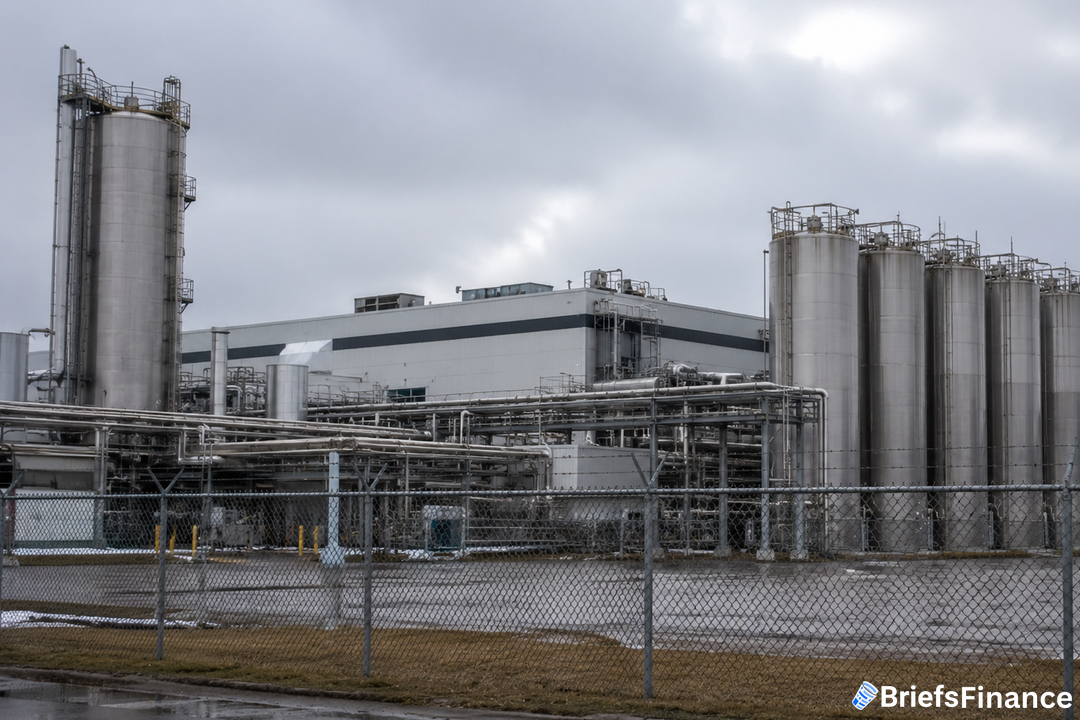
Coca-Cola disclosed to the SEC that a ransomware attack had forced it to halt production at its Fairlife dairy plants. A company spokesperson said, "Our Fairlife manufacturing facilities nationwide are currently shut down." Fairlife ranks among Coca-Cola's key brands, boasting roughly $4 billion in annual sales as of 2024.

Coca-Cola did not say when Fairlife's systems would be restored.

Why a Dairy Brand Is a Big Target

Cyber extortion targeting food and drink firms often leads to prolonged consequences. For example, cyberattacks on Arizona Beverages in 2019 and UNFI last year caused weeks of production halts and empty store shelves. The company has not provided a timeline for system restoration.

Get the market news that matters in a five-minute read with Market Briefs, our free daily newsletter

Immediate Response Uncertain

Coca-Cola has not disclosed whether it has been in contact with the attackers or if a ransom was demanded. The company's cybersecurity team is working to restore systems. In similar past incidents, recovery often took weeks, leaving retailers to scramble for alternative supplies.

The Scale of the Disruption

The cessation of Fairlife's U.S. operations has effectively halted its entire domestic supply chain. The brand's products, including ultrafiltered milk and protein shakes, are sold in major grocery chains nationwide. With no clear restart date, retailers may face shortages in the coming weeks.

Coca-Cola has not indicated whether it maintains backup systems or offline data copies that could speed recovery. In similar incidents, companies often restore operations incrementally, but full normalization can take weeks.

Impact on Retailers and Supply Chains

The production halt also places additional strain on Coca-Cola's relationships with retailers who have come to rely on Fairlife's steady supply. With no clear restart date, grocers may need to seek alternative suppliers, potentially costing the brand valuable shelf space and consumer loyalty. Fairlife's rapid growth in the dairy alternative sector has made it a critical component of Coca-Cola's portfolio, and any prolonged downtime could erode its market position.

Why This Attack Matters

Such cyber incidents highlight the increasing vulnerability of critical food and beverage infrastructure. Food and beverage companies have become attractive targets because their reliance on just-in-time inventory and digital logistics makes them particularly sensitive to downtime. As cybercriminals continue to refine their tactics, firms like Coca-Cola face mounting pressure to invest in robust cybersecurity measures and offline backups to protect critical production systems.

Fairlife has become a significant growth driver for Coca-Cola since its acquisition. Initially launched as a premium ultrafiltered milk, it expanded into protein shakes, creamers, and other dairy-based beverages, capturing health‑conscious consumers and establishing a strong foothold in the dairy alternative market. The brand's rapid expansion into a wide product lineup has made it a key revenue stream, meaning any production disruption risks losing both sales and shelf space to competitors like Chobani, Danone, or Nestlé.

Join Market Briefs, our free daily newsletter, for a quick daily rundown of the markets
Disclosure

Recent News

1 2 3 38

Get Market Briefs delivered to your inbox every morning for free!

No fluff. No noise. No politics. Just finance news you can read in 5 minutes.

Blogs

June 29, 2026
Portfolio Diversification: Why Putting All Your Eggs in One Basket Destroys Wealth
  • Real diversification means spreading investments across all 11 economic sectors plus bonds, alternatives, and cash so no single bet can sink the portfolio.
  • Different sectors perform at different times, so a diversified portfolio captures upswings while smoothing the brutal drawdowns that wipe out concentrated bets.
  • Total market index funds offer the simplest path to diversification, and annual rebalancing is what keeps the structure working over time.
Read More
June 29, 2026
Non Taxable Income: What It Is and Why It Matters
  • Non taxable income is money you receive that you don't owe income tax on.
  • The tax code treats workers, investors, and business owners very differently, and investors often come out ahead.
  • Learning how income is taxed is a quiet superpower for keeping more of what you earn.
Read More
June 29, 2026
Semiconductor Stocks: A Simple Guide for Investors
  • Semiconductor stocks are companies that design and make computer chips, the brains inside nearly every modern device.
  • The AI boom has turned chips into one of the market's most important and most watched groups.
  • They offer big growth potential, but come with high valuations and a notoriously cyclical history.
Read More
June 25, 2026
How Stocks Work: A Simple Guide for Beginners
  • A stock is a slice of ownership in a company - buy one, and you own a piece of the business.
  • You make money two ways: the share price rising over time, and dividends paid to shareholders.
  • The simplest path for most beginners is buying into the whole market through a low-cost index fund.
Read More
June 25, 2026
Stop Loss vs Stop Limit: What's the Difference?
  • A stop loss order sells your stock once it hits a trigger price, prioritizing getting you out.
  • A stop limit order only sells within a price range you set, prioritizing price over a guaranteed exit.
  • The trade-off: a stop loss almost always executes; a stop limit might not if the price moves too fast.
Read More
June 25, 2026
Energy Stocks: A Simple Guide for Investors
  • Energy stocks are companies that produce and supply the power the world runs on, from oil and gas to newer sources.
  • They make up one of the 11 sectors of the market and tend to move with energy prices and big-picture shifts.
  • Like any sector, the key is diversification and understanding the forces driving demand.
Read More
June 18, 2026
What Is a Stop Loss Order? A Simple Guide
  • A stop loss order automatically sells a stock once it falls to a price you set.
  • It's a tool to cap losses or lock in gains without watching the market all day.
  • It works best for active strategies, and can backfire if used carelessly on long-term holdings.
Read More
June 18, 2026
Best S&P 500 Index Fund: How to Choose One
  • The best S&P 500 index fund for most investors is simply the cheapest, most established one that tracks the index well.
  • Funds like VOO, IVV, and SPY all hold the same 500 companies, so the biggest difference is the fee.
  • Pick one, automate your buys, and let time do the heavy lifting.
Read More
June 17, 2026
What Are Penny Stocks? Risks and Rewards Explained
  • Penny stocks are very low-priced shares of very small companies, often trading for just a few dollars or less.
  • They promise huge gains but carry huge risks: low liquidity, high failure rates, and wild price swings.
  • Most investors are better served by quality companies and funds than by chasing cheap shares.
Read More
June 17, 2026
Best Stocks for Beginners With Little Money
  • The best stocks for beginners with little money usually aren't individual stocks at all - they're low-cost index funds.
  • You can start with $100 or less and use small, regular investments to build wealth over time.
  • Focus on diversification and consistency, not on picking the next big winner.
Read More
1 2 3 24
Share via
Copy link











