The Problem: Not Enough Electricity to Go Around
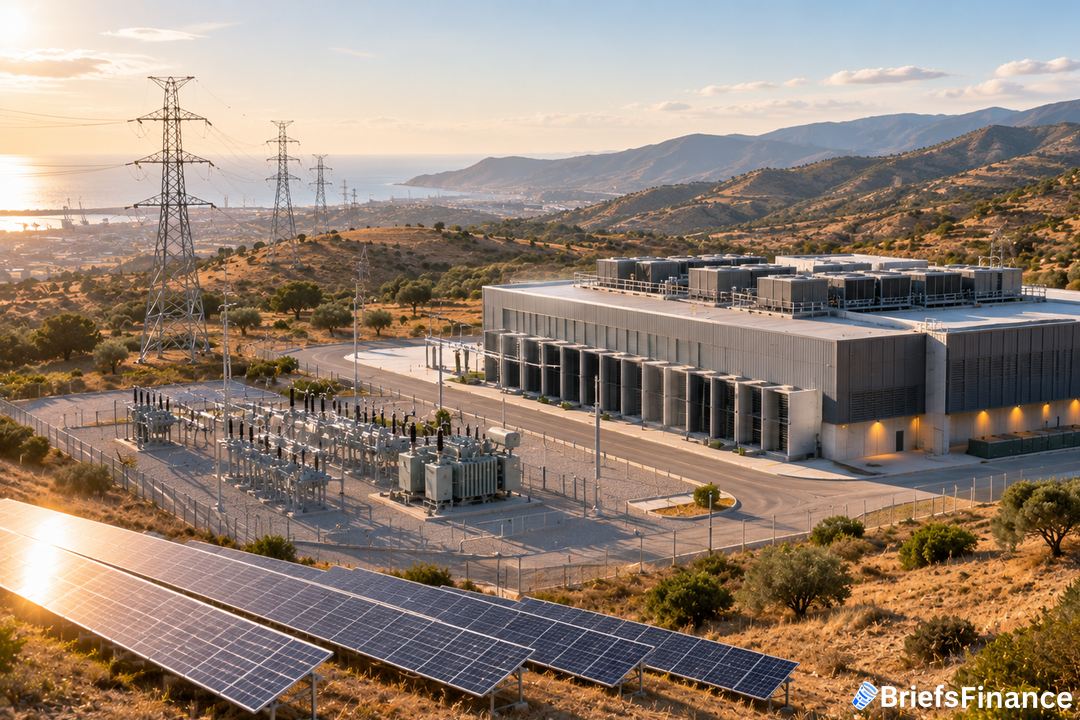
Everyone building a data center in Spain or Portugal is about to run into the same problem: the grid is nearing saturation.
A new report released Thursday by real estate consultancy CBRE Group Inc. lays it out plainly.
The big number is this: in Spain, almost 90% of the electricity network has little or no remaining connection capacity. A long period of underinvestment in grid expansion, combined with increasing electrification and rising demand from large-scale consumers, has left the network mostly saturated. You can plan a giant server farm, but plugging it in is a different story.
Where the Bottlenecks Are Tightest
Madrid is predicted to continue as the biggest data center market in the area, with an estimated 1.3 gigawatts of capacity. But even Madrid faces constraints.
Get the market news that matters in a five-minute read with Market Briefs, our free daily newsletter
Zaragoza tells a different story. The city is forecast to surpass 600 megawatts, and more hyperscale developments remain unannounced. It is a prime example of where developers are heading when the traditional hubs become constrained. The same goes for Sines in Portugal.
Lisbon is entering a "new growth phase," according to the report. After years of hovering around 8 megawatts, installed data center capacity rose to 15 megawatts in 2025. Several projects are now being built, and the market's installed capacity is forecast to almost double once more by 2027.
The pattern is the same everywhere. The need for data center capacity outstrips what the current electricity grid and permitting processes can accommodate. Electricity availability now serves as the primary determinant for data center location.
The Iberian Peninsula's combination of clean power sources, open tracts, and advantageous geography has made it a magnet for data center capital, despite mounting strain on infrastructure. Major technology firms including Amazon, Microsoft, Google, and Meta are among the key investors backing these projects.
What It Means for Your Portfolio
For investors, this is not a story about a failed boom - it is a story about a boom that is changing shape.
The big cloud companies are not going to stop building. But they are being forced to get creative about where they build it.
The bottom line: The winners here are not necessarily the cities with the biggest names. They are the places with available power. For anyone invested in real estate, infrastructure, or utilities in those regions, that shift matters.
And for anyone holding shares in the hyperscale companies - Amazon, Microsoft, Google, Meta - the bottleneck means delays, but not a stop to the growth. These companies have deep pockets and will adapt.
The risk is more about timing. If permit and grid delays stretch out, some of that announced 10.5 gigawatts may never get built. But the demand is real, and the money is still flowing. It just has to take a detour through a few smaller cities first.
Join Market Briefs, our free daily newsletter, for a quick daily rundown of the markets