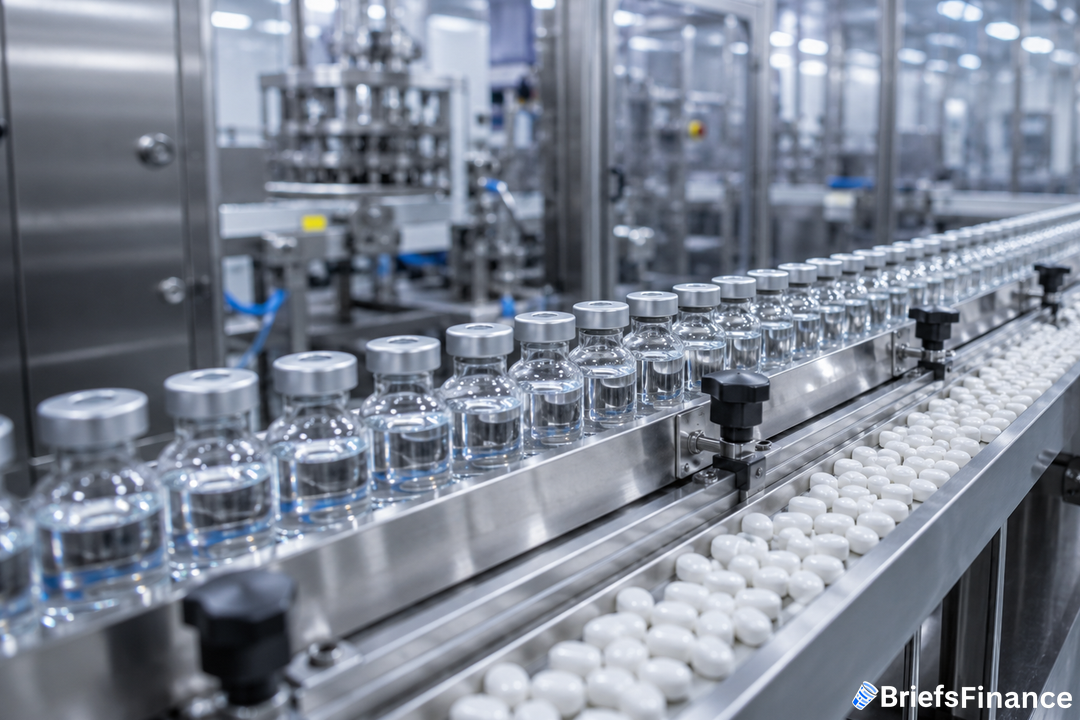
President Donald Trump's plan to place heavy tariffs on overseas generic drugs is prompting new doubts about whether low‑cost manufacturers can relocate production to the United States before levies as high as 200% kick in. This initiative targets an expanding global sector currently worth close to $500 billion.
Generic drugs are a cornerstone of the U.S. healthcare system, keeping costs manageable for patients and insurers. However, the vast majority of these medicines are manufactured overseas, primarily in India and China, raising concerns about supply chain security. This tariff proposal aims to reverse that dependency, but the short timeline and low profit margins create significant hurdles for manufacturers.
The Plan in Plain English
Generic drugs are the cheap, unbranded versions of medicines you find at the pharmacy. But most of those pills come from factories in India, China, and other countries.
The idea is to push drug companies to build factories inside the U.S. instead of buying from overseas.
So any policy that touches that market sends ripples through the entire industry.
Get the market news that matters in a five-minute read with Market Briefs, our free daily newsletter
Why a Two-Year Pause May Not Be Enough
A two-year grace period sounds like plenty of time. But building a domestic drug manufacturing network from scratch takes longer. Namit Joshi, chairman of India's Pharmaceuticals Export Promotion Council (Pharmexcil), said it takes at least four to five years to get the whole ecosystem up and running.
There is a deeper problem. Generic drugmakers operate on thin profit margins - single-digit percentages. That means they have very little wiggle room. Salil Kallianpur, an independent pharmaceutical consultant, put it bluntly: "A 100-200% tariff on a product with single-digit margins is a market-exit notice."
Joshi also noted that companies have two choices: pass the tariff cost along to buyers, or pull out of the U.S. market entirely. Neither option is great for patients who rely on affordable generics.
John Murphy III, who leads the Association for Accessible Medicines, expressed that the industry wants to back policies that guarantee stability for the sector and patient access. Yet he also highlighted that ongoing issues in purchasing and reimbursement for numerous generic drugs continue to discourage additional domestic manufacturing.
Winners and Losers Among Drugmakers
Some drug companies are better positioned than others if this plan moves forward. Jefferies and Citi analysts point out that drugmakers with notable U.S. manufacturing - including Amphastar, ANI, Hikma, and Fresenius Kabi - would gain an advantage if the tariffs are put into effect as currently designed.
Other firms face higher risk because they produce a bigger portion of their U.S.-sold medicines abroad. Companies including Teva, Viatris, and Apotex confront that vulnerability, though analysts caution that the final policy details remain uncertain. Sandoz, one of the biggest generic drugmakers worldwide, informed CNBC that it is premature to evaluate the proposal since further specifics on implementation and scope are still needed. The Swiss company did not discuss whether the announcement might alter its manufacturing footprint or future investment strategies.
What Investors Should Watch
The two-year grace period gives everyone some breathing room. The ultimate outcome hinges on how the tariffs are put into practice. A major unresolved point is whether the duties will cover only imported finished medications or extend to drugs produced in the U.S. using foreign active pharmaceutical ingredients.
Firms that already have U.S. manufacturing appear better equipped, while those reliant on imported generics could face severe pressure. The danger isn't just higher prices - it's also potential shortages if some companies leave the market entirely, as Joshi suggested.
Join Market Briefs, our free daily newsletter, for a quick daily rundown of the markets