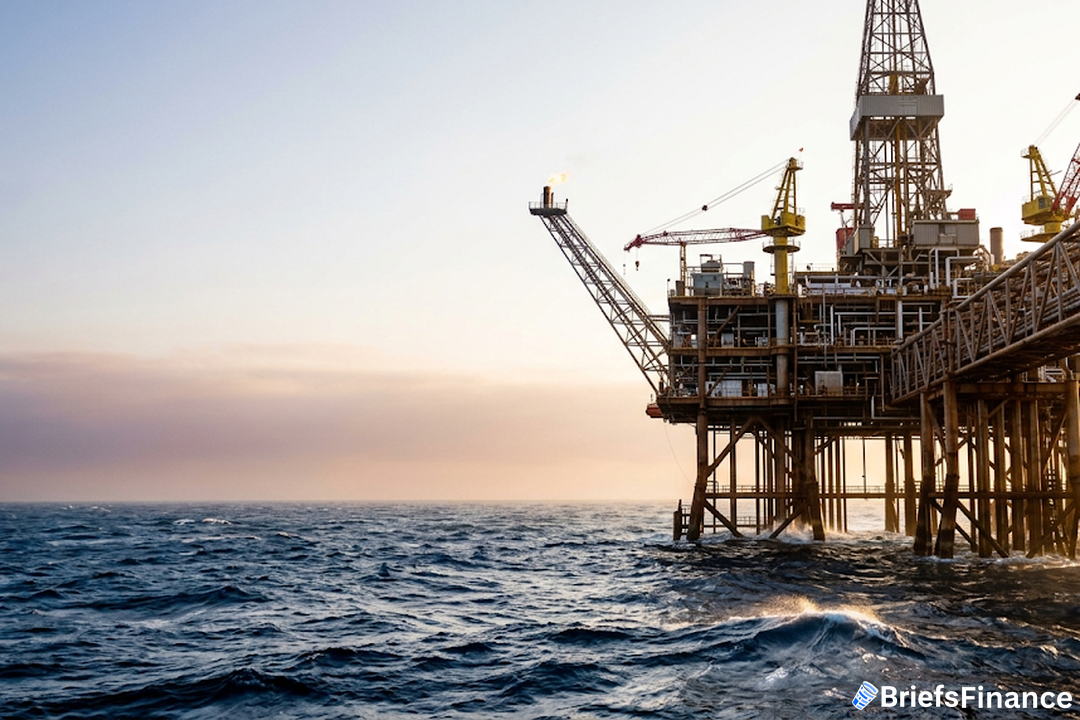
Oil Prices Lift Shell's Profits
Shell just posted its best quarterly profit in four years. The energy giant earned $9.84 billion in adjusted earnings for the April-June period, surpassing the average analyst estimate of $8.79 billion as compiled by LSEG. A separate company-provided forecast had predicted $8.92 billion.
That is more than double the $4.26 billion Shell made in the same quarter a year earlier. The previous record was $11.47 billion in Q2 2022, when Russia's invasion of Ukraine sent energy prices soaring.
The reason for the jump is not complicated.
Why Volatility Works for Energy Companies
Shell CEO Wael Sawan has a blunt take on the current environment. "Volatility is the new normal," he told CNBC's "Squawk Box Europe" on Thursday.
Get the market news that matters in a five-minute read with Market Briefs, our free daily newsletter
But Sawan also made clear that the company is not just riding a wave it cannot control. He pointed to two things Shell focuses on - "outstanding operational performance" across every business, plus "very strong trading and optimization."
That trading operation caught analysts' attention. Maurizio Carulli, an energy analyst at Quilter Cheviot, commented that Shell's "very strong" second-quarter results underscore its standing as a top sector performer. "The standout contribution came from Shell's trading operation, which once again demonstrated the value of its integrated business model, supported by healthy refining and chemicals performance and robust production growth in Brazil," Carulli said.
The company generated $21.4 billion in cash flow from operations during the quarter, supported by higher realized prices. Shell also allocated some cash to reduce debt. Net debt decreased to $41.75 billion, compared to $52.6 billion at the close of Q1.
The recent rise in oil prices stems from supply fears tied to tensions between Iran and the U.S., including airstrikes. Brent crude has climbed above $80 per barrel, directly benefiting Shell's upstream production. Meanwhile, the company's trading desk has been able to exploit price swings for additional profit.
The current geopolitical landscape reinforces the value of Shell's integrated model. While higher oil prices lift upstream earnings, the trading operation can profit from both upward and downward price movements - an advantage pure-play producers lack. This combination of operational agility and financial discipline has allowed Shell to deliver consistent, market-leading returns even amid regional instability.
This quarter's results highlight how a diversified energy giant can capitalize on volatile markets. By balancing strong production with a nimble trading operation, Shell has turned geopolitical turmoil into a competitive edge - while also improving its financial health and maintaining generous shareholder returns.
What Comes Next for Shell and Its Investors
Shell plans to keep returning cash to shareholders.
For the full year, Shell is sticking with its earlier capital spending forecast of $24 billion to $26 billion. That suggests the company is not changing its long-term plans just because of a short-term price spike.
The market seemed to approve. On the London Stock Exchange, Shell shares gained 1.5% Thursday morning.
Join Market Briefs, our free daily newsletter, for a quick daily rundown of the markets