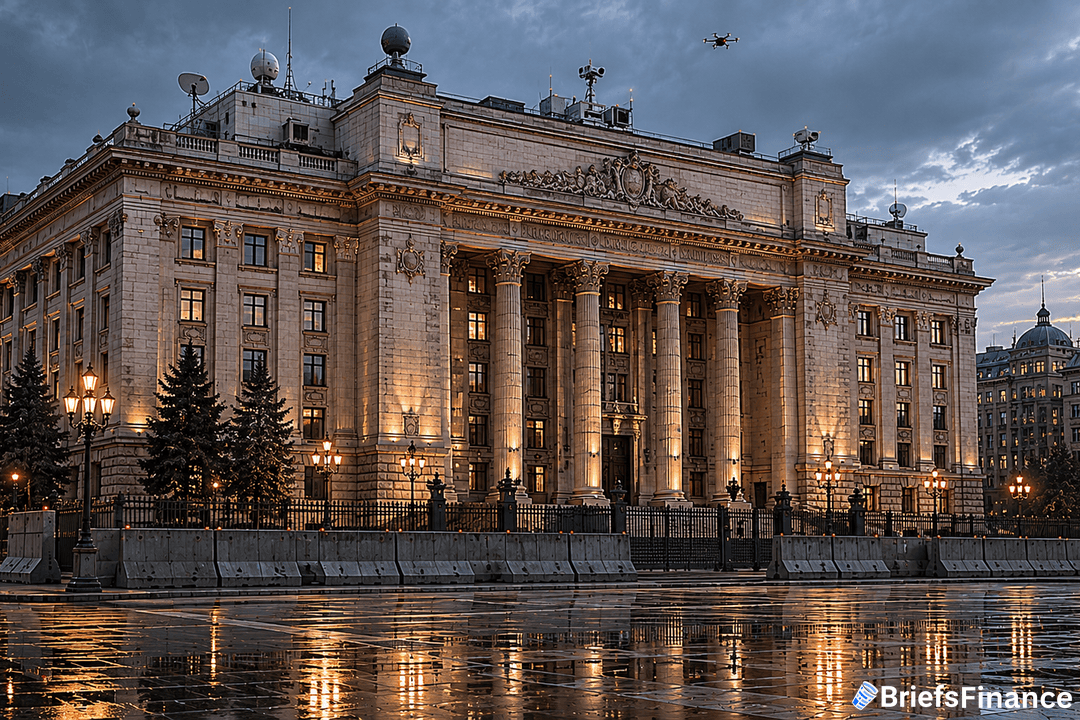
Russia's central bank now has its own anti-drone unit, and so does Sberbank.
So does the company that moves cash around the country, plus the agency that delivers classified state mail. This is what happens when a war stops being something a country sends soldiers to fight, and starts being something its bank tellers have to defend against.
What The Law Does
Russia's lower house of parliament passed the law on Tuesday, letting staff at the central bank and other approved institutions carry weapons and operate systems that take down drones, without waiting for special forces to show up. Methods include jamming the drone's signal, taking over its remote control, or just shooting it out of the sky.
Anatoly Aksakov, who chairs the State Duma's financial markets committee and helped write the bill, told RBC Radio the institutions will pay for their own systems. As he put it, "If it's the central bank, then the central bank will pay; if it's Sberbank, then Sberbank will pay."
The war in Ukraine has pushed Russia to defend more of its territory at once, because Ukraine's military has shifted to longer-range drone strikes. Those strikes stretch Russia's air defense across a country the size of two Australias.
For a daily read on stories like this and what they mean for global markets, Market Briefs delivers the news in five minutes a day, plus a free investing masterclass when you join.
Why Investors Should Care
When a country's financial system has to start arming itself, that is a signal about the cost of doing business there. Foreign investors have already pulled back hard from Russia since 2022, and this law is a reminder of why.
The other angle is global, with defense stocks like General Dynamics and other contractors benefiting from rising demand for counter-drone systems across NATO countries. The buyers are no longer just militaries, since banks, power grids, and ports are now in the same supply chain.
Russia also warned U.S. Secretary of State Marco Rubio on Monday to evacuate diplomats and American citizens from Kyiv ahead of fresh strikes. Foreign Minister Sergei Lavrov said Russia would launch "systematic and consistent strikes" against Ukrainian military sites, including drone factories.
With the U.S. focused on its own operation against Iran, peace talks look stalled. Markets are watching for any sign the U.S. and Russia can get them restarted while Washington is busy in the Middle East.
What To Watch
The war is moving into a phase where the front line runs through ATMs and trading floors, not just trenches.
Counter-drone budgets in both countries are climbing, which keeps a tailwind under defense suppliers even if peace talks restart. Companies that make jammers, radars, and short-range air defense gear are the most direct beneficiaries.
Russia is also signaling that it sees this fight lasting a while. Buying anti-drone systems is a capital expense, not a one-week emergency purchase, and the message to investors is that the war risk premium is not going away soon.
For more reads like this in your inbox every morning, join 350,000+ investors reading Market Briefs, and you also get a 45-minute investing course as a bonus when you sign up.