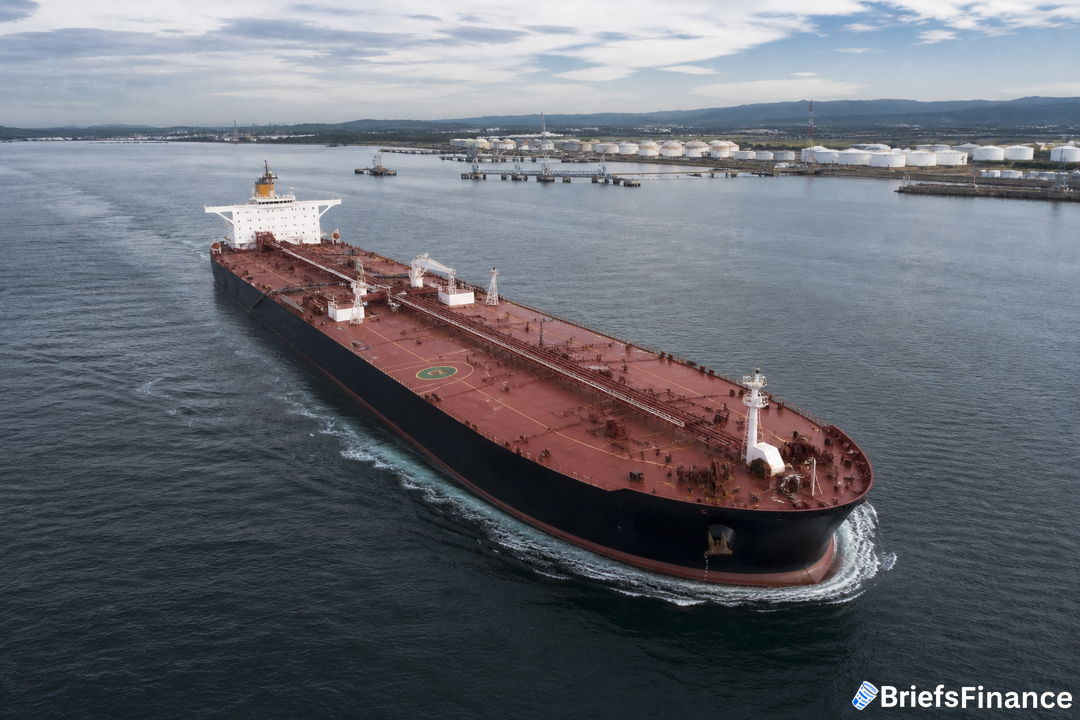
Shipments Jump as Prices Spike
Russia is moving more barrels just as the market tightens. Tanker-tracking data show seaborne crude exports averaged 3.54 million barrels a day in the four weeks to Sept. 13, after the sharpest weekly increase since mid-May. That surge coincided with Brent's climb to its highest since May after drone strikes shut Saudi Arabia's East-West pipeline, a route the kingdom has leaned on while Iran effectively blocks the Strait of Hormuz.
The squeeze on Middle Eastern supply has several fronts. Iran-backed Houthi rebels have attacked tankers, stalling Saudi flows through the southern Red Sea, and the US is blocking Iran-linked ships, cutting flows by about 1.5 million barrels a day that would otherwise have gone to China. Refiners in China and India are likely to welcome the extra Russian barrels as they juggle those disruptions.
Prices and Revenues Are Climbing
Higher global benchmarks are lifting Russian grades. According to Argus Media, the price received for Moscow's barrels delivered to India reached its highest level since early May during the past week. Chinese buyers are paying up too, with Pacific benchmark ESPO, sold on a delivered basis, quoted at a premium of more than $20 a barrel to Brent futures. That price strength, paired with slightly higher volumes, pushed the value of Russia's seaborne exports toward a near four month high last week.
Over the four-week span ending Sept. 13, gross export earnings averaged $1.9 billion per week, up by $180 million a week versus the window that ended Sept. 6, marking the strongest level since the run to June 28. Week over week, the value jumped by about $620 million to $2.42 billion, the most since the seven days to May 24.
Routes Shift to Keep Barrels Moving
Moscow is reshuffling routes to push more oil through safer outlets. Through this month to date, cargoes via the Baltic port of Ust-Luga are up by roughly one-third versus August, adding roughly 160,000 barrels a day. To make room, Russia diverted Kazakh cargoes to the more vulnerable Black Sea terminal at Novorossiysk. Two shipments of Kazakhstan's Kebco grade sailed from Novorossiysk in the latest week, and all Kazakh crude this month has been routed through that port, freeing capacity at Ust-Luga, which is viewed as safer.
Loadings at Novorossiysk have picked up since operations resumed in late August after Ukrainian drone strikes. In the week to Sept. 13, 38 tankers took on 27.06 million barrels of Russian crude, up from 23.88 million barrels on 33 ships a week earlier. The amount of Russian oil at sea has edged higher over the past two weeks, reflecting a rebound from a 16 week low during the last seven days of August.
In times like these, steady investors focus on protecting and growing savings. Join Briefs Finance CEO Jaspreet Singh on September 29th for a FREE live investor workshop, How to Profit From A Dollar That's Losing its Value, where he shows how we're spotting investment opportunities as the dollar falls. Save your spot.
Asia remains the main draw. Measured shipments to Asian buyers - including loads lacking a stated final destination - averaged 3.41 million barrels a day over the 28 days ending Sept. 13, compared with 3.35 million in the preceding window. Some newer voyages list interim stops such as Suez or Port Sudan, so they show up as "Unknown Asia" until later. West of Suez, flows to Turkey eased to about 50,000 barrels a day, versus roughly 80,000 barrels a day in the prior four-week period.
Since August, shipments to Syria have dropped to zero after the Mediterranean country agreed, during negotiations with the US over lifting remaining sanctions, to "drastically" reduce Russian oil imports. In the most recent four-week period, Egypt-bound shipments climbed to around 80,000 barrels per day, compared with roughly 30,000 per day during the 28-day span ending Sept. 6. And in 2023, Russia re-routed about 500,000 barrels a day that once moved by pipeline to Europe into seaborne exports.
Weekly numbers can be volatile due to weather, maintenance, sanctions, military activity, and when departures occur.
Production Pressure and Politics
Even with more barrels leaving, output is slipping. Russia is sending some crude that cannot be processed domestically into exports, but not enough to hold production steady. Demand in Asia remains solid, with Indian refiners taking upwards of 2 million barrels a day of Russian crude for a third month in a row in August.
Meanwhile, strikes targeting Russian oil and gas condensate processing facilities are happening nearly every night, even as pressure builds from US President Donald Trump, who pins the rise in diesel prices on those attacks - not on the war in the Middle East.
What it means for you: route changes are keeping Russian barrels flowing, global prices are firm, and Asia is still buying. That mix lifted Russia's export revenues to $2.42 billion last week and to a $1.9 billion weekly average over the 28 days to Sept. 13, even as production grinds lower. If energy touches your budget or your portfolio, keep one eye on shipping lanes and the other on the price chart.
Whatever the headlines, building a simple plan can keep your money steady. Our CEO Jaspreet Singh is hosting a FREE live investor workshop, How to Profit From A Dollar That's Losing its Value, on September 29th. Sign up free to join him live.