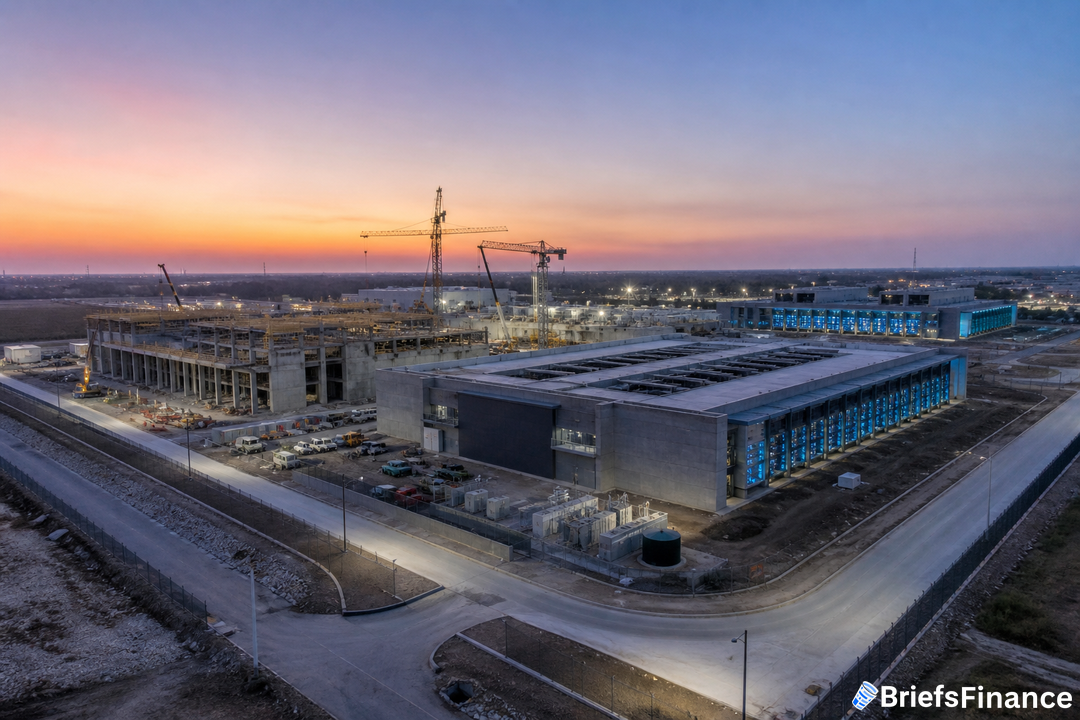
The AI Infrastructure Boom Continues
JPMorgan is structuring a $5 billion debt agreement to help Volta Infrastructure build data centers optimized for artificial intelligence applications. This financing comes as tech companies compete intensely for limited chips and computational capacity needed to develop next-generation AI models.
Founded this year by former Brookfield Asset Management executives Ricard Boada and Sofia Gumuzio, Volta is part of a rapidly growing industry focused on making AI infrastructure more accessible. The startup recently formed a strategic partnership with Anthropic, pledging to provide $10 billion in computing power over six years through a Norwegian data center facility.
Why Capital Is Flooding AI Infrastructure
The massive financing package reflects surging interest in AI infrastructure investments. Analysts report that nearly $600 billion has been allocated since last year for data centers, semiconductor acquisitions, and related initiatives.
Volta differentiates itself by enabling clients to bypass the substantial expenses of purchasing AI chips directly. Instead, customers like Anthropic pay for flexible access to Volta's managed computing solutions. This capital-efficient approach has gained traction with investors - the company's recent $300 million funding round boosted its valuation to $2.4 billion.
The Role of Specialized Financing
JPMorgan's participation signals institutional belief in AI infrastructure as a promising lending sector. Other financial institutions are developing customized financing options for businesses needing advanced semiconductors. Volta's arrangement demonstrates how conventional banks are evolving to support the physical infrastructure behind AI advancement.
Smart investing grows with AI's rise, so grab your free Always Be Buying E-Book to start building wealth today
Background: Surging Demand for AI Compute
The rush for AI infrastructure stems from skyrocketing demand for processing power. Developing sophisticated models such as Anthropic's Claude or OpenAI's GPT-4 demands enormous data center resources, frequently testing supply chain limits. Volta's flexible, usage-based model helps mitigate these challenges by providing scalable solutions that lower initial expenses for AI developers. This strategy has drawn significant investor and client interest, establishing the company as an important participant in the AI sector's expansion.
What It Means for Investors
While AI applications capture attention, the foundational infrastructure enabling them is attracting substantial investment. Volta's financing illustrates emerging funding approaches designed to satisfy growing demand. As AI adoption increases, expect to see more creative debt-equity combinations that connect technological potential with hardware needs.
The bottom line: The AI revolution depends as much on physical infrastructure as algorithms. Strategic financial arrangements like JPMorgan's will be crucial in developing the industry's foundation.