Free NewsletterPro Login

Warning: Undefined variable $stocks in /var/www/briefs.co/htdocs/wp-content/plugins/oxygen/component-framework/components/classes/code-block.class.php(133) : eval()'d code on line 448

Warning: foreach() argument must be of type array|object, null given in /var/www/briefs.co/htdocs/wp-content/plugins/oxygen/component-framework/components/classes/code-block.class.php(133) : eval()'d code on line 448

Warning: Undefined variable $funds in /var/www/briefs.co/htdocs/wp-content/plugins/oxygen/component-framework/components/classes/code-block.class.php(133) : eval()'d code on line 472

Warning: foreach() argument must be of type array|object, null given in /var/www/briefs.co/htdocs/wp-content/plugins/oxygen/component-framework/components/classes/code-block.class.php(133) : eval()'d code on line 472
/* the link was here */
×
Free investor livestream — Nov 17

How To Use ChatGPT & Claude To Research Stocks Like A Pro

01
The prompt we use to break down any stock
02
How to fact-check what AI tells you
03
How to compare two stocks in minutes

IEA Warns Data Centers Could Double Electricity Use by 2030

Published Nov 19, 2026
Share:
Summary:
  • The International Energy Agency says data centers may use roughly 1,000 terawatt-hours a year by 2030, roughly twice today's load.
  • The agency points to stretched component markets, pushback in communities and limited grid headroom as hurdles, with big queues of projects in Texas, Virginia, Finland and the U.K.
  • Peak power demand could climb 40% to 50% by 2035, and grids are "one of the biggest energy investment stories of the next decade."

What the IEA says about data centers and power grids

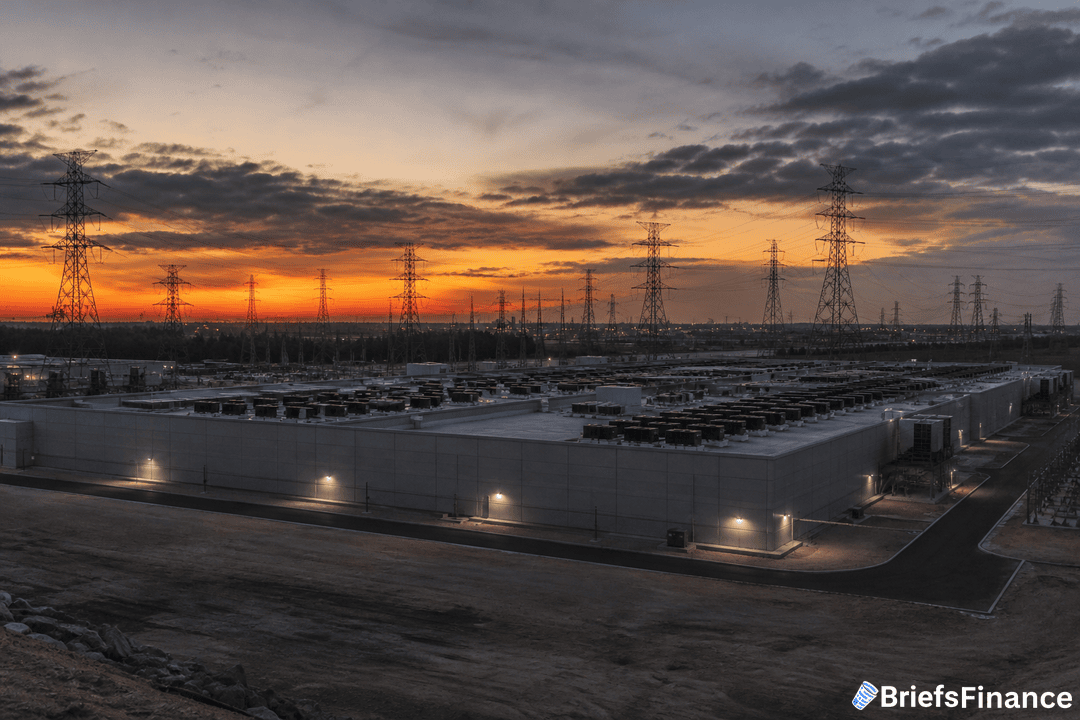
Global data center electricity needs could roughly double by 2030 to around 1,000 terawatt-hours annually. That kind of step up would lean hard on power systems and slow new builds if connections lag.

The projection sits in the IEA's Stated Policies Scenario, which reflects measures that have been proposed but not yet enacted. The agency flags a heavy slate of projects in Texas, Virginia, Finland and the U.K., noting that in some areas, the total capacity waiting to plug in tops today's peak demand.

Where the bottlenecks show up

The IEA cites three practical choke points for new facilities: overtaxed supply chains, neighborhood resistance and not enough room on local grids. Without upgrades, networks risk crowding and shakier reliability, which would mean longer waits for connections.

Power producers could also be required to reduce generation when the system cannot accommodate demand. On the materials front, the IEA notes that copper, power cables and transformers are already in short supply, complicating efforts to expand or reinforce networks.

How much buildout is needed

According to the Stated Policies Scenario, the IEA estimates that by 2035 power networks will need to install 26 million kilometers of fresh transmission and distribution lines, while also upgrading or swapping out about 16 million kilometers of current lines by that year. It also projects peak electricity demand rising by 40% to 50% by 2035.

Under the Current Policies Scenario, which reflects rules already in force, grid spending is expected to increase by 75% over the next decade. The IEA also projects renewable generation growing 85% more in the coming decade than in the last one, with solar photovoltaics set to emerge as the largest single provider of electricity beginning in the late 2030s. By 2035, electricity would make up almost 30% of total final energy use worldwide, as opposed to 23% in the IEA's main scenarios.

When big systems evolve, staying informed matters, so sign up for the free Market Briefs newsletter for five-minute updates

The energy security angle

The IEA says the 2026 energy crisis could push countries to electrify faster as they try to reduce reliance on imported oil and gas. That shift lowers exposure to fuel imports but raises the bar for grid reliability.

It adds a shipping reality check: in 2025, before the Iran war, an average flow of 20 million barrels per day of crude and oil products transited the Strait of Hormuz, representing roughly 25% of the world's seaborne oil trade. The same corridor carried nearly one fifth of global LNG trade. As Executive Director Fatih Birol put it, "The pressures of the current crisis must not obscure the choices that will shape energy security, sustainability and prosperity for the decades to come."

What this means for your portfolio

The bottom line: if electricity demand expands and grids bulk up, capital will follow. Companies tied to transmission, distribution, and essential kit like transformers, cables and copper sit squarely in what the IEA calls "one of the biggest energy investment stories of the next decade." Renewable developers and solar manufacturers also feature, with solar projected to lead global generation from the late 2030s.

Markets and infrastructure change over time, and our free Market Briefs explains it all in five minutes or less

Disclosure

Recent News

1 2 3 … 131

Get Market Briefs delivered to your inbox every morning for free!

No fluff. No noise. No politics. Just finance news you can read in 5 minutes.

Blogs

November 17, 2026
Is the Stock Market Going to Crash? Why Nvidia and the Fed Have Investors on Edge
  • Tech stocks are selling off because investors don't know who will lead Nvidia, the company that has been funding the AI industry and selling it chips.
  • Inflation has the Federal Reserve planning to raise interest rates, with a hike expected in December, and that puts pressure on homebuyers, private equity and the $40 trillion national debt.
  • Briefs Finance CEO Jaspreet Singh says nobody has a crystal ball, so his rules are to buy when markets are low, hold long term and invest only what you're willing to lose.
Read More
November 16, 2026
The $40 Trillion National Debt: Trump's 4-Part Plan to Make It Feel Smaller
  • The national debt is above $40 trillion, and the Federal Reserve has gone from sending Washington its profits to losing money.
  • President Trump's four-part plan leans on shorter-term debt, stablecoin companies buying Treasuries, a bigger balance sheet and government stakes in private companies.
  • The goal is to outgrow the debt, not pay it off, so Jaspreet Singh points investors to the seven industries where Washington wants growth.
Read More
November 16, 2026
The Fed Is Talking About a Jumbo Interest Rate Hike. It Has No Easy Way Out
  • The Fed makes its next rate decision on December 9 and is now talking about jumbo interest rate hikes of 0.5%, though one in December looks unlikely.
  • Washington will pay a record $1.05 trillion in interest this year on $40 trillion of debt, and that debt resets at higher rates as the Fed hikes.
  • Jaspreet Singh's five moves are to pay down variable-rate debt, earn interest on your savings, know which stocks feel the pressure, look at value and hedge.
Read More
November 16, 2026
Buying on Margin Is at a Record High. Here's the Risk for the Stock Market
  • Margin debt, the money investors borrow to buy stocks, is at a record of around 4.6% of GDP, up from 3.9% in 2021.
  • ETF money has more than tripled in five years to 7% of GDP, while corporate buybacks and 401(k) money sit below their earlier peaks.
  • Margin calls and panic selling can make the next downturn deeper, so Jaspreet Singh keeps buying broad market funds and says most investors should skip margin debt.
Read More
November 16, 2026
Housing Prices Are Falling. Buying a House Still Isn't Cheaper
  • Housing prices have fallen for four straight weeks, but mortgage rates around 7.2% keep the monthly payment about where it was in 2023.
  • Talk of a jumbo Fed rate hike and a plan to sell Fannie Mae and Freddie Mac on the stock market could both push mortgage rates higher.
  • Briefs Finance CEO Jaspreet Singh treats a house as a liability: buy within your budget and let your investments build the wealth.
Read More
November 14, 2026
Nvidia News: Jensen Huang Is Out, and the "Bank" Behind American AI Just Lost Its Founder
  • Jensen Huang is out at Nvidia over affairs with multiple people, and the company he founded has been the bank of American AI, with about $30 billion into OpenAI and $10 billion into Anthropic.
  • A hotter-than-expected inflation report has Fed officials talking about a possible 0.5% hike in December, and gold, silver, and bitcoin fell on the news.
  • President Trump said the US may not need a deal with Iran, keeping oil prices and inflation risk high. Jaspreet Singh breaks down what it all means for AI stocks and your portfolio.
Read More
November 14, 2026
Record Highs, a 57-Year Low in Jobless Claims, and a Stock Market Bubble: Inside the Weirdest Market in History
  • Stocks are booming at the fastest pace in years, jobless claims just hit a 57-year low, and most investors still feel like nobody is hiring.
  • The Fed is protecting the dollar over the economy, oil swings on every Iran headline, and a few AI companies are carrying an S&P 500 where four of five stocks sit in a correction.
  • Jaspreet Singh explains why circular financing between Nvidia, OpenAI, Anthropic, and SpaceX rhymes with 2008's house of cards, and how his three investing pillars handle a stock market bubble.
Read More
November 14, 2026
Is a Recession Coming? The Fed Just Made a U-Turn It Has Only Made Twice in 60 Years
  • The Fed has raised rates, cut them, then raised them again only twice in the last 60 years, and both times the economy fell into a recession and stocks crashed.
  • The same stop-and-go cycle is playing out now, with one big difference: US debt is 125% of GDP today versus about 30% in 1980.
  • In the 1970s gold rose roughly 24x, real estate 157%, stocks lagged, and cash lost half its value. Jaspreet Singh lays out five assets to consider before the next flip.
Read More
November 14, 2026
The 2027 Tax Brackets Are Out: How Some Investors Can Earn $135,300 and Pay $0
  • The IRS 2027 tax plan keeps the same seven rates but widens every bracket and lifts the married-filing-jointly standard deduction to $33,200.
  • The 0% long-term capital gains bracket rises to $102,100, so a household living on $135,300 of investment income could owe $0 in federal income tax.
  • C corporations still pay 21%, small businesses keep the 20% QBI deduction, and the 401(k) limit climbs to $25,500 with an $8,500 catch-up for investors over 50.
Read More
November 14, 2026
Rare Earth Stocks: Why China's January 2027 Ban Could Be the Opportunity of the Decade
  • China plans to block rare earth exports to the US on January 10, 2027, and the US produces effectively zero of the 17 metals that go into phones, cars, dishwashers, and missiles.
  • When China cut off Japan in 2010 and squeezed Germany from 2015, some rare earth prices jumped 18x and 15x, and one rare earth company went bankrupt while another soared.
  • Washington is already putting billions into MP Materials, Vulcan, and a stockpile called Project Vault, and Jaspreet Singh walks through how investors can get exposure to rare earth stocks and ETFs.
Read More
1 2 3 … 33
Share via
Copy link










