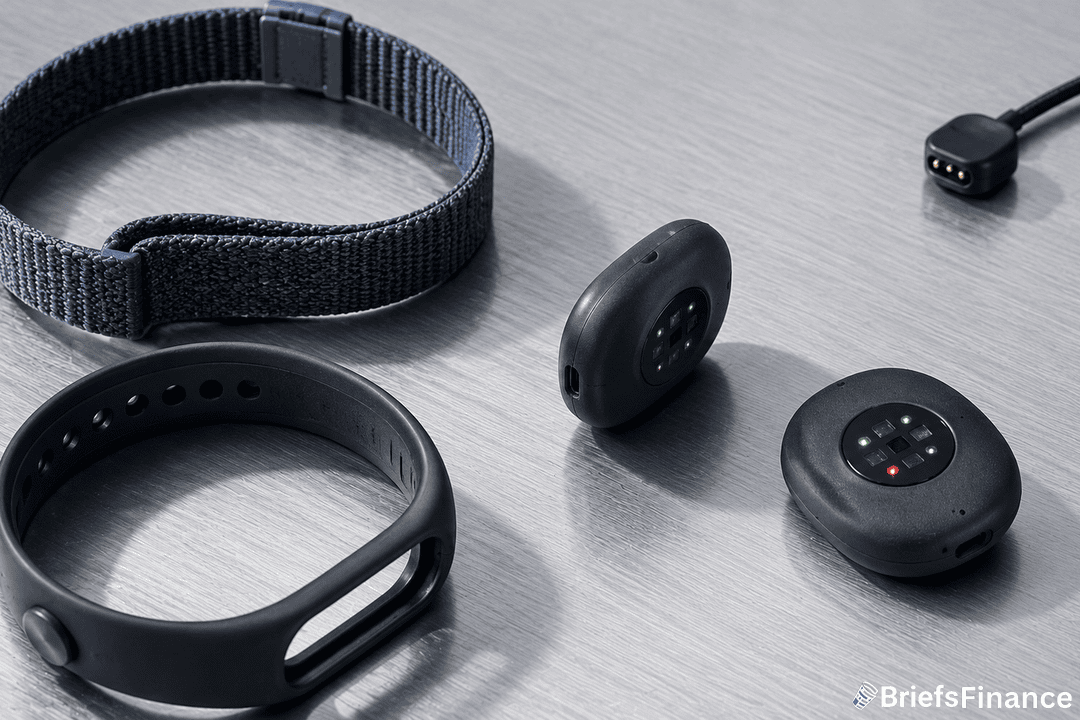
For years, Whoop had the screenless fitness tracker category mostly to itself - athletes loved it, and investors loved it more after the company raised $575 million in March at a $10 billion valuation. Then Google walked into the room with a $100 sticker price.
The new Fitbit Air is Google's first screenless wearable, weighing 5 grams, half the price of a Whoop subscription, and built around an AI coach powered by Gemini. The category just got loud.
How The Math Works
Whoop's business model is the subscription, so you don't really buy the device - you sign up for a $200, $240, or $360-a-year membership and the hardware comes with it. Google flipped that.
The Fitbit Air costs $100 upfront for the hardware, while the Gemini-powered AI Coach and core Google Health features come free with the device. A premium tier with extra perks runs $10 a month or $100 a year, which is cheaper than Whoop's entry-level plan.
The hardware specs are close. The Fitbit Air tracks heart rate, sleep, blood oxygen, skin temperature, and workouts, runs about 7 days per charge, and weighs about 5 grams without a band - though Whoop still doubles it on battery at roughly 14 days.
We break down stories like this every morning in Market Briefs - quick reads on what's actually moving, plus a free investing masterclass when you sign up.
The AI Coach Has Some Bugs
Engadget gave the device an 8.8 out of 10, but the AI side has been bumpy out of the gate. 9to5Google's reviewer reported that the Health Coach invented a 5.2-mile run that never happened, then admitted it had made up the data when challenged.
Engadget's reviewer hit similar issues - workout sessions tagged with "Adjusted that for you" headlines for sessions that hadn't been edited, and at one point the AI logged a phantom walk after a workout. Google says the coach was stress-tested with clinical experts and validated using its in-house SHARP framework.
The fixes are rolling in, but the first impressions weren't perfect.
What To Watch
The real question isn't whether the Fitbit Air is a better tracker than Whoop, but whether Whoop's subscription-only model survives in a world where Google is selling a comparable product for half the price of Whoop's cheapest annual plan. Whoop has the community and the data history.
Google has the AI, the distribution, the data center power behind Gemini, and the lower price. Hardware categories rarely stay premium-priced once Google enters them.
If you want the next big consumer tech story before it's everywhere, our daily newsletter comes every weekday morning and you also get a 45-minute investing course as a free sign-up bonus.