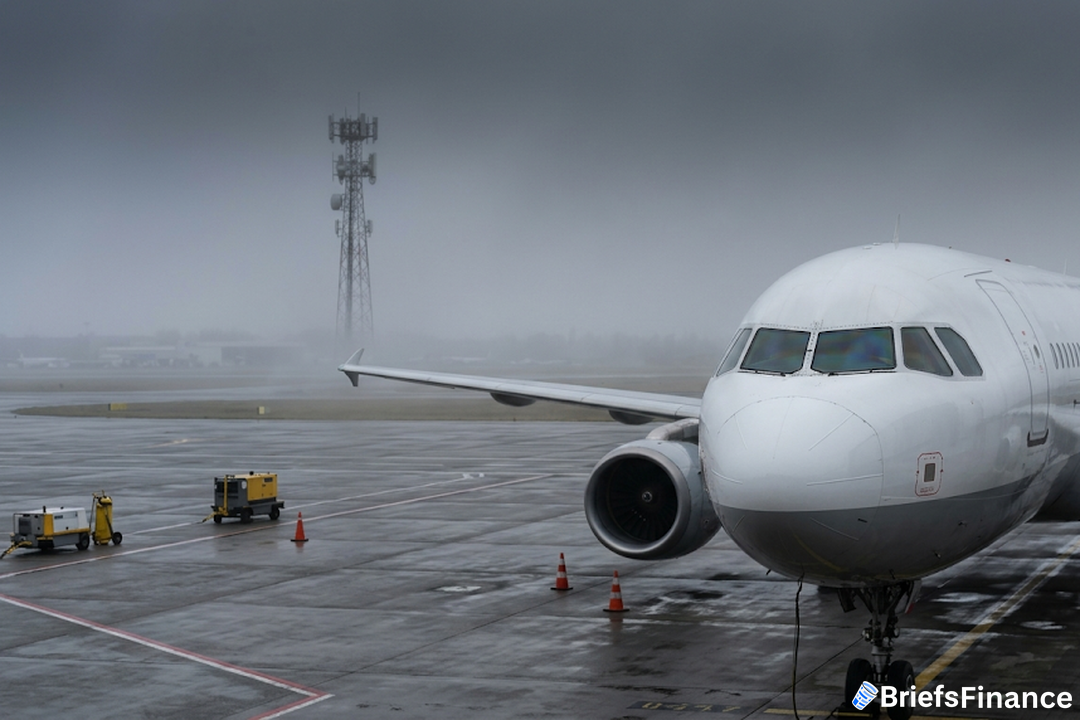
What Just Happened
The FAA now mandates that all planes must be able to resist disruption from 5G signals operating on adjacent frequency bands. These radio altimeters, essential for safety, determine how high a plane is flying and enable low-visibility takeoffs and landings. When 5G towers transmit at full strength, they can interfere with older altimeters.
This conflict has simmered for years. During the Biden administration, airlines and wireless carriers clashed over 5G expansion in the lower C-band. At that time, an agreement was struck between the parties.
Industry groups had repeatedly warned that unmitigated 5G interference could ground flights and endanger safety, leading to temporary buffer zones and voluntary power reductions. The new rule formalizes the long-term solution: replacing legacy altimeters with hardened versions across the entire U.S. fleet.
Get the market news that matters in a five-minute read with Market Briefs, our free daily newsletter
To provide context, the tension between aviation safety and telecommunications expansion dates back to early 2021, when the FCC first auctioned C-band spectrum for 5G. Airlines raised alarms about potential altimeter failures near airports, prompting a series of temporary deferrals, power limits, and buffer zones around runways. Those ad‑hoc measures bought time while the FAA and wireless carriers studied the interference risk. This new regulation replaces those stopgaps with a permanent equipment standard.
Background
Throughout 2022 and 2023, the temporary safeguards - including reduced 5G tower power near 50 major airports and voluntary delays in activating certain transmitters - allowed airlines to maintain operations while the FAA evaluated altimeter performance. The agency conducted extensive flight tests and laboratory simulations, ultimately concluding that only physically upgraded altimeters could guarantee immunity against full-power 5G emissions. The rebate program, funded through a combination of carrier fees and federal appropriations, is designed to offset the $4.49 billion retrofit cost and push the entire fleet to compliance within five years instead of the original ten-year timeline estimated by industry analysts. The FAA expects that airlines will begin submitting upgrade plans within months, with priority given to aircraft operating in high-risk areas near major urban airports.
The Cost and the Spectrum Fight
This fight has been brewing for years.
The FAA stressed its partnership with the FCC to facilitate a smooth implementation of the updated rules. Carriers required to replace their altimeters to prevent signal disruption can take advantage of a rebate program. The regulation incorporates protections such as capping the transmission power of the 5G spectrum being sold and imposing height limits on 5G towers.
What It Means for Airlines
An FAA spokesperson said, "Commercial aircraft will equip with next-generation technology several years earlier than otherwise would have been feasible."
Join Market Briefs, our free daily newsletter, for a quick daily rundown of the markets