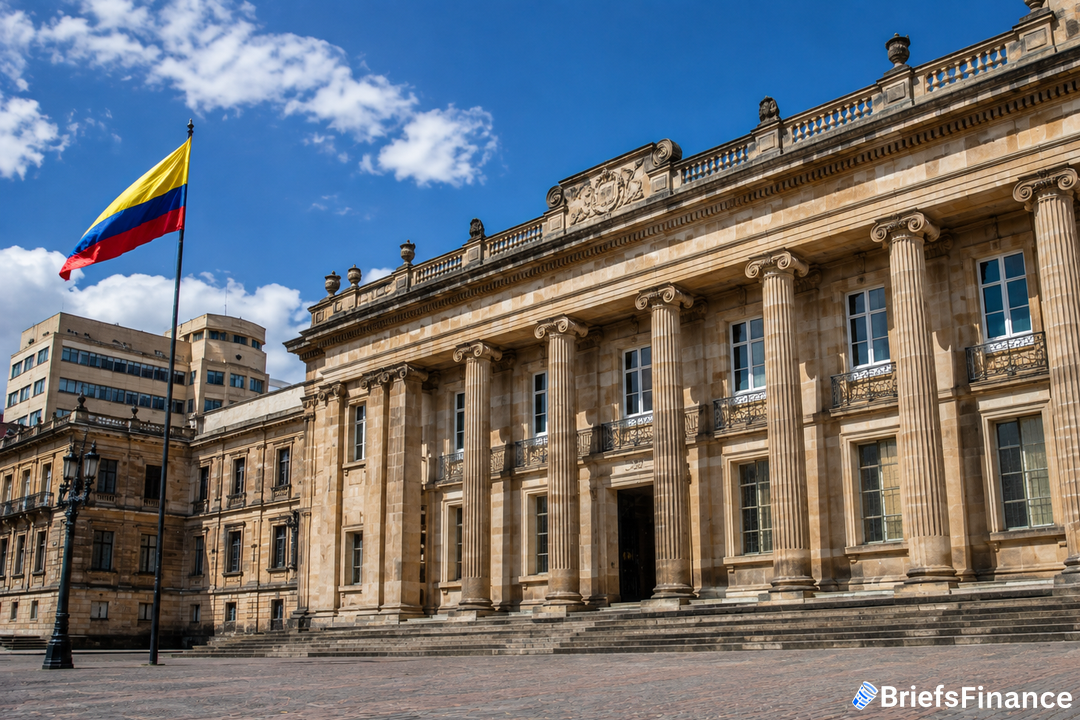
A Split Vote Leaves Rates Unchanged
Colombia's central bank made the surprise call to hold interest rates steady on July 31, the last monetary policy decision of President Gustavo Petro's administration, despite rising price pressures.
The bank's seven-person board split 4-3. In a press conference following the meeting, central bank Governor Leonardo Villar confirmed the benchmark rate would remain at 12%. Four members voted to stay put, while the other three wanted a 50-basis-point rise. Bloomberg's survey of 27 economists showed just four anticipating the pause; all others expected a hike of 25 to 75 basis points.
Andres Abadia, who covers Latin America at Pantheon Macroeconomics, said in a research note before the meeting that inflation reflects the government's expansionary fiscal stance, a 23% increase in the minimum wage, and temporary shocks in food and energy prices. He was one of the few analysts to call the decision correctly.
The vote was a final political win for Petro, ending a presidency that was often marked by friction with the central bank. He had frequently criticized board members for maintaining restrictive policy as inflation accelerated. Finance Minister Germán Ávila, present at his last policy meeting, echoed those complaints and once threatened to skip rate-setting meetings.
Inflation Is Still the Problem
The decision to hold came even though inflation is running above 6%. Officials now face a real chance that inflation will not return to the bank's 3% target, with a tolerance band of one percentage point in either direction, in 2026 or 2027.
Get the market news that matters in a five-minute read with Market Briefs, our free daily newsletter
Villar and most of his colleagues on the board have said repeatedly that inflation expectations are not well anchored, so policy must stay tight until price growth slows clearly.
Colombia's peso has gained more than 20% against the dollar this year, which has helped reduce imported inflation but at the same time weighed on coffee, banana, flower and other commodity exporters.
More Than Just Rates
Villar also announced an initiative to build up international reserves, with purchases of up to $4 billion. The first auction is set for Aug. 3, and the purchase rights may be used starting Aug. 4.
Watching the New Government
International investors have piled into Colombian securities, drawn by high yields for carry trades and by expectations for incoming President Abelardo de la Espriella to push through fiscal adjustment. The country's independent fiscal watchdog projects the budget deficit will top 7% of GDP this year.
Petro has blamed the central bank's high policy rate for pushing up sovereign bond yields. The bank's board, however, has consistently said the main cause of high sovereign borrowing costs is Colombia's weak public finances.
Economist Miguel Gómez Martínez will take the government's seat on the board as Colombia's next finance minister. That appointment gives the incoming administration a direct voice when the board meets again in late September.
What This Means for Your Money
For now, the benchmark interest rate stays at 12%, so borrowing remains expensive for households and businesses. In the central bank's latest survey, economists had expected a peak of 12.5%, with the first rate cut arriving in March 2027.
Join Market Briefs, our free daily newsletter, for a quick daily rundown of the markets