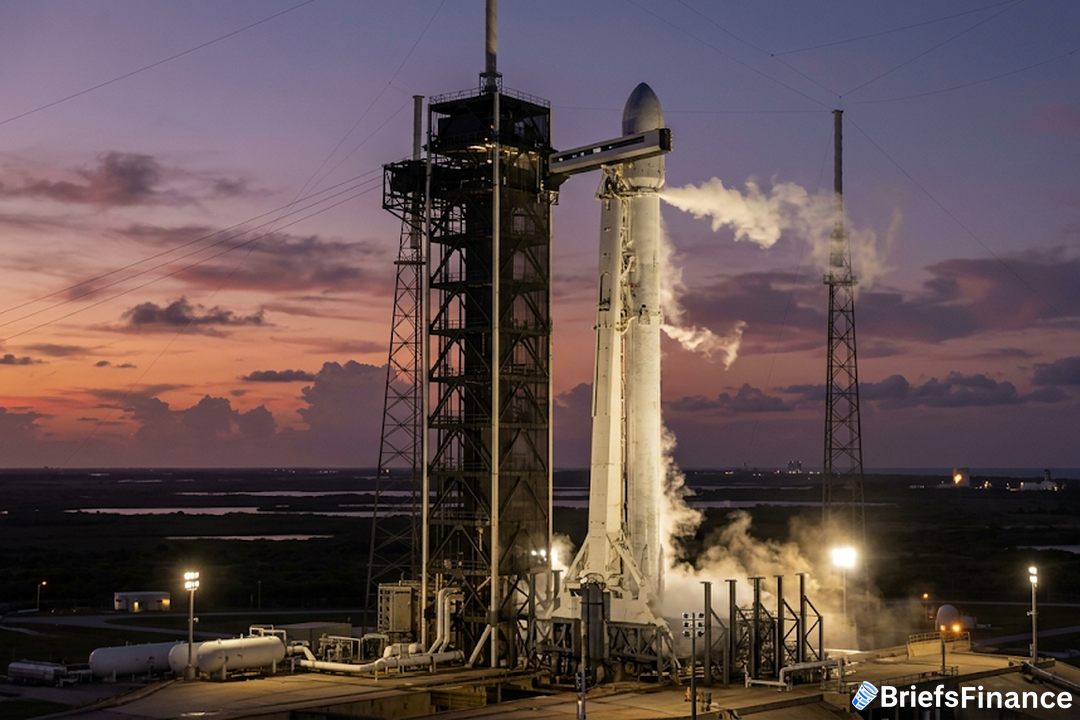
Short Sellers Crowd In
In the run-up to two major events next week, bearish investors have expanded their SpaceX wagers sharply. On Aug. 4, SpaceX will release its maiden quarterly earnings as a listed company.
Sam Pierson, S3's director of research, said the dominant wager is based on the share release. "The big bet right now is on the unlock and effectively that there won't be anything announced on earnings that will overcome the volume of unlocked shares coming to market."
The cost of borrowing SpaceX shares has also risen while these positions are built. A short position works by selling shares obtained from another investor; the seller hopes the price drops so the shares can be repurchased more cheaply and returned. The jump in bearish bets suggests many traders expect the stock to come under pressure once the lock-up passes.
"There is a little friction for shorts who want to keep the position on through next week, after that it is very likely the borrow cost will go back to being easy to borrow," Pierson added.
Get the market news that matters in a five-minute read with Market Briefs, our free daily newsletter
Why the Lock-Up Matters
Lock-up agreements are a standard feature of recent IPOs. Such agreements typically keep company insiders and early investors from selling their stock until a certain date, after which those shares can be traded freely. SpaceX's arrangement is staggered, so this first release is one step in a longer process.
At present, the float is about 640 million shares, or approximately 5% of all outstanding stock. After the first release of locked-up shares, S3 estimates that proportion will rise to around 12% of all outstanding stock. The upcoming batch of 911.5 million shares is larger than the current float, which is why short sellers are treating the date as a key risk. An expiration does not mean all eligible shares will be sold at once; it simply removes the restriction, but the market often watches these events closely because shareholders may choose to cash out.
Unlock dates can create volatility even when actual selling is modest, because traders position ahead of potential supply and the perception of a looming overhang affects pricing. Because SpaceX's arrangement is staggered, the August release is only the first of several future unlocks.
The stock has already weakened since the IPO. By 12:48 p.m. New York time, shares were at $108.83, down 3% and roughly 19% under the IPO price.
Pierson said, "There are three key drivers to monitor over the next year." "The unlock ladder is the nearest. S&P 500 entry is another - seasoning rules put it out to mid-2027 at the earliest, but the market is already handicapping it," he added.
The third possibility, according to Pierson, is a combination with Tesla, "which would fast-track that inclusion."
What It Means for Investors
SpaceX went public in June, and its shares currently sit roughly 19% under the IPO price. The first unlock could add a significant number of tradable shares to the market even if not every eligible shareholder sells immediately, leaving the stock exposed to further supply-related concerns after this month's event. These factors, combined with the potential for S&P 500 inclusion further out, are likely to keep attention on SpaceX's share structure and trading conditions over the coming months.
Join Market Briefs, our free daily newsletter, for a quick daily rundown of the markets