Free NewsletterPro Login
S&P 500 6,287 +0.42%
DOW 44,521 -0.18%
NASDAQ 21,103 +0.71%
S&P 500 +12.4%
Briefs Finance Fund +24.8%
JOIN THE FUND →

Apple to Roll Out Complete Mac Update Cycle Amid AI Boom

Published Jul 23, 2026
[tts_player]
Share:
Summary:
  • Apple intends to release updated versions of every Mac model over the coming fall and throughout next year.
  • Apple increased the price of every Mac in June, with the MacBook Neo now $699 (up from $599) and the 13‑inch MacBook Air at $1,299 (previously $1,099).
  • A Mac leasing program is set to debut on July 28, and memory chip shortages have caused shipping delays of at least three months for some Mac mini and Mac Studio orders.

Biggest Mac Refresh in Years

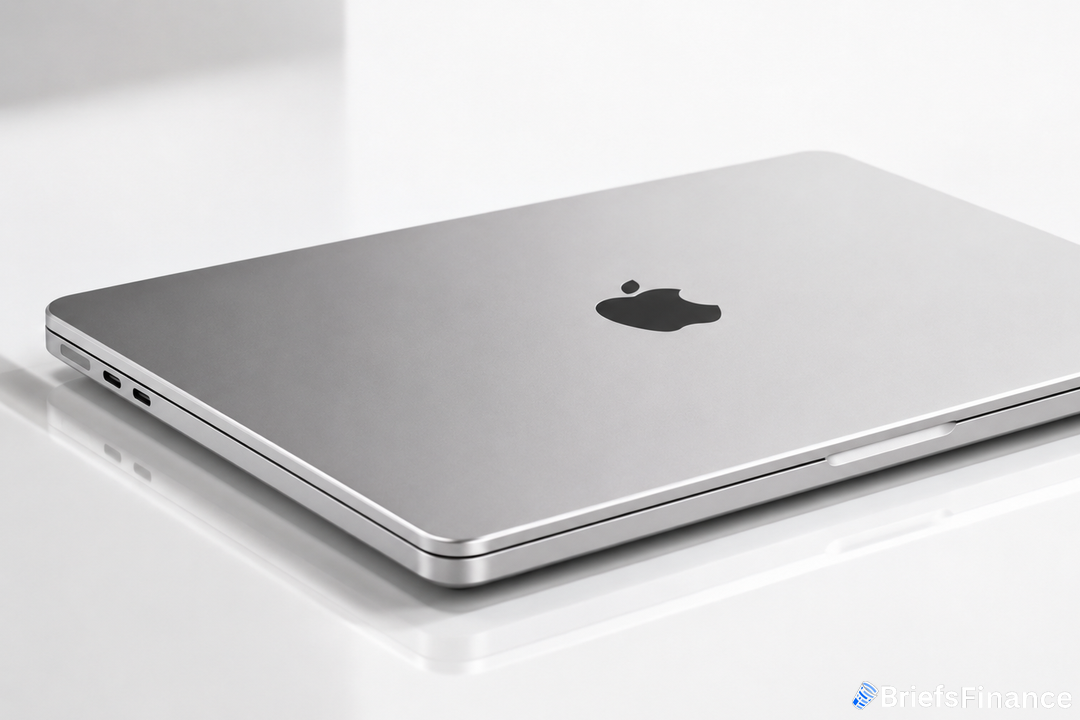
Apple is gearing up to introduce new iterations of each Mac it markets, encompassing both desktops and laptops, starting this autumn and continuing into next year. The tech giant is revamping its entire Mac lineup to take advantage of the rising demand for high‑performance machines driven by artificial intelligence.

The first wave will feature a refreshed lower‑tier 14‑inch MacBook Pro, which will be among the earliest models to adopt the M6 processor, along with the first iMac refresh in two years. These updated iMacs and the entry‑level MacBook Pro are finished but won't ship before the fall.

The most striking upcoming model is a premium 14‑inch and 16‑inch MacBook with an all‑new design, a touch screen, and OLED display technology - both industry firsts for Apple's laptop line. This series, internally designated K114 and K116, is set for release between late 2024 and early 2025. Apple is currently testing these machines with macOS 27.1, which is set to reach consumers at the end of October. These laptops will feature M5 Pro and M5 Max processors.

A refreshed MacBook Air family is planned for early next year, comprising 13‑inch and 15‑inch variants (codenamed J913 and J915). The new Air will look much like the current model, though Apple is working on an OLED version that could appear as early as 2028.

Get the market news that matters in a five-minute read with Market Briefs, our free daily newsletter

Apple is additionally preparing a basic 14‑inch MacBook Pro with a fresh design for next year. This model, code‑named K104, will resemble the high‑end 14‑inch and 16‑inch versions but will run on a standard M7 chip.

A new iteration of the MacBook Neo, Apple's low‑cost laptop, is also in the works. Internally, Apple has been testing a variant with an updated A19 Pro processor and increased memory. The Neo launched in March, and Apple intends to periodically refresh it with new color options.

Apple has plans for upgraded Mac mini and Mac Studio models as well. The Mac mini under testing uses M5 Pro and M6 chips, while the Mac Studio features M5 Max and M5 Ultra processors. However, the release timeline and specific chip and memory configurations depend on the availability of memory‑chip supplies.

Why Costs Are Rising and Delivery Times Are Extended

The Mac is experiencing a revival, with sales forecast to increase for a third consecutive year. The machines have attracted users who operate computationally intensive AI agents. Meanwhile, a memory‑chip shortage is straining production, prompting Apple to raise prices.

A top‑spec 16‑inch MacBook Pro with maximum memory and storage now costs $9,999.

Because of their processing power and monitor support, the Mac mini and Mac Studio are popular choices for AI workloads. Demand has so outstripped supply that new orders for certain Mac mini and Mac Studio models face delays of at least three months. In April, Apple CEO Tim Cook stated that he thinks it could take "several months" for these machines to achieve supply‑demand equilibrium. In February, Apple announced that it would, for the first time, manufacture the Mac mini in Houston, moving beyond Asian production sites.

According to a Tuesday report from Bloomberg, Apple will introduce a program to lease Mac devices starting July 28.

The combination of rising prices and supply constraints is forcing Apple to adjust its go-to-market strategy. By introducing a leasing program on July 28, the company aims to make its high-end Macs more accessible to businesses and professionals, particularly those deploying AI agents that require sustained computational performance. Meanwhile, the decision to manufacture the Mac mini in Houston signals a shift in Apple's supply chain risk management, moving some production away from Asia.

Join Market Briefs, our free daily newsletter, for a quick daily rundown of the markets
Disclosure

Recent News

1 2 3 41

Get Market Briefs delivered to your inbox every morning for free!

No fluff. No noise. No politics. Just finance news you can read in 5 minutes.

Blogs

June 29, 2026
Portfolio Diversification: Why Putting All Your Eggs in One Basket Destroys Wealth
  • Real diversification means spreading investments across all 11 economic sectors plus bonds, alternatives, and cash so no single bet can sink the portfolio.
  • Different sectors perform at different times, so a diversified portfolio captures upswings while smoothing the brutal drawdowns that wipe out concentrated bets.
  • Total market index funds offer the simplest path to diversification, and annual rebalancing is what keeps the structure working over time.
Read More
June 29, 2026
Non Taxable Income: What It Is and Why It Matters
  • Non taxable income is money you receive that you don't owe income tax on.
  • The tax code treats workers, investors, and business owners very differently, and investors often come out ahead.
  • Learning how income is taxed is a quiet superpower for keeping more of what you earn.
Read More
June 29, 2026
Semiconductor Stocks: A Simple Guide for Investors
  • Semiconductor stocks are companies that design and make computer chips, the brains inside nearly every modern device.
  • The AI boom has turned chips into one of the market's most important and most watched groups.
  • They offer big growth potential, but come with high valuations and a notoriously cyclical history.
Read More
June 25, 2026
How Stocks Work: A Simple Guide for Beginners
  • A stock is a slice of ownership in a company - buy one, and you own a piece of the business.
  • You make money two ways: the share price rising over time, and dividends paid to shareholders.
  • The simplest path for most beginners is buying into the whole market through a low-cost index fund.
Read More
June 25, 2026
Stop Loss vs Stop Limit: What's the Difference?
  • A stop loss order sells your stock once it hits a trigger price, prioritizing getting you out.
  • A stop limit order only sells within a price range you set, prioritizing price over a guaranteed exit.
  • The trade-off: a stop loss almost always executes; a stop limit might not if the price moves too fast.
Read More
June 25, 2026
Energy Stocks: A Simple Guide for Investors
  • Energy stocks are companies that produce and supply the power the world runs on, from oil and gas to newer sources.
  • They make up one of the 11 sectors of the market and tend to move with energy prices and big-picture shifts.
  • Like any sector, the key is diversification and understanding the forces driving demand.
Read More
June 18, 2026
What Is a Stop Loss Order? A Simple Guide
  • A stop loss order automatically sells a stock once it falls to a price you set.
  • It's a tool to cap losses or lock in gains without watching the market all day.
  • It works best for active strategies, and can backfire if used carelessly on long-term holdings.
Read More
June 18, 2026
Best S&P 500 Index Fund: How to Choose One
  • The best S&P 500 index fund for most investors is simply the cheapest, most established one that tracks the index well.
  • Funds like VOO, IVV, and SPY all hold the same 500 companies, so the biggest difference is the fee.
  • Pick one, automate your buys, and let time do the heavy lifting.
Read More
June 17, 2026
What Are Penny Stocks? Risks and Rewards Explained
  • Penny stocks are very low-priced shares of very small companies, often trading for just a few dollars or less.
  • They promise huge gains but carry huge risks: low liquidity, high failure rates, and wild price swings.
  • Most investors are better served by quality companies and funds than by chasing cheap shares.
Read More
June 17, 2026
Best Stocks for Beginners With Little Money
  • The best stocks for beginners with little money usually aren't individual stocks at all - they're low-cost index funds.
  • You can start with $100 or less and use small, regular investments to build wealth over time.
  • Focus on diversification and consistency, not on picking the next big winner.
Read More
1 2 3 24
Share via
Copy link











