Free NewsletterPro Login

Warning: Undefined variable $stocks in /var/www/briefs.co/htdocs/wp-content/plugins/oxygen/component-framework/components/classes/code-block.class.php(133) : eval()'d code on line 448

Warning: foreach() argument must be of type array|object, null given in /var/www/briefs.co/htdocs/wp-content/plugins/oxygen/component-framework/components/classes/code-block.class.php(133) : eval()'d code on line 448

Warning: Undefined variable $funds in /var/www/briefs.co/htdocs/wp-content/plugins/oxygen/component-framework/components/classes/code-block.class.php(133) : eval()'d code on line 472

Warning: foreach() argument must be of type array|object, null given in /var/www/briefs.co/htdocs/wp-content/plugins/oxygen/component-framework/components/classes/code-block.class.php(133) : eval()'d code on line 472
/* the link was here */

Alphabet-Blackstone's AI Cloud Play Hits Speed Bumps, Keeps Building Anyway

Published Sep 8, 2026
Share:
Summary:
  • The joint venture known internally as Project Braid began with $5 billion from Blackstone, and it aims to lease Google's AI chips starting in 2027.
  • Google scrapped a Crusoe build in Cheyenne, Wyoming and took over, while transformer shortages and a Texas freeze on new projects add friction.
  • Despite delays, CEO Benjamin Treynor Sloss says the venture is "on track to deliver its targeted 500 megawatts next year" and is widening its site pipeline.

What happened on the ground

Alphabet and Blackstone teamed up on a neocloud dubbed Project Braid, seeded with $5 billion from Blackstone, to rent out Google's AI processors beginning in 2027. Despite early hiccups, the venture says it still expects to reach 500 megawatts next year.

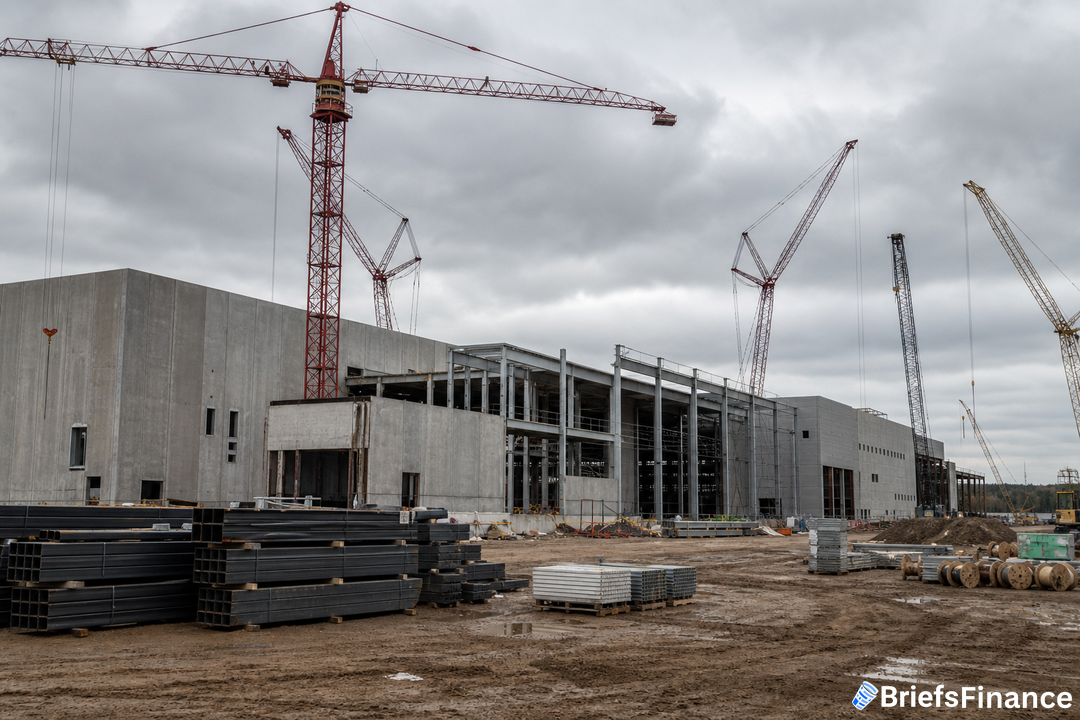
One of those hiccups: people familiar say Alphabet's Google pulled the plug on a Crusoe-led plan to build in Cheyenne, Wyoming. Google assumed command of the build and is reapplying for permits after it no longer trusted Crusoe's ability to execute, and authorities in the area informed residents that the project will be reduced in scope. Crusoe - widely recognized for work tied to OpenAI and Oracle Corp.'s Stargate flagship site in Texas - didn't respond to messages.

Another proposed location fell through because it lacked the required transformers, according to one person. Those parts are in short supply, with wait times that can approach a year, per McKinsey. Google declined to comment, and Blackstone pointed to the joint venture's emailed statement.

Why the buildouts are slowing

It is not just this project. Communities are pushing back, regulators are taking a closer look, and data centers have turned into a campaign flashpoint ahead of this year's midterm elections. JPMorgan estimated in May that more than 60% of capacity slated for 2027 hasn't even broken ground. Add in shortages of switchgear and skilled workers, and timelines slip.

Texas has become a tougher market too. According to some people, Governor Greg Abbott halted approvals for new initiatives as the state seeks additional details on how developers and tech firms handle electricity expenses, disrupting other efforts.

Long term projects shift course, so steady financial planning safeguards your progress. Join Briefs Finance CEO Jaspreet Singh on September 29th for a FREE live investor workshop, How to Profit From A Dollar That's Losing its Value, where he shows how we're spotting investment opportunities as the dollar falls. Save your spot.

How Project Braid and its backers are reacting

Project Braid leaders are projecting calm. "It is very common for individual potential sites to progress at different rates," CEO Benjamin Treynor Sloss said in an emailed statement. He added that the neocloud planned for that variability, has a "diversified set of options," is making "strong progress," and is "on track to deliver its targeted 500 megawatts next year."

The venture says demand is running hotter than expected: "Given higher-than-expected demand for our compute capacity, we are actively expanding our pipeline to evaluate a broader pool of sites to support our long-term scaling plans." Backers are combing their networks for options. Over the past few weeks, Google sought assistance from neocloud executives it partners with, while Blackstone brought in consultants and other allies. One person said the team has identified 29 possible data-center sites.

The bigger picture for AI buildouts - and your money

Google wants the chips behind its Gemini AI model in front of more customers and a stronger hardware ecosystem to better challenge Nvidia. A number of the biggest neocloud providers - CoreWeave Inc. among them - operate solely on Nvidia's AI chips. To make headway, Alphabet needs more data centers for Google Cloud and partners willing to host its tensor processing units.

Google, forecasting up to $205 billion in capital expenditures this year, set up this joint venture with Blackstone to curb the direct expenses of its AI buildout. The setup would shift some spending and risk off the tech giant's balance sheet, even as Blackstone works toward its goal of becoming the world's largest backer of digital infrastructure. People involved with Project Braid now peg the odds of data-center projects meeting delivery dates at roughly 50%, down from about 90% three years ago.

That poses a proving ground for BXN1, Blackstone's new AI investments unit, spun out of a business centered on growth‑equity bets. Blackstone is also widening its exposure, most recently aligning with other firms that have vowed to work with Nvidia on committing billions to AI infrastructure.

When plans evolve, protecting and growing your savings starts with calm, consistent choices. Our CEO Jaspreet Singh is hosting a FREE live investor workshop, How to Profit From A Dollar That's Losing its Value, on September 29th. Sign up free to join him live.

Disclosure

Recent News

1 2 3 … 103

Get Market Briefs delivered to your inbox every morning for free!

No fluff. No noise. No politics. Just finance news you can read in 5 minutes.

Blogs

October 16, 2026
How Boring Math Makes You Rich: The Briefs Money Spreadsheet, Explained
  • Briefs Money shows you what to do with every paycheck, and in what order: how much to spend, save, and invest, when to build an emergency fund, and which debt to pay off first.
  • The Climb to Wealth course walks you through the system step by step, and the Personal Finance Spreadsheet is where you track your own numbers.
  • Investing is one piece of building wealth. The system that gets money to your investments, and keeps it there, decides the outcome.
Read More
October 16, 2026
Common Investing Mistakes: Why a Stock Grade Is One Tool, Not the Whole Toolkit
  • The Briefs Score shows growth, income, and wealth preservation investors how well a stock fits their goal, with a separate letter grade for each one.
  • The most common mistake is treating the letter as an instruction. An A tells you a stock scores well for one goal, not that you should buy today.
  • Research works best as one input in a process you own. The grade shows how a stock stacks up. You supply the goal, the timeline, and the rules for being wrong.
Read More
October 16, 2026
How to Read a Company's Numbers Without a Finance Degree (Using Briefs Terminal)
  • Briefs Terminal lets you size up any public company in about ten minutes: what the stock costs, what it earns, how fast sales are growing, and what it pays you, all on one page.
  • It lines those numbers up against the company's closest competitors for you, so you can tell if a number is impressive or just average.
  • Below that are the income statement, balance sheet, and cash flow statement from the company's SEC filings, the latest news, and transcripts of its earnings calls.
Read More
October 16, 2026
What Type of Investor Am I? The Three Investor Archetypes, Explained
  • Briefs sorts its stock grades and monthly reports by three investor goals: growth, income, and wealth preservation. Pick yours and you know which report and which grade to read first.
  • Growth investors want stocks that beat the S&P 500. Income investors want to get paid in cash. Wealth preservation investors want stocks that hold up when the market drops.
  • The same stock can score an A- for one goal and a D- for another, so picking your goal comes before picking any stock.
Read More
October 16, 2026
How to Build a Stock Watchlist That Isn't Just Stocks You Heard About
  • A watchlist on Briefs Terminal lets you group stocks by the idea you're tracking and follow each one's price, one-day move, and 52-week high and low in one place.
  • Each list has its own name and description, so you always know why a stock is on it, and you can make as many lists as you have ideas.
  • The monthly growth, income, and wealth preservation reports under the Briefs Research tab hand you new themes to track that you didn't hear about online.
Read More
October 16, 2026
How to Choose an ETF That Matches Your Idea (Using the ETF Planning Tool)
  • The ETF planning tool takes an idea like "I want to invest in fast food companies," asks what you mean, and finds the ETFs that match, with the reasons, the holdings, and the sources.
  • Build a Plan then shows what your money could grow to in those ETFs over the years you choose, with conservative, expected, and optimistic estimates next to the S&P 500.
  • It gets you from an idea to an actual plan without researching dozens of companies one at a time.
Read More
October 16, 2026
Is This Stock a Good Buy? How to Use the Briefs Score to Tell If a Stock Fits the Way You Invest
  • The Briefs Score shows growth, income, and wealth preservation investors how well a stock fits their goal, with a separate letter grade for each one.
  • One stock can score very differently for each. Nvidia showed an A- for growth and a D- for income, because it grows fast and pays almost no dividend.
  • Seven sub scores under each grade show what earned the letter, so you can see exactly where a stock is strong or weak for your goal.
Read More
October 16, 2026
How to Tell an Asset From a Liability: The One Question to Ask Before You Buy Anything
  • The typical American household earned more in 2025 than in any year on record, yet only 30% of Americans say they could pay a surprise $1,000 bill from savings, so the problem isn't income but what the income gets spent on.
  • An asset puts money in your pocket and a liability takes money out, and the wealthy buy assets first, then let the assets pay for the fun stuff.
  • Before you buy anything, ask one question: does this put money in my pocket, or take money out of my pocket? Then you need a plan for the money you keep.
Read More
October 16, 2026
How to Build Your First $2,000 Emergency Fund and Wipe Out Every Debt Over 10%
  • Your first money goal isn't investing, it's $2,000 in its own account named Do Not Touch, built by moving 10% of every paycheck into it automatically.
  • More than a third of American adults couldn't cover a $400 surprise bill with cash or savings, according to the Federal Reserve, and that's how one bad day turns into years of credit card payments.
  • Once the $2,000 is there, attack every debt charging more than 10% interest, highest rate first, because you can't out-invest a 22% credit card so paying it off is the investment.
Read More
October 16, 2026
How to Invest Through a Crash: 3 Rules From the Worst-Timed Investor Alive
  • Meet Bunty, a fictional investor with the worst timing in history: he put $100,000 into the market in four chunks right before four crashes, never sold, and by 2025 it had grown to more than $500,000.
  • Investors who jump in and out of the market miss its best days, and missing just a handful of those days can cut your final result roughly in half.
  • The fix is ABB, Always Be Buying: you buy on a schedule through booms, crashes and scary headlines, which matches the market, and beating it takes knowing where the money is moving first.
Read More
1 2 3 … 29
Share via
Copy link










