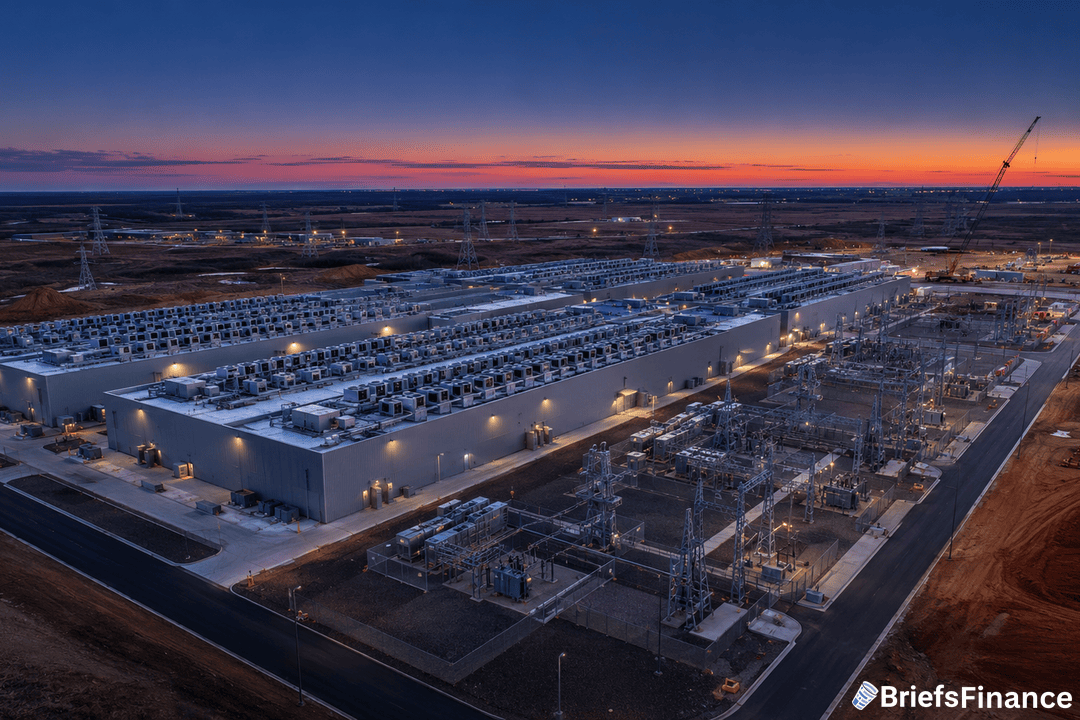
Oracle has $553 billion in orders sitting on its books, which is not a typo. The catch is that it plans to spend about $50 billion a year building the data centers needed to fill them, and investors want proof the math works.
The Demand Is Real
That $553 billion is what the company calls backlog, meaning orders customers have signed but Oracle has not delivered yet.
The figure jumped 325% in a year, one of the biggest demand signals any software company has ever posted, and the money is starting to show up in the results.
Oracle's cloud business, which rents out computing power over the internet, grew 84% last quarter, and the company raised its revenue target for next year to $90 billion.
We unpack earnings like this in plain English every morning in Market Briefs, plus you get a free investing masterclass when you join.
The Catch
Building all that computing power is expensive, and Oracle plans to spend about $50 billion this year on equipment and data centers, a number called capex.
It is like a restaurant with a year of reservations already booked but still building the kitchen, where the bookings only count if the food actually gets served.
The risk is timing, since Oracle is spending now and getting paid later, and investors want to see that gap closing rather than widening.
What Wall Street Wants To See
Analysts expect $1.96 in profit per share, and Oracle guided cloud growth as high as 50% for the quarter.
The stock had a strong run this year before slipping about 3% the day ahead of the report, a sign of how much is riding on the numbers.
Several Wall Street firms raised their price targets going in, with one as high as $300, so expectations are sitting near the ceiling.
What To Watch
Whether Oracle can turn that $553 billion backlog into delivered revenue fast enough to justify the spending.
Hit the numbers, and the AI spending story holds for the whole sector. Wednesday after the bell, the backlog stops being a promise and starts being a test.
Want the market explained without the jargon? Sign up for Market Briefs and get a 45-minute investing course thrown in for free.