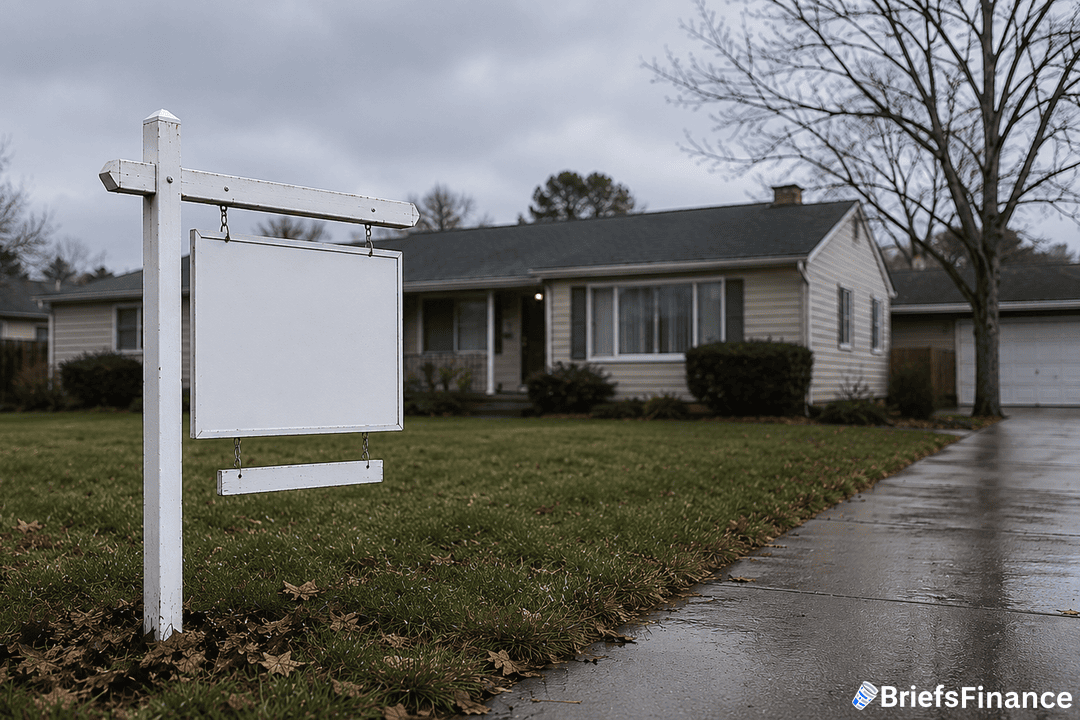
The housing slump isn't just hard on buyers. It's now pushing the people who sell homes out of the business too.
Four straight years of high rates and high prices have worn them down. Agents are quitting or picking up second jobs to get by.
The housing slump numbers show how deep it runs.
The Exodus In Plain Numbers
The National Association of Realtors counted 1.4 million members in April. That's down from a peak of 1.6 million in late 2022, which works out to about 200,000 people gone in a couple of years.
The ones who stayed are leaning on other paychecks. Only 71% of agents now say real estate is their only job, the lowest share since the group started tracking it in 2005.
It's not hard to see why. Last year's home-sales pace, set against the number of households, was the slowest since 1982.
That date matters. First American, which ran the numbers, found last year worse than any since the early 1980s.
That was the last time high rates froze the market this hard.
The pain reaches past agents, too. Loan officers and others tied to home sales feel the same squeeze, since they all get paid when deals close.
Fewer deals means fewer paychecks all the way down the chain.
We keep you on top of shifts like this every morning in Market Briefs, plus a free investing class when you join.
What A Frozen Market Looks Like Up Close
Agents get paid when homes change hands. So when sales dry up, their income does too.
It's a commission job with no salary to fall back on, which makes a slow year brutal in a way a steady paycheck never is.
Kim Taylor opened a brokerage with her husband in Fort Worth in 2023, then closed it this spring. "We just became a bleeding artery," she said.
She called the past 11 months the hardest of her career.
The slump is now in its fourth year, and that length is the real problem. A bad quarter is survivable, but four lean years drain savings and patience alike.
So plenty of agents are taking side jobs just to ride it out.
For folks who still want a piece of property without the agent's risk, there's the landlord-free route worth knowing.
Worth Noting
For investors, a thinning agent count is a signal worth tracking. Fewer agents means a market that's been slow long enough to push people out, not just spook them.
It also hints at what a turn might look like. When sales finally pick up, there will be fewer hands to catch the work, which can mean faster pay for the agents who stuck around.
For now, though, the trend still points the other way.
The slump that started with buyers has now reached the people selling to them.
If you want the market explained clearly each weekday, sign up for Market Briefs. You also get a free 45-minute investing course when you join.