Prices and what moved them
European natural gas bounced off a two-week low, with Dutch front-month futures up 1.6% to €89.52 a megawatt-hour by early afternoon in Amsterdam. That uptick followed a three-session drop that carved off more than 15% and came alongside gains in crude.
Markets are weighing a political shift against stubborn supply risks. "Energy markets are under significant pressure following the Democrats' clean sweep in the US midterms as hopes grow that the political shift could accelerate efforts to bring the war with Iran to an end," ING's Warren Patterson and Ewa Manthey wrote. "However, fundamentally, the European gas market remains tight."
Politics meets shipping risk
Because Democrats now control both chambers, their tighter grip on federal spending could limit how much President Donald Trump can continue the conflict. Even so, the path to a resolution has seen little tangible movement so far.
On the water, hazards remain. Iran said a tanker struck a mine in the Strait of Hormuz on Thursday morning, and it is discussing with Oman how to restart ship traffic. With Europe's tight balance hinging on when flows through Hormuz normalize, those headlines still matter for price direction.
Smart investors look to new tools to find small advantages over time. We're hosting our first ever investor livestream on 11/17 to show you how to use ChatGPT and Claude to invest like a pro, hosted by Briefs Finance CEO Jaspreet Singh. Save your seat.
How tight the market is
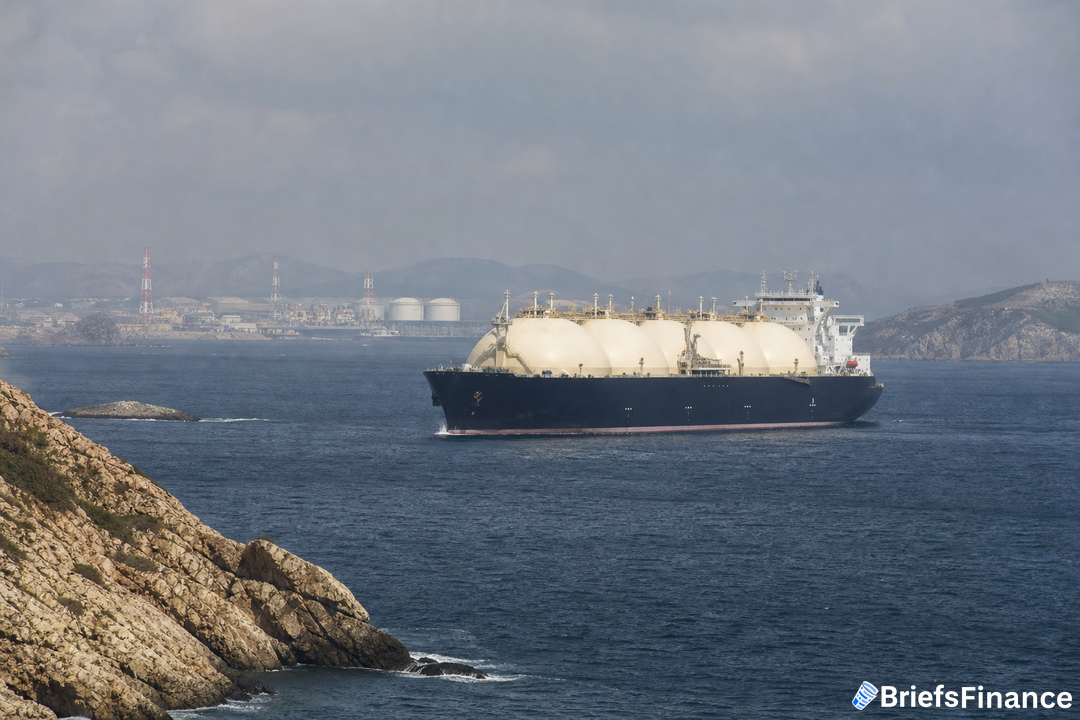
The Iran war has removed close to 20% of the world's LNG exports from circulation, leaving Europe unusually short on fuel heading into winter and priming a tougher contest with Asia for spot cargoes. In both regions, gas prices recently reached peaks not seen since 2022, having climbed to more than three times their level at the year's start.
The squeeze shows up in storage. EU inventories slipped to 74%, versus a five-year seasonal norm of 90%, and Germany sits below 61%. Colder weather and weaker wind and solar output prompted withdrawals this week. Supply has not helped much either, with Norwegian pipeline deliveries running under capacity amid some unplanned outages, while buyers in South and Southeast Asia are expected to ramp up spot purchases after the recent price dip.
Positioning and the road ahead
According to Engie's EnergyScan, spot-market fundamentals haven't pointed lower, and speculators likely amplified the latest selloff. Funds trimmed their net long exposure in European gas last week and "their sales probably continued this week," it said, adding, "It remains to be seen where they will stop."
Expect choppy trading. ICIS sees volatility persisting and, in its base case shared during a Thursday webinar, does not anticipate any meaningful resolution or return of flows through the Strait of Hormuz until the end of the first quarter. A swift shift in the conflict could deliver a "dramatic" bearish jolt to prices. The bottom line: your energy exposure is riding on politics, shipping lanes, and storage cushions, not just weather.
Learning how to use technology thoughtfully can quietly improve long term investment results. On 11/17, our CEO Jaspreet Singh goes live for our first ever investor livestream on how to use ChatGPT and Claude to invest like a pro. Register to join him.