What happened on X
On November 4, an X user asked Altman, "Will you change your X name to Ram Altman?" He replied, "OK. Yay," and changed his display name.
The rename landed after criticism of comments he made on the October 29 "Cheeky Pint" talk show about how DRAM is used. Elon Musk - the head of Tesla and SpaceX - posted an image on X poking fun at memory being "hoarded" on personal computers.
What he said and how he clarified
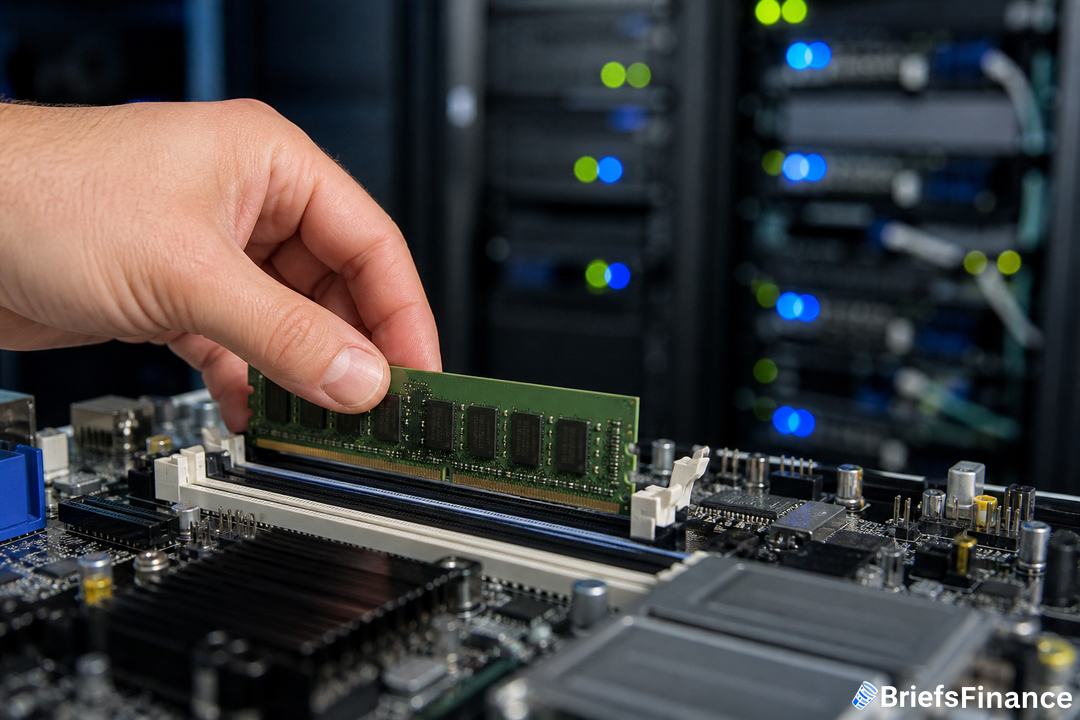
Altman contended that, from a worldwide resource point of view, it's inefficient for scarce DRAM to sit in separate PCs where it's active only around 5% of the time. In a tight supply environment, he said, cloud utilization should be pushed higher.
The same day, in a separate post about superintelligence, he said, "People should always be in control of the future," rejecting the idea that humans should only do what AI deems worth rewarding.
New technologies can give investors subtle advantages when used thoughtfully and patiently. We're hosting our first ever investor livestream on 11/17 to show you how to use ChatGPT and Claude to invest like a pro, hosted by Briefs Finance CEO Jaspreet Singh. Save your seat.
The supply squeeze and price signals
Behind the back and forth is a straightforward backdrop: demand from generative AI is surging. AI companies are buying massive amounts of memory to build models and run services, which is pushing up RAM prices for consumers and making PCs and smartphones more expensive.
In a September 30, 2026, report, TrendForce said it expects contract prices in October to December 2026 to rise 10 to 15 percent quarter on quarter for general purpose DRAM and 15 to 20 percent for NAND flash. It cited memory makers prioritizing advanced processes for high performance servers and forecast continued marketwide shortages. Its breakdown added that enterprise SSD price increases are widening, PC DRAM remains tight with supply potentially declining in 2027, mobile DRAM allocations are tight with an upward trend maintained, and graphics DRAM is rising because GDDR6 production is shrinking. For PCs, makers might divert production lines to servers through 2027, which could leave fewer units available.
Capacity moves, market read, and your portfolio
Japan figures into the buildout. Micron's Hiroshima plant, the country's only mass production DRAM site, held a July 4, 2026 groundbreaking for a new cleanroom to produce next generation DRAM for AI. The total investment is about ¥1.5 trillion (about $9.5 billion), with up to ¥536 billion (about $3.4 billion) in subsidies from Japan's Ministry of Economy, Trade and Industry. The arrival of EUV lithography machines and related equipment is expected to begin in the latter half of 2028.
Pricing on the ground reflects the tension. According to BCN, the average unit price of PC component memory as of May 2026 was about 4.8 times what it was in the same month a year earlier, while notebook PCs' average unit price rose about 3% year over year for January to May 2026, suggesting the pass through into systems has not fully played out. The market also showed caution that Altman's remarks might put additional pressure on consumer memory supply, even as his call to boost production keeps the spotlight on capacity investment plans. The broader question of how to allocate memory in the AI era is still unresolved.
Keeping an open mind about smart tools helps investors find clearer decision making. On 11/17, our CEO Jaspreet Singh goes live for our first ever investor livestream on how to use ChatGPT and Claude to invest like a pro. Register to join him.