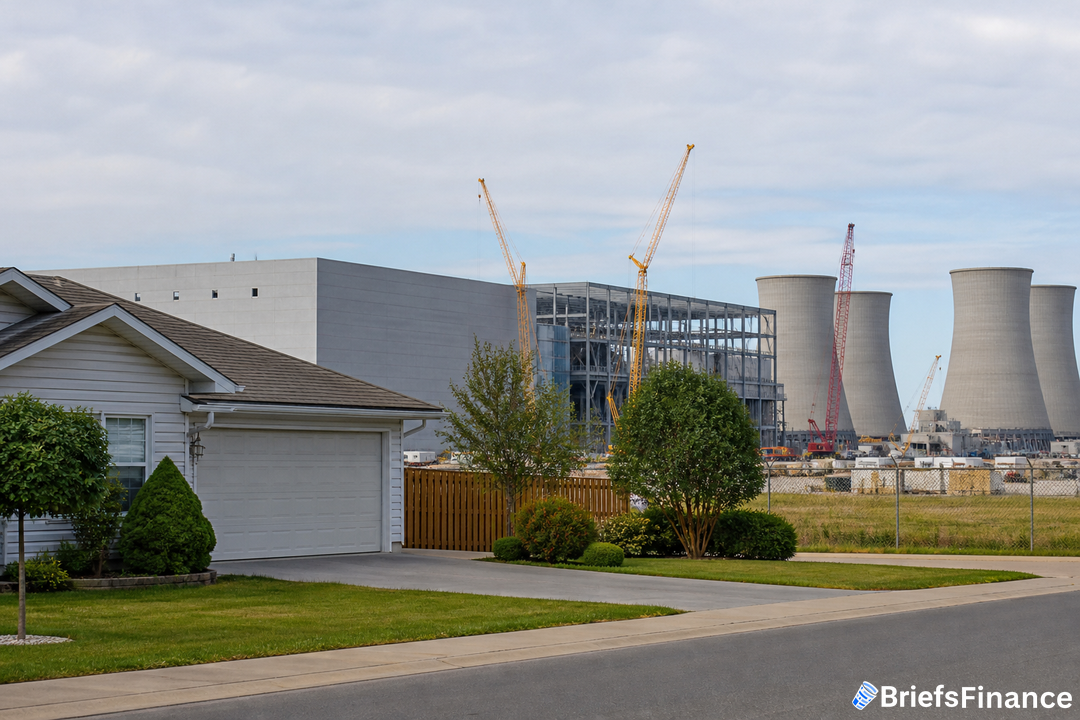
What happened at the polls
Local ballots turned into a speed bump for the AI buildout. Of 41 measures across 10 states aimed at tightening rules on data center development, voters largely embraced the restrictions. The only place that bucked the trend was Harwood, North Dakota, which rejected a proposed charter rule that would have forced additional review before greenlighting industrial projects such as data centers.
Ohio stood out with 21 local votes tied to data centers, underscoring how central the issue has become. A CNBC Voter Poll found that 56% of voters said data centers weighed heavily in their choice, calling the topic either crucial or a major consideration, with Democrats assigning it more importance than Republicans.
The big races and high-profile projects
Ohio politics and megaprojects collided. After labeling the incumbent "the face of data centers," Democrat Sherrod Brown defeated Republican Sen. Jon Husted. The governor's mansion flipped too, as Democrat Amy Acton, a physician, beat Republican businessman Vivek Ramaswamy. Acton backs a "conditional moratorium" that would require projects to pay the full freight of utility costs and "exclusively build with union labor."
That matters because in August, OpenAI said it had lined up 8 gigawatts of computing capacity for Ohio's PORTS-Pike Technology Campus, calling it the world's largest planned AI data center campus. The project's website says construction is slated to start this year, with capacity arriving in phases beginning in 2028. SoftBank and SB Energy are developing the campus with the U.S. Department of Energy.
SoftBank, a major OpenAI investor, and OpenAI unveiled plans earlier this year to put $1 billion into SB Energy. Nvidia is providing financial backing for the effort, and the total price tag could be more than $500 billion.
When infrastructure and innovation intersect, informed investors can find long-term opportunity. We're hosting our first ever investor livestream on 11/17 to show you how to use ChatGPT and Claude to invest like a pro, hosted by Briefs Finance CEO Jaspreet Singh. Save your seat.
CNBC named Ohio America's Top State for Business in 2026, and the state now sits at the forefront of the data center fight.
How the industry and money showed up on the ballot
Even before votes were counted, the AI trade had been wobbling. In October, worries about higher rates and excessive outlays dragged down chipmakers, neoclouds, and other data-center stocks. Alphabet, Amazon, Microsoft and Meta - the hyperscalers - say demand can't be sated, and they're committing annual outlays in the hundreds of billions of dollars to AI infrastructure. With the exception of Microsoft, all have slipped into negative cash flow as a result.
Beyond Ohio, communities in California, Florida, Illinois, Kansas, Maine, New Jersey, Nevada and Wisconsin also weighed data center questions, per Ballotpedia. Candidates from the Democratic Party who ran on halting or tightening rules for new projects captured pivotal contests in Ohio, Wisconsin, Georgia and Texas, and Texas is tracking to become the top global data-center market by 2030. In a headline race, Gina Hinojosa defeated Texas Gov. Greg Abbott, faulting him for the rapid expansion and arguing he prioritized the tech industry over local communities.
Tech's power base in Silicon Valley poured record amounts into influencing the 2026 midterms, yet the largest donor blocs still favored Republicans. A CNBC analysis of FEC records found that, among the 20 largest donor groups, 14 backed Republicans almost exclusively, with crypto, AI and online gambling interests contributing more than $377 million. Elon Musk spent hundreds of millions and largely came up empty, later posting on X, "Data centers in space looking pretty appealing right now."
Political fallout and what it means for your portfolio
Democrats moved quickly after the results, with calls to put AI executives under oath. "The House Democratic majority must make it a top priority to protect Americans' jobs, freedom, and lives from AI billionaires," said Rep. Greg Casar, who chairs the Congressional Progressive Caucus. "AI company CEOs should be called to testify under oath." He accused Republicans of being "bought and paid for by AI billionaires," urged Democrats to "hold them accountable instead of cashing their checks," and called the backlash "one of the top issues of the 2026 election" and "the early tremor of a much bigger AI earthquake."
In plain English: tougher local approvals, union and utility mandates, and heightened federal scrutiny feed straight into timelines, capital needs and financing costs for AI infrastructure. Pair that with hyperscalers' massive spend, Ohio's centrality to a flagship campus, and a market already worried about rates and overshoot, and you have a sharper risk lens for anything tied to the AI data center supply chain, from chips and power gear to land, energy and construction.
Knowing how emerging tools influence markets can help you sharpen investment decisions. On 11/17, our CEO Jaspreet Singh goes live for our first ever investor livestream on how to use ChatGPT and Claude to invest like a pro. Register to join him.