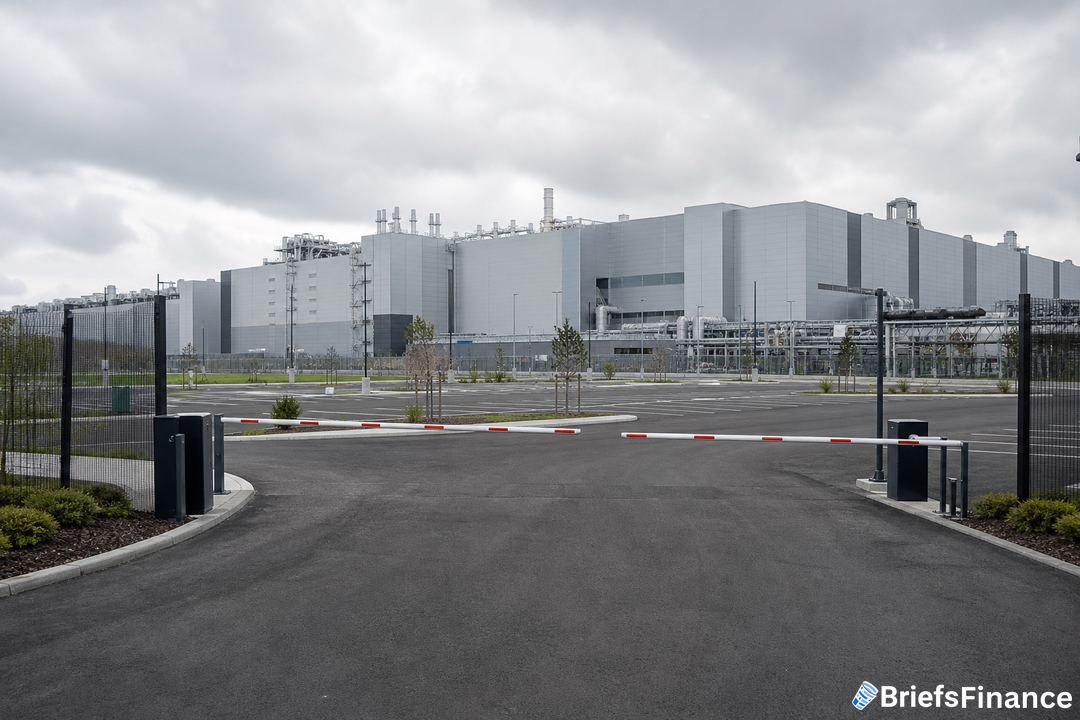
What happened to Intel stock
Intel tumbled 29% by early afternoon, putting it on track for its worst day since the mid 1970s and its second biggest single-session slide on record. At 1:49 PM EDT, shares changed hands at 64.17, down 27.90 or 30.30%.
That move erased part of a huge rally. Going into Thursday's earnings, the stock had climbed about 150% this year, helped by demand for central processors that are becoming key for agentic AI workloads.
The drop followed a forecast that fell short. For the current quarter, Intel projected adjusted earnings of 25 cents per share and revenue between 15 billion and 16 billion dollars. Analysts polled by LSEG were looking for 17.1 billion dollars of revenue and 43 cents of EPS.
Why the outlook slipped
Management pointed to two main drags. First, an explosion earlier this month at a fab in Israel led to an extended shutdown. CEO Lip-Bu Tan called it an "unfortunate and tragic accident." The explosion claimed the lives of two employees and left a third critically hurt, delaying shipments of 10 nanometer chips.
Finance chief David Zinsner said the incident will reduce revenue by about 600 million dollars over two quarters. He added, "We see the PC slowdown continuing at least through the first half of next year." Higher costs for memory and other parts are pressuring PCs, and Counterpoint Research estimates that worldwide PC deliveries declined by 4% in the second quarter versus a year ago.
Tan, hired in March 2025, said, "We're going to have a couple of customers ready to announce the next two quarters," highlighting "tremendous progress" on upcoming 14A chips.
How markets reacted and the wider tech picture
The selloff rippled across markets. Under the Trump administration, the U.S. government acquired a 10% stake in Intel a little over a year ago. While the position remains profitable, its value fell by about 12 billion dollars on Friday. Nvidia, which also took a big stake, saw about 6 billion dollars wiped from its investment.
Tech broadly sagged. The Nasdaq Composite dropped in excess of 2.5%. Nvidia fell 4%, Broadcom dropped about 6%, and Qualcomm tumbled 12%.
Market setbacks are reminders that thoughtful tools can help investors find an edge. We're hosting our first ever investor livestream on 11/17 to show you how to use ChatGPT and Claude to invest like a pro, hosted by Briefs Finance CEO Jaspreet Singh. Save your seat.
Alphabet suffered its worst day on record Thursday, plunging more than 12%, and it declined again Friday. Amazon slipped about 1% after a third quarter miss on revenue and earnings, while keeping its 2026 capital spending forecast at 220 billion dollars. The company further disclosed that free cash flow was negative for a second consecutive quarter, jumping sharply versus the prior period.
Investors are uneasy about the scale of AI outlays. "I don't think this is a moment of reckoning but I think it's a moment where investors should take a long thought about how positioning across the space still remains crowded even though the fundamentals are strong," said Raymond James's chief market strategist, Matt Orton, on CNBC's Squawk Box Europe. D.A.
What this might mean for your portfolio
Intel's turnaround centers on its foundry push. As the only U.S.-headquartered maker of cutting-edge logic chips, Intel has begun high-volume production of its top-tier 18A chip at a new Arizona plant, which offers a substitute to Taiwan Semiconductor Manufacturing Co. Another Arizona facility is slated to start operations by the end of 2028. For the moment, Intel has yet to sign outside clients for these new chips.
Zinsner said Intel will continue to pursue prudent spending on capacity and working capital - cash tied up in inventory and receivables - to bolster supply and underpin future growth even as PC demand remains weak.
The bottom line: the quarter is guided to 25 cents of adjusted EPS and 15 billion to 16 billion dollars in revenue, with a temporary hit tied to the Israel shutdown, and the next test will be whether Intel secures and announces outside foundry customers over the coming two quarters.
Learning how to use new tools calmly can improve long term investment decisions. On 11/17, our CEO Jaspreet Singh goes live for our first ever investor livestream on how to use ChatGPT and Claude to invest like a pro. Register to join him.