Free NewsletterPro Login

Warning: Undefined variable $stocks in /var/www/briefs.co/htdocs/wp-content/plugins/oxygen/component-framework/components/classes/code-block.class.php(133) : eval()'d code on line 448

Warning: foreach() argument must be of type array|object, null given in /var/www/briefs.co/htdocs/wp-content/plugins/oxygen/component-framework/components/classes/code-block.class.php(133) : eval()'d code on line 448

Warning: Undefined variable $funds in /var/www/briefs.co/htdocs/wp-content/plugins/oxygen/component-framework/components/classes/code-block.class.php(133) : eval()'d code on line 472

Warning: foreach() argument must be of type array|object, null given in /var/www/briefs.co/htdocs/wp-content/plugins/oxygen/component-framework/components/classes/code-block.class.php(133) : eval()'d code on line 472
/* the link was here */

Marc Lore's Wonder is stitching together food brands, electric kitchens and AI-built "restaurants"

Published Oct 25, 2026
Share:
Summary:
  • The e-commerce veteran behind Diapers.com's $545 million sale to Amazon and Jet.com's roughly $3 billion sale to Walmart stayed at Walmart through 2021 to push its online growth.
  • Wonder's acquisition tab exceeds $1 billion, it has opened 170 storefronts in three years, and next year it aims to move into Texas and reach at least 100 locations there by the end of 2027.
  • Beginning Nov. 17, the company will roll out Wonder Create, a program where creators, founders and companies can pay $10 per month to start a "restaurant," get AI help with names, logos, pricing and recipes, and share in the revenue.

From online retail to food at scale

Marc Lore made his reputation in e-commerce rather than in restaurants. He co-founded the parent of Diapers.com, which Amazon bought for $545 million in 2010, later started Jet.com and sold it to Walmart for about $3 billion in 2016, remaining until 2021 to speed Walmart's e-commerce expansion.

He is also tied to the Minnesota Timberwolves. In 2021, Lore and Alex Rodriguez struck an agreement to purchase the team for $1.5 billion, though final completion did not come until 2025. In August, Rodriguez said Lore had made a deal to reduce his investment to a minority stake "to focus on his business," referring to Wonder.

Investors have followed him. Dave Munichiello - managing partner at Alphabet's venture capital arm GV - said, "I joke around at GV that I do enterprise software investing, AI investing and anything that Marc Lore is running as an active CEO." Lore's own pitch is simpler: "Everybody eats," he said. "It's defensible from AI."

What Wonder looks like now

Wonder started with sprinter vans outfitted with mobile kitchens, then phased them out after roughly two years in favor of brick-and-mortar sites that could expand options and cut costs. Over the last three years, 170 storefronts have opened from Virginia to Massachusetts.

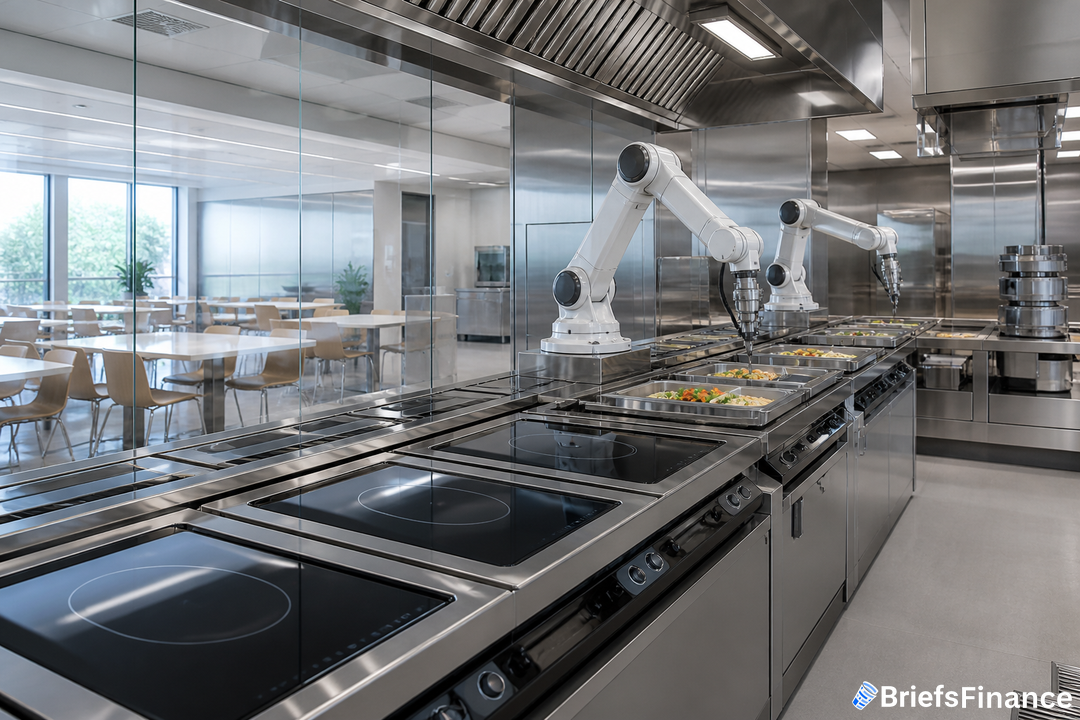
Food is prepared at commissary kitchens and transported to each store, where employees unseal, cook and finish menu items. Each site runs entirely on electric power, with no gas lines or ventilation, enabling faster openings with fewer renovations and less red tape.

Menus pull from more than two dozen "restaurants," including Dabba Indian Kitchen, Tejas Barbecue and Pop Salad. Celebrity chefs Bobby Flay, Michael Symon and Marcus Samuelsson get equity plus payments made in advance for licensing their names, and newer arrivals feature acquired brands like Blue Ribbon Fried Chicken and Salt Hank's.

Ghost kitchen comparisons miss the mark, Lore argues. "You can see there's a front of house [in the] brick and mortar," he said. "You'll see people at lunchtime, sitting there enjoying lunch, so it's not ghost-y in that way. But I think it's also just in the fact that we're vertically integrated." The company has cycled through "a new kind of food hall" and "modern food court" before landing on "a vertically integrated food technology platform."

Expansion, deals and AI bets

The company's acquisition outlay tops $1 billion, not counting undisclosed transactions, and includes Grubhub, Relay (a delivery and logistics provider), the meal-kit firm Blue Apron, plus buzzy New York restaurant concepts. Lore sees a "tremendous total addressable market" if Wonder can deliver high-quality meals at wallet-friendly price points, especially serving exurban and rural communities that have limited choices beyond fast food and highway gas-station fare. The company's first push into Texas is slated for next year, with a goal of no fewer than 100 sites statewide by the end of 2027.

Beginning Nov. 17, the company will debut Wonder Create, enabling creators, founders and companies to pay $10 per month to launch a "restaurant," receive AI assistance on the name, logo, pricing and recipes, and participate in revenue sharing. "It could be a restaurant for you and your friends, or you could be an influencer that has a following," Lore said. Over time, the platform will open to the public, and users will choose the menu items using Wonder's pantry as the source.

When new business experiments and brand rollouts spark curiosity, sign up for the free Market Briefs to stay informed quickly

Wonder is also building MEL, a proprietary AI platform that can use health data from devices like Oura and Whoop, or even blood biomarkers, to design breakfast, lunch and dinner. MEL isn't yet offered to Wonder customers, although Lore said he relies on AI to guide his personal meal choices.

Quality control, retention and the road to an IPO

Winning diners is the hard part. Consumers are dining out less, and while delivery is still above pre-pandemic levels, it has fallen from its Covid peak. Fees and higher delivery menu prices add to the bill.

Skeptics have aired complaints online. In late 2025, Amir Ings, a 27-year-old in Philadelphia, reviewed three tacos on TikTok and said, "It's OK, but it's just average," adding he paid about $16 for food he thought should have been closer to $8. Lore told CNBC that Wonder gets thousands of daily reviews covering taste, temperature and portion size on a 1-to-10 scale, and Munichiello said board meetings start with taste scores.

"We're maniacally focused on food quality .... We're constantly iterating on the meals that score lower," Lore said. "I do expect food quality to improve as we scale, which is not always the case."

Despite the chatter, retention looks solid. Transaction data from Indagari indicates that Wonder posted a higher weighted-average retention rate and greater lifetime value than Cava and Sweetgreen. It has also made its model work in New York. "They made this company work well in the hardest place in the country to stand up this model: New York," Munichiello said. "You have so much choice in New York."

The company is preparing for public markets. In March, Wonder hired Gabrielle Scheibe Rabinovitch, previously at Worldpay, as chief financial officer. Lore declined to comment to CNBC on IPO timing, although he has said the company will be "ready and prepared to go public early next year."

Financially, the company has been operating at a loss since buying Blue Apron and Grubhub, The Information reported. Management plans to bring meal prices down by emphasizing automation and deploying drones for delivery, a long-term cost play that will be expensive to build. Investors have grown less tolerant of growth-at-all-costs strategies, said Avery Marquez of Renaissance Capital, so unprofitable issuers need to show progress toward profits or durable growth.

The bottom line: Wonder is trying to expand locations, sharpen food scores and wire in cost-cutting tech ahead of a potential IPO. That mix, plus the Texas buildout and the planned Nov. 17 Wonder Create step, will shape how this story touches your portfolio.

If you want a simple daily update on the economy, stocks and real estate, subscribe to our free Market Briefs newsletter for five-minute clarity

Disclosure

Recent News

1 2 3 … 110

Get Market Briefs delivered to your inbox every morning for free!

No fluff. No noise. No politics. Just finance news you can read in 5 minutes.

Blogs

October 23, 2026
Are We in a Recession? 5 Threats to the Economy and Where the Money Is Moving
  • The S&P 500 is up about 13% this year, but without AI it's in a bear market, with nearly 40% of its companies down more than 20% for four months or longer.
  • Jackson, Briefs Finance's head of investing research, sees five threats: rising interest rates, sticky inflation, an economy propped up by AI, a struggling UK, and high oil prices.
  • The opportunities he's watching mostly sit outside the dollar: rising economies like Brazil and Indonesia, US-backed emerging market bonds paying 7% to 9%, and the shifts that fear creates.
Read More
October 16, 2026
How Boring Math Makes You Rich: The Briefs Money Spreadsheet, Explained
  • Briefs Money shows you what to do with every paycheck, and in what order: how much to spend, save, and invest, when to build an emergency fund, and which debt to pay off first.
  • The Climb to Wealth course walks you through the system step by step, and the Personal Finance Spreadsheet is where you track your own numbers.
  • Investing is one piece of building wealth. The system that gets money to your investments, and keeps it there, decides the outcome.
Read More
October 16, 2026
Common Investing Mistakes: Why a Stock Grade Is One Tool, Not the Whole Toolkit
  • The Briefs Score shows growth, income, and wealth preservation investors how well a stock fits their goal, with a separate letter grade for each one.
  • The most common mistake is treating the letter as an instruction. An A tells you a stock scores well for one goal, not that you should buy today.
  • Research works best as one input in a process you own. The grade shows how a stock stacks up. You supply the goal, the timeline, and the rules for being wrong.
Read More
October 16, 2026
How to Read a Company's Numbers Without a Finance Degree (Using Briefs Terminal)
  • Briefs Terminal lets you size up any public company in about ten minutes: what the stock costs, what it earns, how fast sales are growing, and what it pays you, all on one page.
  • It lines those numbers up against the company's closest competitors for you, so you can tell if a number is impressive or just average.
  • Below that are the income statement, balance sheet, and cash flow statement from the company's SEC filings, the latest news, and transcripts of its earnings calls.
Read More
October 16, 2026
What Type of Investor Am I? The Three Investor Archetypes, Explained
  • Briefs sorts its stock grades and monthly reports by three investor goals: growth, income, and wealth preservation. Pick yours and you know which report and which grade to read first.
  • Growth investors want stocks that beat the S&P 500. Income investors want to get paid in cash. Wealth preservation investors want stocks that hold up when the market drops.
  • The same stock can score an A- for one goal and a D- for another, so picking your goal comes before picking any stock.
Read More
October 16, 2026
How to Build a Stock Watchlist That Isn't Just Stocks You Heard About
  • A watchlist on Briefs Terminal lets you group stocks by the idea you're tracking and follow each one's price, one-day move, and 52-week high and low in one place.
  • Each list has its own name and description, so you always know why a stock is on it, and you can make as many lists as you have ideas.
  • The monthly growth, income, and wealth preservation reports under the Briefs Research tab hand you new themes to track that you didn't hear about online.
Read More
October 16, 2026
How to Choose an ETF That Matches Your Idea (Using the ETF Planning Tool)
  • The ETF planning tool takes an idea like "I want to invest in fast food companies," asks what you mean, and finds the ETFs that match, with the reasons, the holdings, and the sources.
  • Build a Plan then shows what your money could grow to in those ETFs over the years you choose, with conservative, expected, and optimistic estimates next to the S&P 500.
  • It gets you from an idea to an actual plan without researching dozens of companies one at a time.
Read More
October 16, 2026
Is This Stock a Good Buy? How to Use the Briefs Score to Tell If a Stock Fits the Way You Invest
  • The Briefs Score shows growth, income, and wealth preservation investors how well a stock fits their goal, with a separate letter grade for each one.
  • One stock can score very differently for each. Nvidia showed an A- for growth and a D- for income, because it grows fast and pays almost no dividend.
  • Seven sub scores under each grade show what earned the letter, so you can see exactly where a stock is strong or weak for your goal.
Read More
October 16, 2026
How to Tell an Asset From a Liability: The One Question to Ask Before You Buy Anything
  • The typical American household earned more in 2025 than in any year on record, yet only 30% of Americans say they could pay a surprise $1,000 bill from savings, so the problem isn't income but what the income gets spent on.
  • An asset puts money in your pocket and a liability takes money out, and the wealthy buy assets first, then let the assets pay for the fun stuff.
  • Before you buy anything, ask one question: does this put money in my pocket, or take money out of my pocket? Then you need a plan for the money you keep.
Read More
October 16, 2026
How to Build Your First $2,000 Emergency Fund and Wipe Out Every Debt Over 10%
  • Your first money goal isn't investing, it's $2,000 in its own account named Do Not Touch, built by moving 10% of every paycheck into it automatically.
  • More than a third of American adults couldn't cover a $400 surprise bill with cash or savings, according to the Federal Reserve, and that's how one bad day turns into years of credit card payments.
  • Once the $2,000 is there, attack every debt charging more than 10% interest, highest rate first, because you can't out-invest a 22% credit card so paying it off is the investment.
Read More
1 2 3 … 29
Share via
Copy link










