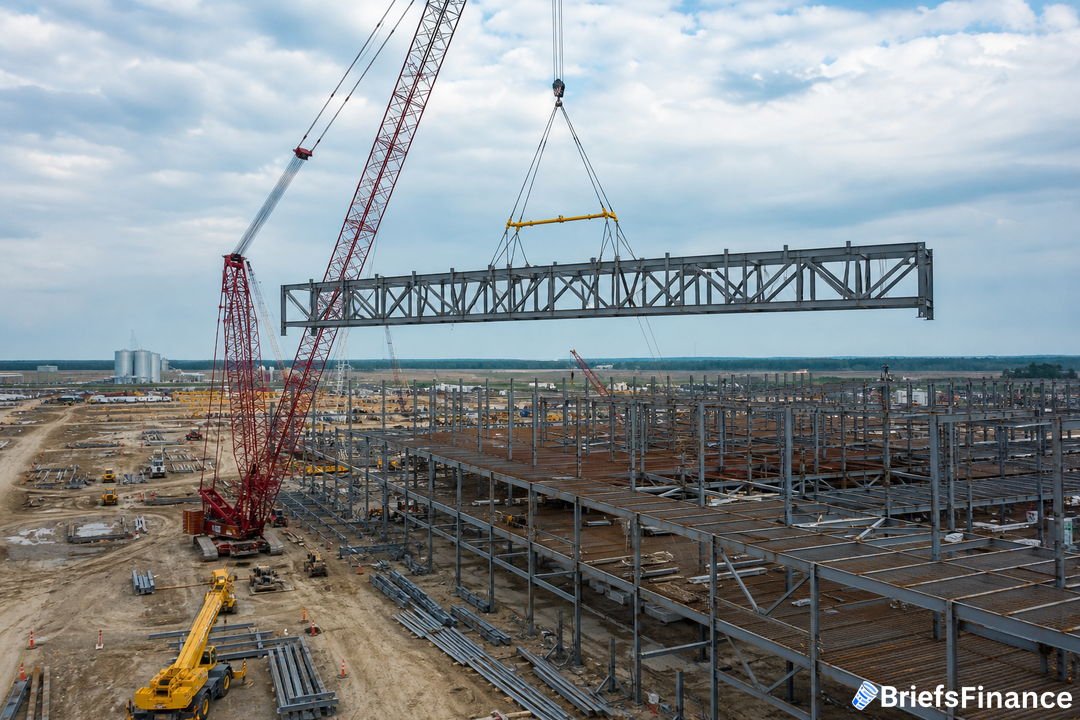
A visible step after years of slippage
Intel marked a tangible milestone at its New Albany, Ohio complex by installing the first large truss, a move that lets construction advance. Intel Foundry head Naga Chandrasekaran framed it this way: "This represents another significant step toward expanded U.S. leading-edge semiconductor capacity," he wrote Wednesday.
The site, just northeast of Columbus, is running at least five years late versus the original timeline. Back in 2022, the plan called for chips to start rolling out in 2025. Intel later reset expectations and now targets finishing the build in 2030, with a second Ohio fab slated to be completed in 2031.
Customers wanted, strategy reset
Intel says the Ohio investment still requires paying customers to make financial sense. In September, reports said SK Hynix - the top producer of high bandwidth memory worldwide - might rent capacity at the new facility to manufacture memory, but both companies declined to confirm any arrangement.
The stretched timeline lines up with a broader rethink of Intel's foundry push under CEO Lip-Bu Tan. The Ohio build is one piece of a plan to manufacture chips for external clients that launched when Pat Gelsinger was CEO. After taking over in 2025, Tan adopted a more cautious turnaround, opting to secure demand before charging ahead with big fab builds.
When construction and investment questions matter to your portfolio, sign up for the free Market Briefs newsletter for quick clarity.
Arizona progress, but not yet with marquee clients
By late 2025, Intel was running high-volume production at its Arizona fab, turning out its most advanced 18A chips. To date, no significant outside buyer has committed to those 18A parts, so the company is using them to produce its own processors. Chandrasekaran also said Wednesday that Intel expects its next Arizona fab to begin operations by the end of 2028.
Why investors should care
Manufacturing stumbles at Intel's 7 and 10 nanometer nodes led to its worst stock year on record in 2024 and made customers wary. Now, record AI demand has Taiwan Semiconductor Manufacturing Co. at full tilt, and, as Mizuho Securities analyst Jordan Klein put it, "competition is extremely fierce," including for Nvidia, Advanced Micro Devices, Apple and Broadcom trying to secure TSMC capacity.
That opens a door for Intel as a second source, says TechInsights analyst Dan Hutcheson: "People want a second source to be able to twist TSMC's arm and keep them honest on pricing," adding, "All the big ones have been testing there." The bottom line: Ohio's visible progress is encouraging, but the payoff for your portfolio hinges on Intel converting that steel and concrete into signed foundry customers.
For clear, concise updates on economic and market topics, subscribe to the free Market Briefs for a few minutes daily.