Free NewsletterPro Login
Free Live Investors Workshop
Seats limited
Tue, Sep 29.
The dollar is losing value.
Here’s how investors can still profit.
Hosted By
Jaspreet Singh
Founder, Briefs Finance
X

Warning: Undefined variable $stocks in /var/www/briefs.co/htdocs/wp-content/plugins/oxygen/component-framework/components/classes/code-block.class.php(133) : eval()'d code on line 448

Warning: foreach() argument must be of type array|object, null given in /var/www/briefs.co/htdocs/wp-content/plugins/oxygen/component-framework/components/classes/code-block.class.php(133) : eval()'d code on line 448

Warning: Undefined variable $funds in /var/www/briefs.co/htdocs/wp-content/plugins/oxygen/component-framework/components/classes/code-block.class.php(133) : eval()'d code on line 472

Warning: foreach() argument must be of type array|object, null given in /var/www/briefs.co/htdocs/wp-content/plugins/oxygen/component-framework/components/classes/code-block.class.php(133) : eval()'d code on line 472
/* the link was here */

Peloton bets on new treadmills, smarter AI and wider reach to restart growth

Published Sep 22, 2026
Share:
Summary:
  • Peloton introduced three treadmills and fresh Peloton IQ features aimed at runners, walkers and hikers.
  • Prices now span from a first-ever folding model at $2,195 to the Tread+ Vision at $6,695, with the mid-tier Tread Vision now $3,495.
  • Shares have dropped 43% since Peter Stern became CEO in January 2025; the stock closed Monday at $4.95.

Product relaunch aims for more space, more budgets, more runners

Peloton rolled out three new treadmills on Tuesday to court everyone from apartment dwellers to serious racers. CEO Peter Stern framed the moment this way: "From record marathon turnouts around the world to the rise of local run clubs, we're rediscovering the joy of running, walking and hiking." He added that expanding the treadmill lineup and debuting AI tools for runners should help Peloton reach "a much wider audience."

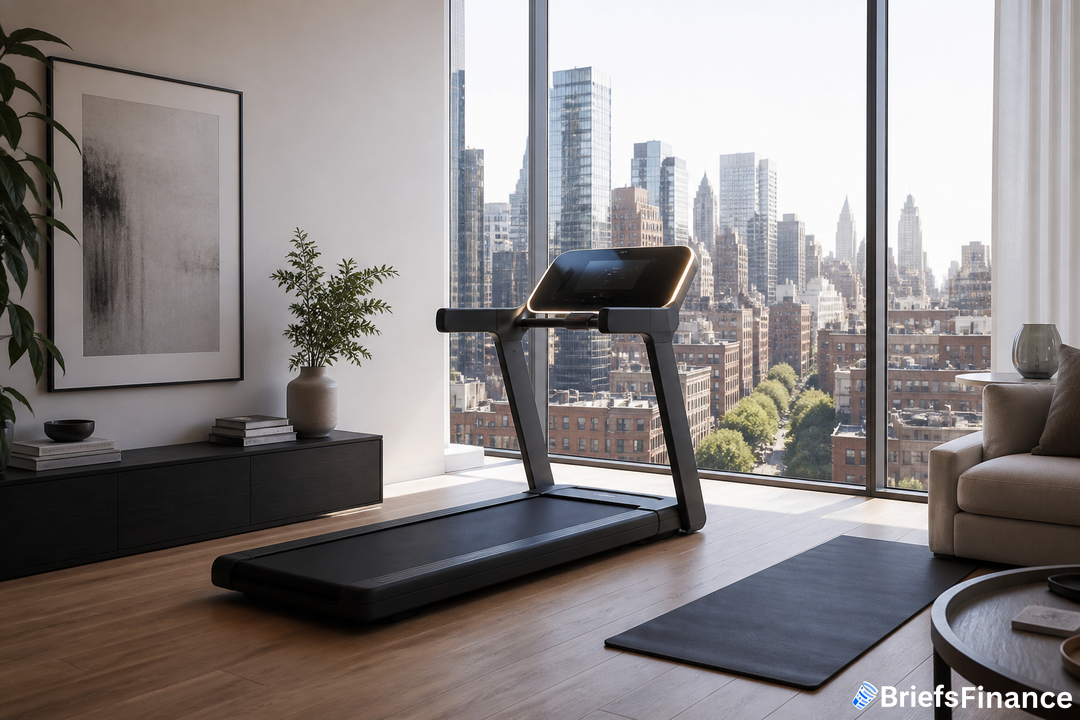
The headliner for everyday spaces is the Tread Flex, starting at $2,195. It is Peloton's first foldable treadmill and can shrink to nearly half its footprint, a clear nod to the space issue that has dogged high-end home equipment. At the top of the range, the Tread+ Vision stays at $6,695, while the Tread Vision moves up by $200 to $3,495.

Premium models come with cameras that analyze movement to give form insights. The Tread+ Vision also adds Sled Mode, which lets users dial in resistance by as much as 300 pounds for strength work, a play for hybrid race fans as events like Hyrox catch on.

Peloton IQ gets a runner-focused upgrade and more device tie-ins

Peloton is growing Peloton IQ, the AI coaching layer it launched last year, with features built for runners. A new Run Analysis tool uses live video to evaluate running efficiency and then offers personalized guidance on pace, form and heart rate, aiming to mirror what you would get from a coach in the room.

The company says it is shifting from being just a screen on gear to a training system where hardware, programming and user data work together. "The Peloton advantage has always been the sum of its parts," said Chief Product Officer Nick Caldwell. "It's about the instructors and content you love, the software that simplifies wellness and equipment that fits seamlessly into your life and transforms your routine."

Investing in durable businesses and steady strategies helps protect what you've built. Join Briefs Finance CEO Jaspreet Singh on September 29th for a FREE live investor workshop, How to Profit From A Dollar That's Losing its Value, where he shows how we're spotting investment opportunities as the dollar falls. Save your spot.

On the ecosystem side, Peloton already works with Apple Health, Fitbit and Garmin Connect, and it is now adding Whoop so members can sync accounts and have Peloton sessions feed into Whoop's personalized insights. Content keeps expanding too, with more than 17,000 Tread classes and race-training programs that walk members through complete plans targeting the New York City Marathon and similar races.

The growth puzzle investors care about

Peloton has spent years trimming expenses, reorganizing operations and patching up its balance sheet after the pandemic surge faded. The company says it is back to profitability with better cash generation, but revenue remains tough as subscriptions drift lower. Since Stern assumed the top role in January 2025, the stock has fallen 43%.

Truist's Youssef Squali told CNBC the firm expects "revenue to remain pretty muted given continuous headwinds to subscriber growth." He also said he anticipates the coming calendar year to look brighter for Peloton thanks to improvements in its hardware and software and a refinancing of the company's debt. Squali rates the stock a "buy" with a $9 target, versus a $4.95 close on Monday.

Beyond the treadmill refresh, Peloton is widening distribution. Via a new Spotify partnership, Spotify Premium subscribers will be able to browse a catalog of more than 1,400 Peloton classes centered on strength and wellness. The company is also building a commercial channel, selling more rugged equipment for use in hotels, apartment buildings, gyms, and other high-traffic venues. The holiday stretch will give an early read on whether these moves can change the growth curve.

What this means for your money

Peloton's playbook is clear: more accessible hardware for small spaces, higher-end features for data-hungry athletes, smarter coaching through AI and a larger footprint through integrations and partners. The business is stable enough to invest again, but subscriber softness and a bruised stock price keep the pressure on. Watch how many new customers they bring in, whether runners stick with the AI tools and how much traction the Spotify and commercial pushes add. Those are the levers that will decide if this reinvention is more than just a shiny new treadmill.

A patient approach and thoughtful decisions can grow your savings through changing times. Our CEO Jaspreet Singh is hosting a FREE live investor workshop, How to Profit From A Dollar That's Losing its Value, on September 29th. Sign up free to join him live.

Disclosure

Recent News

1 2 3 82

Get Market Briefs delivered to your inbox every morning for free!

No fluff. No noise. No politics. Just finance news you can read in 5 minutes.

Blogs

September 21, 2026
How the Federal Reserve Makes Money - and Why It Just Posted Its Biggest Loss Ever
  • For 109 years the Federal Reserve created money, lent it to the U.S. government and handed the interest it collected back to Washington - almost $1 trillion in the decade starting in 2011.
  • Pandemic-era lending locked the Fed into earning about 2% on trillions of dollars while it now pays banks around 4%, producing a record loss of hundreds of billions in 2026.
  • The Fed covers its losses by creating money and the government covers its lost revenue by borrowing, and both feed the inflation that eats at the dollars in your account.
Read More
September 18, 2026
Kevin Warsh Just Defied Trump: What the Fed Rate Hike Means for Your Money
  • The Fed raised rates for the first time since 2023 in a unanimous vote led by Kevin Warsh, the chairman President Trump appointed to cut them.
  • Higher rates make the $40 trillion national debt, business loan resets and mortgages more expensive, but they strengthen the dollar and pay investors holding cash.
  • The war with Iran is pushing up oil, grocery and chip prices, another hike is likely in 2026, and recession talk is about to get louder.
Read More
September 17, 2026
Why America Bailed Out the Yen: The Japan Carry Trade, the Dollar and Your Mortgage Rate
  • In July 2026 the US sent money to steady the yen because Japan is the largest foreign owner of US debt, and Washington needs Japan to keep lending.
  • For decades the Japan carry trade let Wall Street borrow yen at essentially 0% and pour it into US stocks, real estate and Treasuries, and rising Japanese rates are shutting that off.
  • A weaker yen means fewer buyers for the dollar and for US debt, which pushes Treasury rates up and drags mortgage, car loan and credit card rates up with them.
Read More
September 16, 2026
Treasury Yields Are Spiking Because Lenders Are Backing Away From U.S. Debt
  • The U.S. is paying its highest 30-year borrowing rate in about two decades because its biggest lenders, the Fed, foreign governments, and banks, are all pulling back from Treasuries.
  • Every mortgage, car loan, credit card, and business loan is priced off the 10-year Treasury yield, so when Washington pays more to borrow, so do you.
  • With about $40 trillion of debt against a $32 trillion economy, the country either outgrows its debt or slides into a doom loop, and investors need a plan for both.
Read More
September 15, 2026
Fiat Currency Runs on Trust, and the World Just Stopped Trusting the Dollar
  • Gold has overtaken US treasuries as the world's top reserve asset, and central banks are now buying less US debt and more gold.
  • The US dollar is a fiat currency, meaning it's backed by a promise rather than gold, so it loses value when fewer countries want to hold it.
  • Whether the US economy or its national debt grows faster from here decides which assets stand to benefit next.
Read More
September 14, 2026
Why RAM Prices Are Soaring - and Where the Money Is Moving
  • Memory chips - the RAM inside phones, laptops, fridges, and trucks - are in a shortage Tim Cook called a 100-year flood, and some memory prices have climbed about 90% in a single quarter.
  • Four forces hit at once: AI demand, a production shutdown in 2023, build times that push any fix to 2028 at the earliest, and a bombed helium plant in Qatar.
  • The last two supply shocks ended in aggressive Fed rate hikes and market drops of around 45% and 20%, and this time Washington is spending heavily to bring memory production home.
Read More
September 11, 2026
How Is the Economy Doing? Washington Says It's Fixed, but the Numbers Don't Agree
  • Treasury Secretary Scott Bessent says the economy is fixed because lower earners' incomes are now rising faster than top earners'.
  • The Atlanta Fed and Bank of America show different numbers, and Hilton, Marriott, and McDonald's can't agree on what they're seeing either.
  • Whichever side is right, the economy is built to make investors rich, and inflation is how it does it.
Read More
September 10, 2026
US National Debt Hits $40 Trillion: Why the Economy Hasn't Collapsed Yet
  • The US national debt crossed $40 trillion in 2026 and is growing faster than the economy. The debt to GDP ratio now sits at 125%, the highest outside the pandemic and higher than World War II.
  • On September 9, 2026, Treasury Secretary Scott Bessent rolled out an emergency plan for the government to lend money to itself. Ray Dalio now says the dollar has roughly three years before real pain.
  • Empires rarely default. They debase. Since 1971, median household income grew about 8x while houses grew 17x and the S&P 500 grew 360x, so investors got richer while workers fell behind.
Read More
September 9, 2026
Your 401k Is Fueling the AI Bubble
  • About $10 trillion of 401k money sits in a $77 trillion stock market, mostly through target date funds and S&P 500 funds. Roughly 30% of every S&P 500 dollar lands in five AI-heavy tech stocks.
  • Four bubble signals run hotter today than before the 2000 crash: top-ten concentration, tech's share of the index, the Buffett Indicator, and how much of the market index funds own.
  • You only lock in an AI bubble loss if you sell. The 2022, 2020, 2008, and 2000 crashes were all buying windows for long-term investors, and the US-China AI race means government money could keep flowing in.
Read More
September 9, 2026
What Is Wealth Preservation? How To Protect Your Money From Anything
  • Wealth preservation is an investing strategy built around keeping the money you've already made instead of chasing growth.
  • It leans on assets that hold steady when markets fall - gold, Treasury bonds, and companies that keep earning through wars, crashes, and pandemics.
  • The tradeoff is real: you give up some upside, and the two key numbers to check are maximum drawdown and correlation to the market.
Read More
1 2 3 27
Share via
Copy link











