What reporters saw on the road
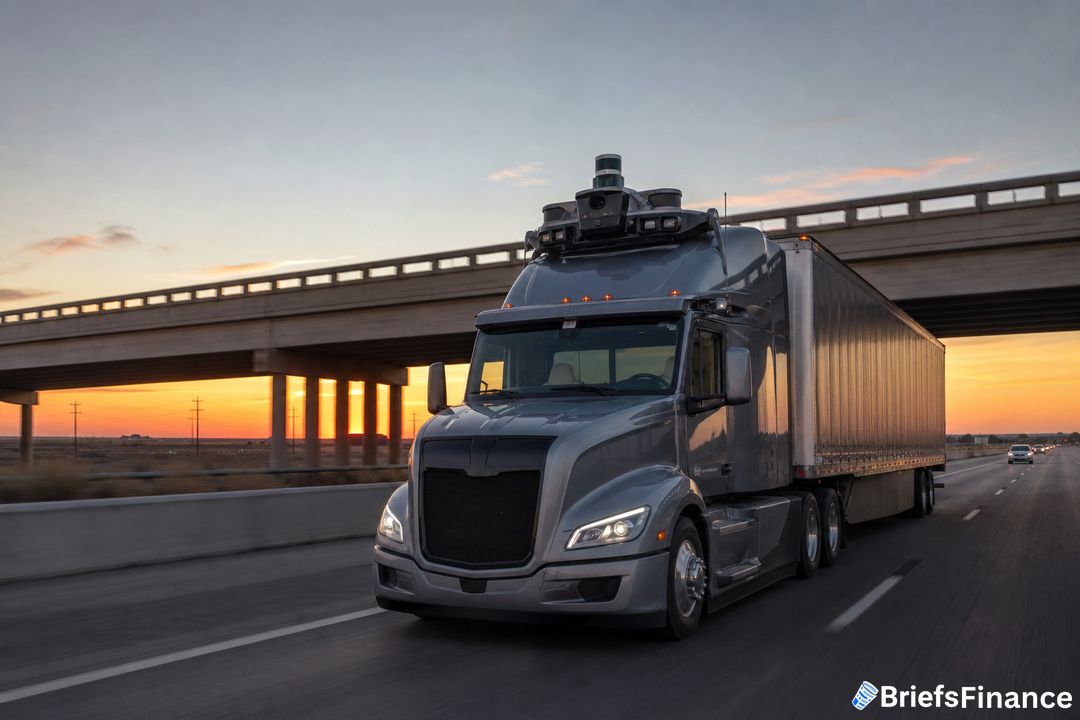
A three-hour ride on I-45 wrapped up in Palmer, Texas, with one hiccup: the truck briefly exited so the team could quickly switch off hazard lights that had turned on for an unknown reason. Otherwise, the haul was quiet. The most dramatic moment came from other truckers doing double takes when they noticed an empty driver's seat.
Chris Urmson, Aurora's founder and CEO, joined CNBC's Phil LeBeau in the truck and spent more than three hours discussing the system while they rode along. "It's using lasers, radar, and cameras to look all around it and see the other cars, see the other trucks on the road, and figure out how to drive safely," he said.
Fleet, testing and how it runs
Aurora has 20 driverless rigs operating today and plans to scale that to 200 by the end of this year. Urmson said, "We've got millions of miles of experience," adding, "We put this through 15 million tests before we put it out on the road." Since shifting public-road trials to 2022, the company reports more than 440,000 miles, the majority with a human safety driver ready to take over.
One tailwind is pure logistics. Federal rules cap human driving time, but driverless trucks could potentially keep rolling close to 20 hours in a single day. Urmson knows not everyone is sold on seeing a tractor trailer humming along at 65 or 70 miles an hour with no one at the wheel, but that is the bet the company is making.
Costs, economics and who is buying
Aurora wants to sell autonomy like a utility through a "driver as a service" model where shippers pay per mile. Bank of America figures the per-mile price for Aurora's offering could be near $0.85, versus approximately $1.30 spent on salaries and benefits for human drivers, with indirect labor excluded. Morgan Stanley's Ravi Shanker projects "an autonomous fleet should be nearly 7.5X as profitable as a human-driven fleet today."
Urmson argues the tech can help carriers trim fuel bills, move freight faster, and backstop hiring gaps. Not everyone is ready to swap out people. Sean Wu, the chief executive at uShip, an online marketplace for shipping, cautions that drivers contribute far more than merely handling the steering and throttle.
New technologies remind investors to balance curiosity with steady protection for their savings. Join Briefs Finance CEO Jaspreet Singh on September 29th for a FREE live investor workshop, How to Profit From A Dollar That's Losing its Value, where he shows how we're spotting investment opportunities as the dollar falls. Save your spot.
"The drivers do more than just move the rig. There is judgement. There is customer service. There is protection," he told CNBC.
"There is just a lot more to think about than 'Hey they are moving a truck from point A to point B.'"
The Department of Transportation pegs the U.S. fleet at about 3.5 million Class 8 semis. Only a sliver are autonomous today, but interest is building. Kodiak AI, Gatik and Tesla are also working on self-driving tech.
Money, milestones and what to watch
Aurora says the I-45 run added another 200 miles of freight delivered by its autonomous system. After booking losses north of $800 million in 2025, the company is aiming for positive free cash flow by 2028, tied to a much larger autonomous fleet on the road. "We've been able to put out timelines and we've basically hit those timelines," Urmson said.
For your wallet, this is about whether long-haul logistics can get cheaper and more reliable. If it does, it can ripple into freight rates and, over time, the price of the stuff you buy.
Staying informed helps you preserve and grow wealth through changing opportunities and risks. Our CEO Jaspreet Singh is hosting a FREE live investor workshop, How to Profit From A Dollar That's Losing its Value, on September 29th. Sign up free to join him live.