The new chase: smaller chunks, faster turn-on
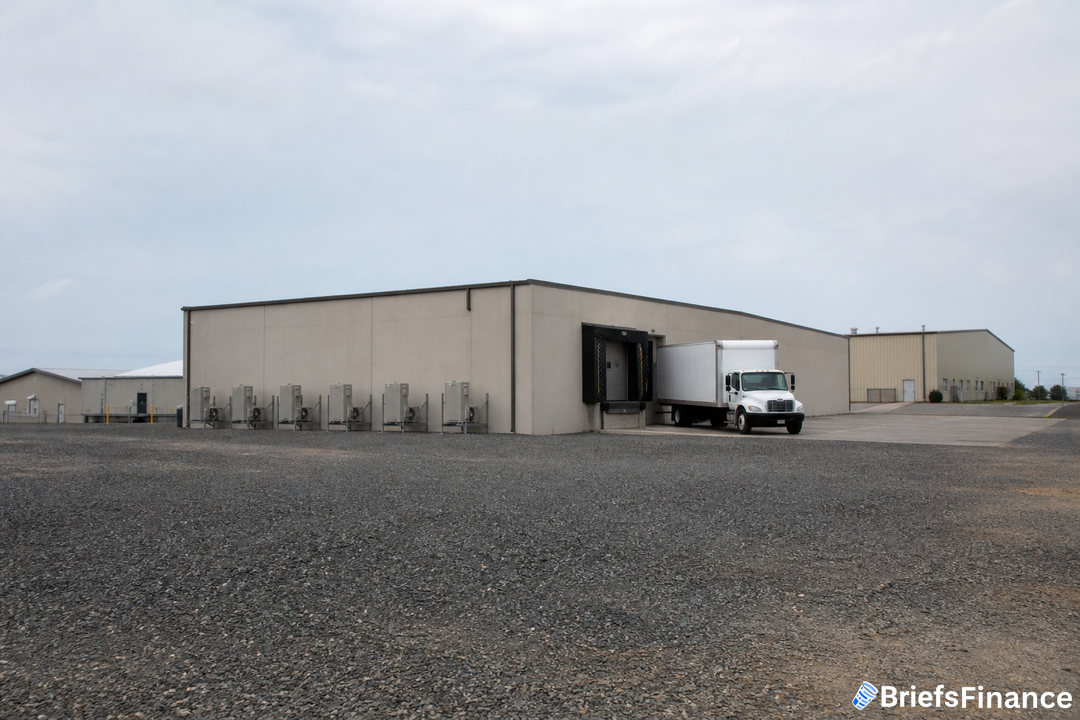
The AI buildout is widening beyond gargantuan campuses. People familiar with ongoing talks say Anthropic and OpenAI are exploring bite-size deployments of roughly 20-30 MW to stand up workloads more quickly. According to four people who requested anonymity to discuss private negotiations, Anthropic has explored possibilities of that size in the U.K. and the Nordics. Two of those people said OpenAI has examined similar opportunities in the Nordics, and one said they were aware of U.S. discussions at that scale involving both companies.
Both firms have announced a flurry of infrastructure arrangements over the past year as they train and serve models for users. They typically rent capacity from data center operators and neocloud providers and have targeted large, long-term deals. Smaller carve-outs, though, can shave time to deployment as demand swells.
"We're building a diversified compute portfolio to meet growing demand for AI around the world," an OpenAI spokesperson told CNBC. "Different workloads need different infrastructure, so we have conversations with a range of partners and assess opportunities based on our requirements, performance, reliability, timing and cost," they added. "We don't comment on specific commercial discussions." Anthropic did not comment.
The big-ticket deals are still getting bigger
The push for smaller sites sits alongside supersized projects. In August, two people familiar with the matter said Anthropic struck a roughly $45 billion cloud agreement with Nscale that includes renting around 460 MW of compute at a development in West Virginia.
OpenAI said that in April it exceeded its initial 10 GW pledge for the Stargate AI infrastructure project, and afterward it committed to build an additional 3 GW in Georgia and 8 GW in Ohio.
Large campuses in the U.S. and elsewhere are increasingly running into local opposition. The sector is also feeling pressure in much of Europe, where developable land and available power are tight.
When technology shifts, investors benefit from steady plans that protect and grow savings. Join Briefs Finance CEO Jaspreet Singh on September 29th for a FREE live investor workshop, How to Profit From A Dollar That's Losing its Value, where he shows how we're spotting investment opportunities as the dollar falls. Save your spot.
Why scale-down makes sense right now
"Speed to usable capacity" is the draw, said Jabez Tan, who leads research at Structure Research. "Securing a few megawatts at an existing powered site can be more practical than waiting for a much larger block in one location." For workloads that can operate across multiple sites, stitching together several smaller deployments can still add up to substantial capacity.
The compute mix is evolving too. Training large models needs many chips working tightly together, but day-to-day deployment, known as inference, can be served by multiple smaller clusters handling separate requests. That makes more locations viable and accelerates timelines.
JLL forecasts that inference will overtake training's share of global data center capacity in 2027. In 2025, inference accounted for 9% of global workloads versus 14% for training. By 2030, JLL projects inference will use 37% of capacity, while training drops to 13%.
In February, an announcement said Nvidia planned to work with multiple data center players to examine smaller facilities tailored for distributed inference.
Industry shifts and what it could mean for your money
One example of the pivot: U.S. firm Crusoe, which built a huge Texas data center complex used by OpenAI, is investing in smaller facilities that the Wall Street Journal reported should be faster and cheaper to bring online than supersized builds, a category that is encountering delays in many parts of the U.S. Crusoe did not reply to a request for comment. The company also said on Thursday it raised $3.9 billion at a $30.9 billion post-money valuation.
For everyday investors, the takeaway is simple enough: if AI leaders can assemble 20-30 MW blocks at powered sites, capacity arrives sooner and in more places, spreading opportunity beyond a few mega-campuses. That could widen which operators, regions and utilities see the upside as inference grows and timelines compress.
Long term success comes from thoughtful choices that keep your money working for you. Our CEO Jaspreet Singh is hosting a FREE live investor workshop, How to Profit From A Dollar That's Losing its Value, on September 29th. Sign up free to join him live.