What Washington did and what it wants
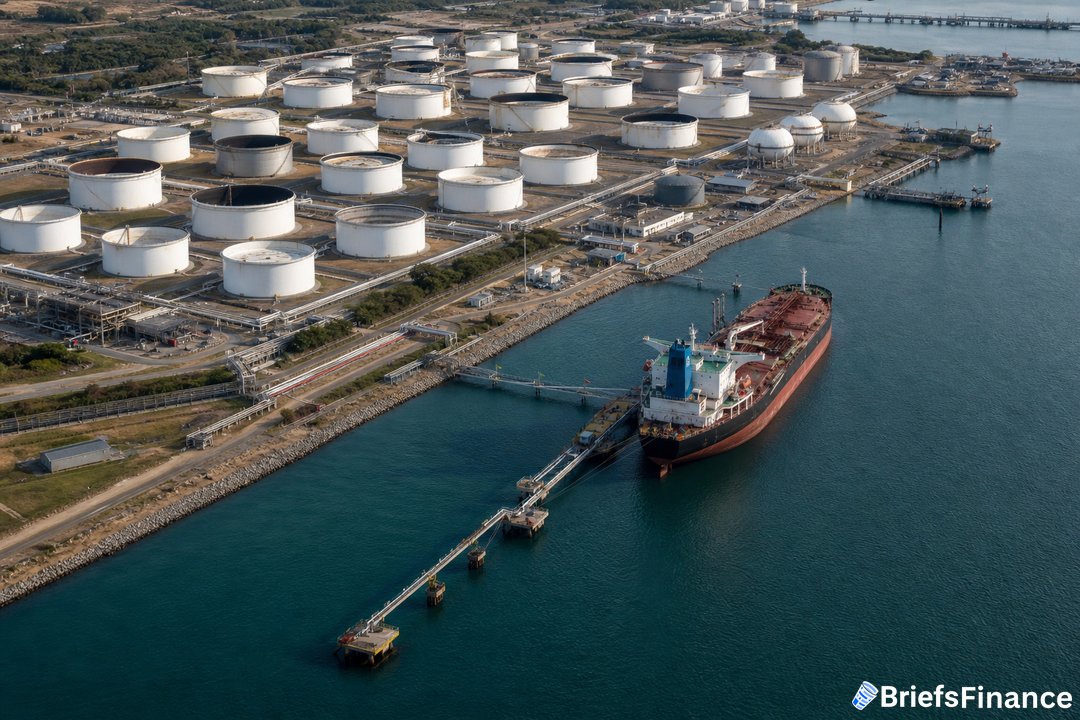
In January, the United States removed Maduro from power. Soon after, the administration backed an arrangement that opens the door to Venezuela's oil patch. Venezuela's interim government granted North American Blue Energy Partners (NABEP), led by Venezuelan businessman Alejandro Betancourt, 100-year rights to develop 17 oil fields. In return, NABEP handed Washington a 35% stake in the parent company, granted the United States the option to buy 20% of current and future output at cost, and gave the United States the right of first refusal on the remaining 80%. The White House framed the move as limiting Chinese and Russian influence under its "Donroe Doctrine," saying most of the fields in the plan had been run by Chinese and Russian firms or by "corrupt cronies of Maduro and Chavez."
The US says the purchase structure gives it majority control over about 20% of Venezuela's proven reserves, which it put at more than 65 billion barrels. On the ground, it is smaller Chinese and Russian companies that have been displaced so far, while Caracas has largely left key Chinese assets untouched amid broader contract reshuffling.
How deep the China-Venezuela ties go
China elevated its relationship with Venezuela to an "all-weather strategic partnership" during Maduro's 2023 state visit. Venezuela has reliably backed Beijing's positions on Taiwan and Hong Kong. Meeting Maduro in Moscow last year, Xi Jinping called the relationship an "ironclad friendship" and said China would "firmly support Venezuela in safeguarding state sovereignty, national dignity and social stability." Maduro's January removal was diplomatically awkward for China, coming a day after a high-level Chinese delegation visited Caracas.
Trade and finance bind the two closely. For almost twenty years, China has ranked as either Venezuela's leading or runner-up trade partner, and two-way commerce reached more than $7.4 billion last year. Since 2000, Chinese state-backed lending to Venezuela has exceeded $100 billion, according to AidData, the most for any country in Latin America.
Much of that was to be repaid in oil. Lending has ebbed as Venezuela's industry struggled with sanctions, corruption and underinvestment, and estimates of what is still owed range from $10 billion to $20 billion.
Security ties exist too. Venezuela is among the region's larger buyers of Chinese arms, purchasing $495 million in the decade through 2020, the Center for Strategic and International Studies reports, citing SIPRI.
The money story behind the headlines is usually the part that matters. Join Market Briefs free and get it every morning.
Oil flows, field control and what changed
China bought around 80% of Venezuela's crude exports last year, but shipments have halted since Maduro's ouster in January, based on vessel tracking compiled by Bloomberg. Those barrels mattered more for paying back oil-backed loans than for China's overall energy security, since Venezuela supplied just 4% of China's total oil imports last year.
Venezuela's Merey crude is prized for making bitumen used in roads and construction. Its steep discount to similar grades made it a staple for China's independent refiners, though heavier Canadian barrels can substitute at a higher cost. Chinese state firms have projects in the Orinoco belt and beyond, but they are not dominant producers.
Output tied to Chinese entities is under 10% of Venezuela's production, while Chevron's operations account for more than 25%. Even before the US move, Chinese companies had claims on portions of Venezuela's reserves. Analysts at Morgan Stanley, citing Wood Mackenzie, estimate Sinopec and CNPC together have claims of about 4.4 billion barrels.
The repayment fight and the bigger regional play
The new US structure could complicate China's path to getting repaid. US Energy Secretary Chris Wright told Bloomberg TV that China will have no debt claims on revenue from Venezuela's new oil production. Beijing says its cooperation with Venezuela is compliant with international and domestic law, involves no third party, and that its lawful interests must be protected. One route for recovery would be through Venezuela's broader sovereign debt restructuring.
The geopolitical ripple is larger than one country. Ecuadorian political risk expert Christian Reyes, who is based in Beijing, said, "Venezuela isn't necessarily a precedent for direct expropriation, but it may be a precedent for coerced exclusion." He added that the US is more willing to treat parts of Latin America's economic ties with China as a security issue and use leverage to enforce those boundaries. Still, unwinding China's presence would be hard given its deep entanglement across the region. The US is Latin America's largest trading partner and China is second, with Chinese companies embedded in power grids, mining, electric vehicles and infrastructure.
What matters for your wallet: the US says it now has majority control linked to about one fifth of Venezuela's oil reserves and secured long-term field rights plus purchase and priority options. If those terms shape where cash flows go, that could affect who gets paid back first and which firms benefit. Watch how this redirects oil revenue streams in Venezuela and how China responds across Latin America's trade-heavy sectors.