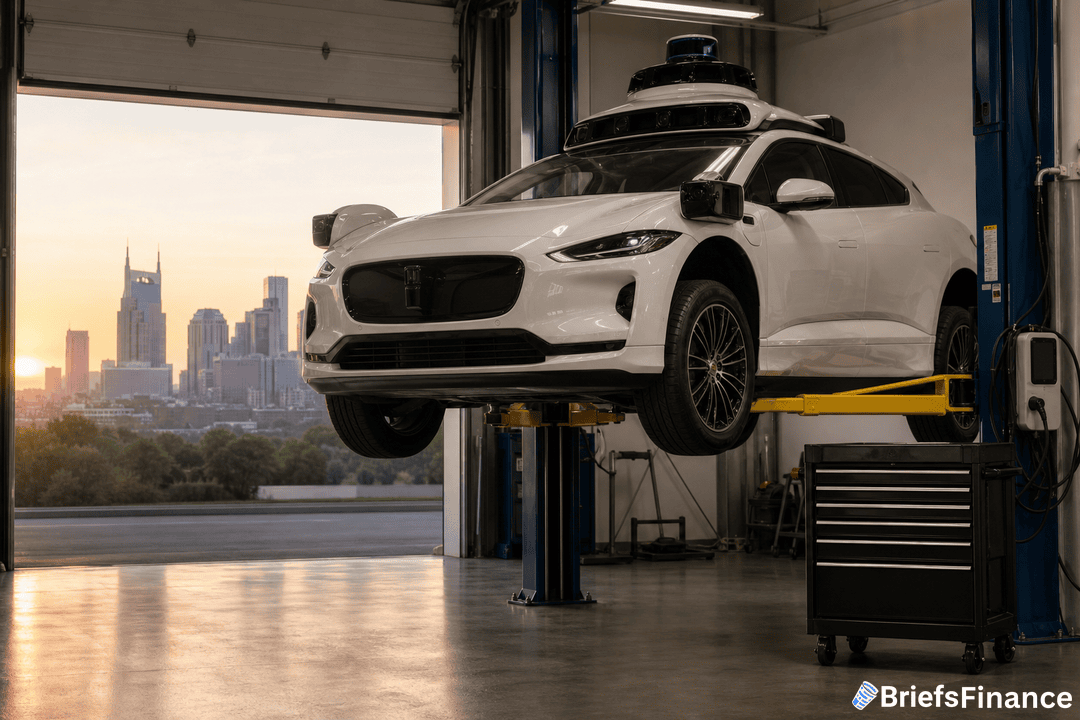
From Driving to Cleaning
Nashville is where the old ride-hailing economy is meeting the new one. Lyft used to pair you with a driver.
For nearly ten years, Jonathan Baines worked as a Lyft driver while also pursuing a career in pop and soul singing. His current role is fleet operations lead at the Nashville site that Waymo operates, which Lyft purchased in June. "The general idea is to keep cars rolling through here," he says.
Chauncey Thompson spent about a decade in rental cars before becoming a fleet operations associate. He prefers this job to driving because of the new technology, steady hours, and teamwork. "It's new. It's innovative," Thompson says. "This is going to open doors for me in the AV industry that I wouldn't have had otherwise."
The work involves more than just cleaning. Each vehicle must be charged, inspected, and checked for any issues. After storms, workers check for mud and make sure sensors are calibrated. Lyft's internal technology alerts the team when a car needs attention, but a human still decides whether it is ready for passengers.
Understanding what moved a market beats knowing that it moved. Get the free Market Briefs daily newsletter and follow the drivers.
The pace is different from traditional car maintenance. "The big difference is the frequency with which you have to service these vehicles, daily versus every few months," Baines says. "The machines can't clean themselves, they can't charge themselves, so all that work falls to us now."
Flexdrive, which manages about 15,000 traditional rental cars with only about 100 employees, sees robotaxis as a different ballgame.
Waymo robotaxis are designed to travel up to 100,000 miles, far more than a typical rental car's 40,000. More miles mean more charging, more wear, and more cleaning. That's why the maintenance workload is so heavy compared to conventional fleets.
A Changing Workforce
This shift is part of a larger story about automation and employment. While driving itself is automated, the vehicles still require human hands for upkeep. Former drivers bring valuable knowledge of roads and customer expectations, even if they no longer sit behind the wheel.
The Nashville depot is a small example of how jobs evolve. Instead of eliminating work, automation often transforms it. The people washing a robotaxi are doing a job that did not exist a few years ago. For investors, this means opportunities in the companies that build and maintain these fleets.
As robotaxis become more common, the demand for maintenance workers will likely grow. For now, Nashville is a testing ground - and a reminder that the future of transportation is not just about technology, but about the people who keep it running.
But the path to this point was not straightforward. Lyft once pursued its own self-driving technology, but in 2021 it sold that division, choosing instead to partner with Waymo. This collaboration allowed Lyft to focus on its core ride-hailing business while relying on Waymo's autonomous vehicles. The Nashville facility is a result of that partnership, blending Lyft's operational expertise with Waymo's state-of-the-art technology.
Waymo, for its part, operates in 24 markets across the U.S. Its fleet is growing, and the need for maintenance depots like the one in Nashville is becoming more critical. For workers like Baines and Thompson, this means stable employment in an industry that is often seen as a threat to jobs. Instead, it has created a new category of work - one that requires attention to detail, technical skills, and a willingness to adapt.
The transition is not without challenges. Employees must learn to service vehicles that drive themselves, which requires a different mindset. But for those who embrace it, the opportunities are real. The Nashville depot stands as proof that even as automation advances, human expertise remains indispensable.
A few minutes a day is enough to stay genuinely informed about your money. Join Market Briefs free and start tomorrow.