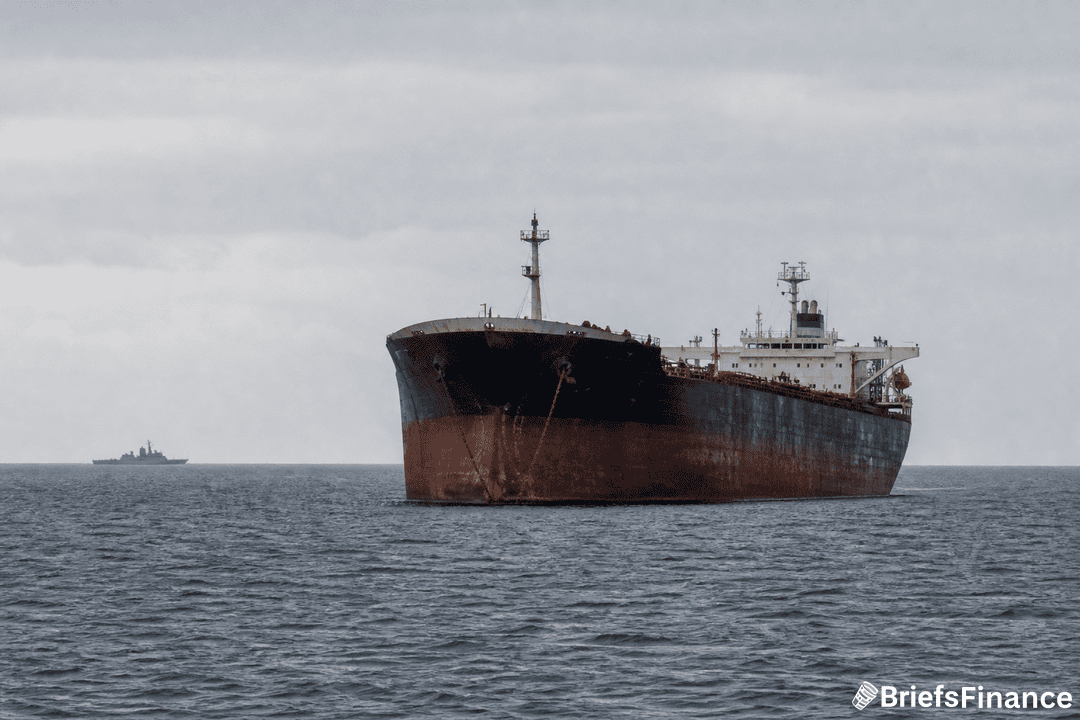
Chinese refiners are running low on Iranian crude, and the price is already starting to show it.
A US blockade that resumed in mid-July has trapped a growing number of Iranian tankers at sea. The result is a tightening squeeze on the independent Chinese buyers who rely on that oil, and it is pushing up what they pay.
The Oil That Is Going Nowhere
Around 40 million barrels of Iranian crude stranded near Singapore, a common transfer point for oil headed to China, are sitting idle. But according to Kpler, a firm that tracks shipping data, only 10% of that volume remains unsold. That works out to roughly two supertanker loads.
Inside the Persian Gulf, no fewer than 41 million barrels of oil remain trapped on ships, along with 22 empty tankers waiting to load, per Kpler. The blockade is effectively parking vessels where they cannot deliver.
This hurts two sides at once. Iran loses a key customer, and China's independent refiners, known as teapots, lose a key supply. These smaller refiners are the main buyers of Iranian crude, which they get at a discount. That discount is disappearing fast.
The money story behind the headlines is usually the part that matters. Join Market Briefs free and get it every morning.
The teapots had grown accustomed to snapping up Iranian barrels at a discount because US sanctions had kept other buyers away. With that supply now stuck at sea, the refiners must weigh paying up for spot cargoes or slowing down their plants. The longer the blockade stays in place, the more painful that choice becomes.
Prices Are Already Moving
The market is reacting quickly. Offers for Iranian Light crude have risen to a premium of $3.50 per barrel over ICE Brent this week. Just a week earlier, that same crude was trading at a discount of about $3.50 a barrel.
That swing of roughly $7 in a week shows how tight supply has become.
Kpler's senior crude analyst, Muyu Xu, put it bluntly: "Buyers could face virtually no new Iranian supplies for late-September delivery onwards." That gives Iran room to raise prices, since there is simply less oil available.
The pile of Iranian oil floating near Singapore had been building for a while, mostly because Chinese demand was weak. But recent purchases suggest demand from the teapots may be picking up. If those refiners cannot get Iranian crude, they will need to find alternatives or cut their processing rates starting in October.
What Comes Next
The bottom line: For everyday investors, this is a story about supply and price. When a major source of crude gets cut off, oil prices tend to rise, and that eventually shows up in what you pay at the pump.
It also matters for your portfolio if you hold energy stocks or funds tied to oil. Tighter supply can boost prices for producers, while refiners who lose access to cheap crude may feel the pinch.
The situation is still developing. What happens in October, when teapot processors may have to slow down, will tell us how much of a real shortfall this becomes. For now, the oil is sitting on the water, and the buyers are watching the calendar.
Understanding what moved a market beats knowing that it moved. Get the free Market Briefs daily newsletter and follow the drivers.