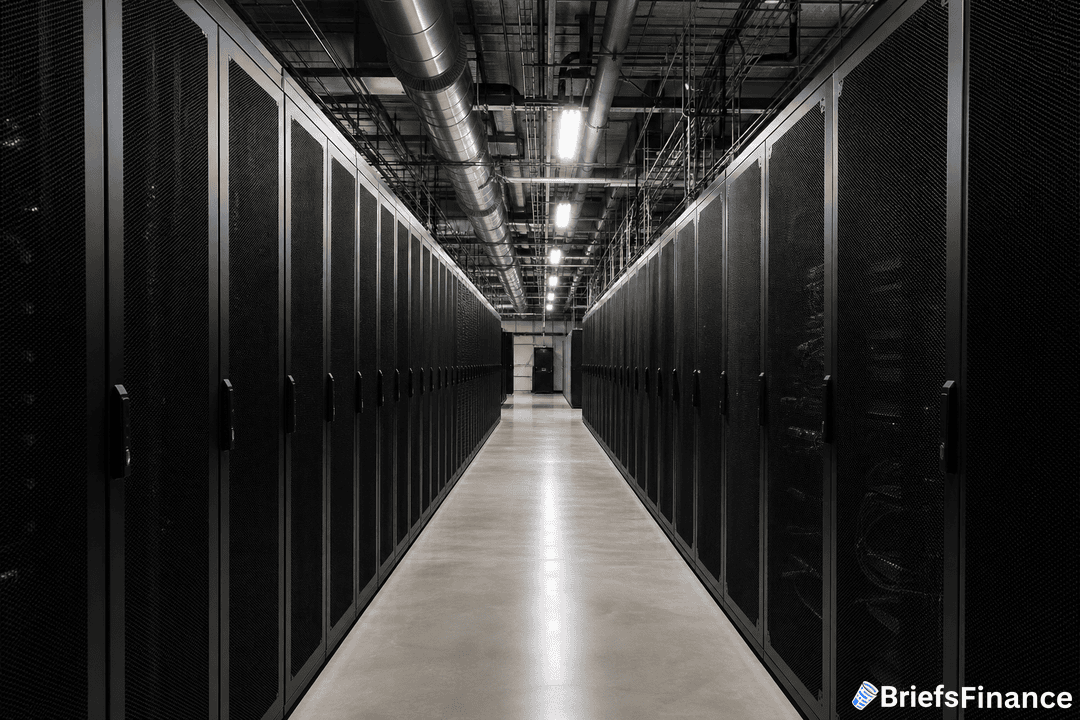
Every AI chat, image, and prediction runs on servers that get hot. Really hot.
That heat is turning into a serious business for a Danish manufacturer most people have never heard of.
Danfoss has been cooling computers for decades, going back to the days of IBM mainframes. But the AI boom of the last two to three years has changed everything. The company now supplies cooling systems to the biggest data-center operators and chipmakers, and it expects that part of its business to roughly double in size.
The Numbers Behind the Heat
Here is the scale of what is happening.
That jump is not a small blip. It is a major shift in what this company actually does.
CEO Kim Fausing said the company sees a very strong pipeline for data-center work through at least 2029. He also noted that the tech giants are saying the same thing, signaling sustained strong growth in this segment.
A few minutes a day is enough to stay genuinely informed about your money. Join Market Briefs free and start tomorrow.
The reason is simple physics. AI racks may need 10 times the computing power of older equipment. As Fausing put it, "When you talk about cooling needs, suddenly there is exponentially more that needs to be cooled." That means the business opportunity is correspondingly greater.
A Wave of Investment
The money behind this trend is staggering.
Danfoss is not waiting around. The company is expanding output capacity with new assembly lines and factory construction worldwide. It expects 2026 revenue to be in the upper portion of its €9.1 billion to €10.6 billion guidance range.
The early numbers already show the momentum. After weak demand in heat pumps and agriculture, Danfoss returned to revenue growth.
The company has been preparing for this moment for a while. Five years ago, it bought Eaton Hydraulics for $3.3 billion, adding fluid-conveyance technology that turns out to be important for liquid cooling.
Other investors see the same opportunity. Earlier this year, KKR and Mubadala sold CoolIT Systems, another cooling company, for $4.75 billion. They had purchased it in 2023 for about $270 million. That is a massive return in a short time.
What Comes Next
The growth is not spread evenly around the world. The US, China, and India each saw organic sales growth above 20%, while Europe lagged behind. But southern and eastern Europe are now picking up.
Fausing expects Europe will see a comparable data-center building wave in two to three years, and he says that wave has already started in southern and eastern Europe.
There is also a second act coming. Danfoss sees a technology cycle of about three to five years, with rapid chip changes likely to create future replacement and servicing demand for installed equipment. He described it as a service and renewal business that almost does not exist yet but will come on top.
The bottom line: AI is not just about the chips inside your phone or laptop. It is about the physical infrastructure that keeps those chips running. Companies that build that infrastructure are seeing demand that looks nothing like a normal business cycle.
For investors, this is a reminder that the AI story has many layers. The obvious names get the headlines, but the companies solving the practical problems, like keeping everything cool enough to function, are capturing real money too. And with billions still slated for data-center construction, that cooling demand is unlikely to fade anytime soon.
Rates, prices and policy all end up in your budget eventually. Get the free Market Briefs daily newsletter and see it coming.